Statsig’s Outdoor Launch Campaign in San Francisco

Division of Labor launches a new Ad Campaign for Statsig

If Karl Malden was driving the Streets of San Francisco today, he’d be seeing a whole lot of outdoor advertising for Statsig. (If you don’t know The Streets of San Francisco, click here for the best mid-70’s TV show intro ever.) 

Statsig builds software that helps product developers, well, develop products. Startups to Fortune 500s rely on Statsig feature flags, experimentation, and analytics to help them, test and launch new products and new product features faster and more reliably than ever before.

Another one of our Series B startup clients told Statsig about Division of Labor and that’s, like, the best compliment an ad agency can get. Forget the award shows and Cannes Lions; when clients tell other clients your campaigns moved the needle, that’s gold.

The communication strategy we used follows a proven success model Division of Labor has executed with other Series B startups. Basically, technology companies with highly targeted products utilize a broad outdoor media buy combined with targeted digital and social media to build awareness with our key target while also building secondary awareness among a more general population. This drives website traffic and instigates consideration while the digital media and social channels (along with good salespeople) can drive trial. But it also seeds the ground for companies and decision-makers to be more receptive when their developers ask to bring Statsig into the company.

Of course, the key to all of this working is creating messaging that is unignorable and taps into some little bit of truth that makes product developers go: “Those people get me!” And getting this right happened thanks to great collaboration with Statsig’s internal communications team led by Elizabeth George and Brock Lumbard along with Margaret-Ann Seger, GB Lee, Skye Scofield and Statsig’s founder Vijaye Raji.

“Our research shows that while our customers are highly engaged in the technical world, they also take time offline, and that is where we plan to meet them,” Statsig founder and CEO Vijaye Raji said

The core idea for the campaign is the core idea for the product; build, measure, learn, repeat.

Messages talk about the importance of testing product features with thoughts like, “Don’t think, test.” Other boards praise the power of product testing with lines like “A/B testing saves V/C money.”

The campaign utilizes Statsig’s signature 3D iconography that brings to life the lab-like environment the brand believes in. Brex handled the out-of-home media buy and, like they did with previous Division of Labor projects for Stytch and Hirect, they did an amazing job finding great boards and unique properties we could have some fun with.

Please keep your eyes peeled. And check out the launch story here in Geek Wire.

########

The Small Agency Blog is produced by Division of Labor; the ad agency for startups, based in San Francisco, twice named Small Agency of the Year by Ad Age. The award-winning creative shop services a variety of clients and specializes in startups that have obtained Series B financing or higher. They also offer freelance services. Click here for a free consultation.


Why your startup needs an Ad Agency

Stytch’s founders and their internal team worked closely with Division of Labor Advertising to create their hugely successful first advertising campaign.

The people who work at ad agencies are generally not Rhodes Scholars, rocket scientists, or Mensa members. They didn’t graduate from Stanford, Penn, or MIT. And if you’re the CEO of a Series B startup, you may be smarter than many of them. But intelligence doesn’t make great advertising. Insight does. And advertising agencies know how to connect emotionally with people and make them want things.

Why startups need ad agencies: Series B start-ups often achieved their growth and success by collaborating internally. But with an influx in funding and a need to broaden awareness or achieve higher growth goals, an outside perspective from an ad agency can take your brand to the next level.

If you have the money to build an internal agency, that can work too. But before you spend the millions on salaries and talent, spend a few thousand on an outside ad agency. Someone like Division of Labor or another ad agency in San Francisco can accomplish in a few weeks what it would take months for you to build internally.

Ad Agencies didn’t live your history

And that’s a good thing. Founders and early employees often know too much; about the product about the market about the technology about the details. Your target audience doesn’t think about your product 1/100th as much as you do. Neither do we. But an agency can help find that little piece of truth, that one thing that will make people sit up and go, “Ooah, what’s that?”

Strategic Planning: Sure, you can draft a business plan, but can you craft a campaign strategy that weaves seamlessly beyond just digital and social clicks? An ad agency does more than just draw pretty pictures; they map out the entire journey, sorta like a GPS with a PhD in marketing.

Copywriting: Anyone can string a few adjectives together, but crafting copy that’s actually memorable is an art form. Your product or service may be as exciting as watching paint dry, but in the hands of the right creative team, even insurance can be entertaining.

 Design: Product design is not graphic design or art direction. You probably have great product designers and UX designer on staff. But that’s not the same as a conceptual art director or a designer who can bring a campaign to life and create a brand that’s unignorable. 

 Media Planning: Buying Ad Space is Not a DIY Project. Ad agencies are like real estate agents for your content, securing prime advertising spaces and negotiating deals that make your budget stretch further than your yoga instructor doing downward dog. We’ve seen countless campaigns get messed up because the wrong media is bought or the timelines aren’t clear or the specs are wrong or the assets are shipped incorrectly. Yes, you’ll pay a small commission. But do it right or don’t do it.

 Data Analysis: Ad agencies don't just throw darts in the dark and hope for the best. They dive deep into the data, analyzing the performance of your campaigns. They can adjust the messaging and adjust the target media to get the absolute most from your media spend. At the same time, we do not blindly follow data. We use it to craft holistic campaigns. If advertising was pure science, we would have written the algorithm and retired a long time ago.

That’s it. What an ad agency does for you isn’t exceptionally complicated But it’s a skill like any other best left to the experts. You trust them to know their craft and you’ll benefit from their perspective.

########

The Small Agency Blog is produced by Division of Labor; a top San Francisco ad agency and digital marketing firm that’s been named Small Agency of the Year twice by Ad Age. The award-winning creative shop services clients on a retainer or project basis. They also offer brand consulting services and hourly engagements for startups and smaller brands. Click here for a free consultation.




Why is every Series B startup brand blue?

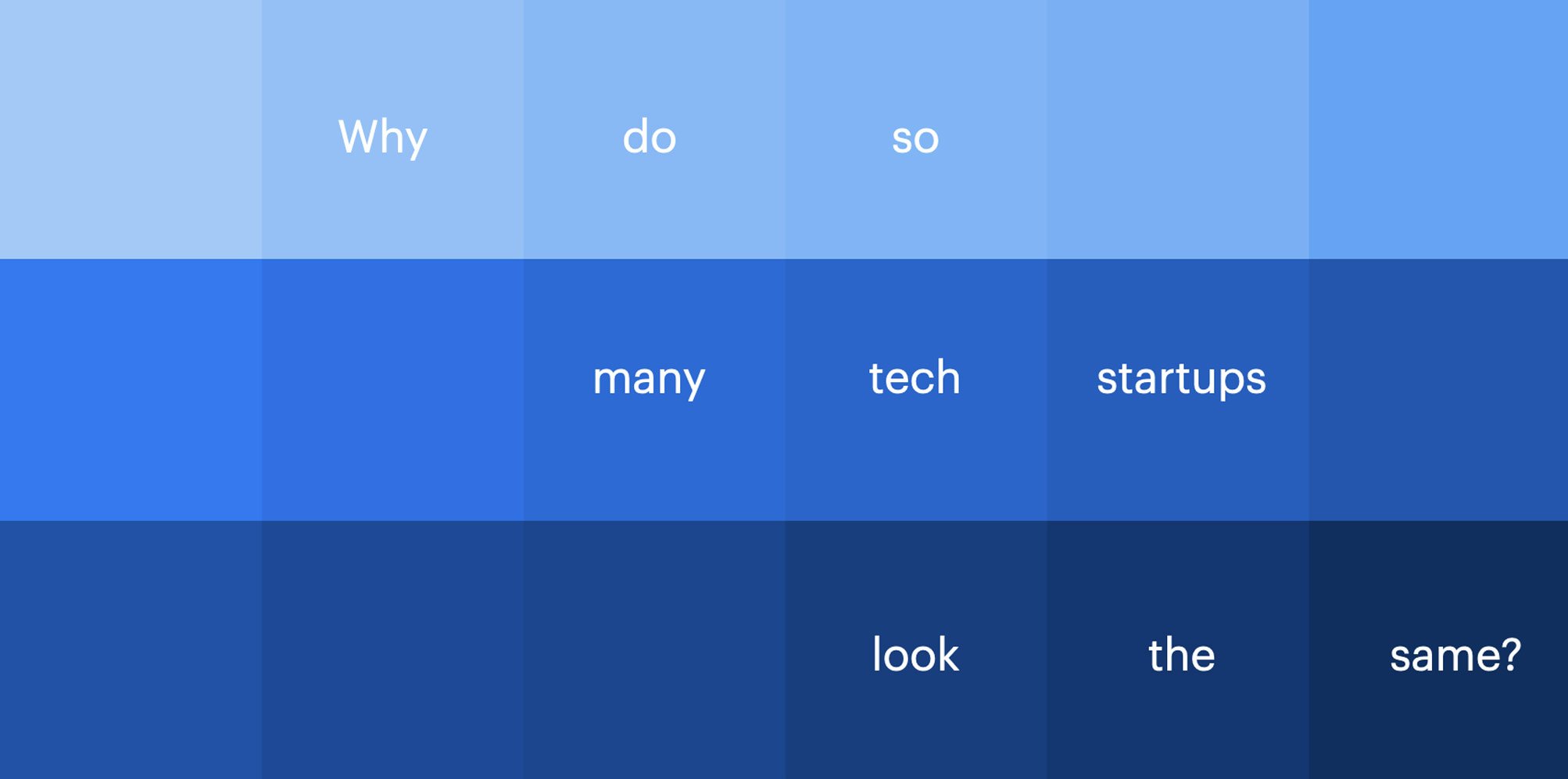
Why do so many tech startup brands look the same?

There’s plenty of research that shows how blue is the world’s favorite color. Studies going back to 1941 indicate that universally, bluish hues are the most preferred. Even Republicans generally prefer blue. But why? And does that mean blue is the right color for your startup branding palette?

A seven year study conducted by psychologists Stephen E. Palmer and Karen Schloss, published in 2010, reveals that a person’s preference for a given color can be determined by averaging out how much that person likes all of the objects they associate with that color. For example, how much you like the color orange depends on how you feel about pumpkins, traffic cones and Cheetos, among other things. For green, it depends on how you feel about Brussels sprouts, dollar bills and the lawn.

“If you look at all of the things that are associated with blue, they're mostly positive,” explains Schloss, an assistant professor of psychology at University of Wisconsin-Madison. (Which is also where this writer went to college and met his future wife. Just sayin’.) “It’s really hard to think of negative blue things.”

So should the fact that people overwhelmingly like the color blue be the reason your company chooses a blue color palette? The short answer is, hell no. Millions of people who like the color blue do not drive Fords, use IBM or purchase Viagra from Pfizer. (All massive blue brands.) The first rule of marketing and advertising is not: “Do what everyone else is doing.” The first rule is “Do what you can to stand out, not blend in.”

People also see blue as a responsible, corporate color. It connotes trust. It’s a color to be taken seriously because so many Fortune 500 companies use blue as a primary color. So isn’t a predominantly blue brand inherently responsible and able to be taken seriously? Again, hell no. Too many other factors influence the way potential customers see a brand. And the first one is, do they even notice the brand? And if you’re one of thousands of tech startups using a sans serif typeface over a blue, grey and black palette, fewer people are gonna even notice you, let alone pass judgment.

DIG INTO THE BRAND GUIDELINES

We often have clients that say their main color is blue, yet when we look into their branding documents we find these incredible arrays of secondary colors. So we build campaigns off the secondary colors because for Series B startups just beginning to advertise, people don’t know the brand, nor the brand color, nor anything else for that matter. So this is the time to use colors and design that helps your ad campaign yes stand out.

Besides the secondary color palette, there’s often graphics or blog design guidelines that can inspire what the main brand can become. Often these guidelines were put together early and without much purpose and there’s no harm in adapting things as you launch an initial campaign.

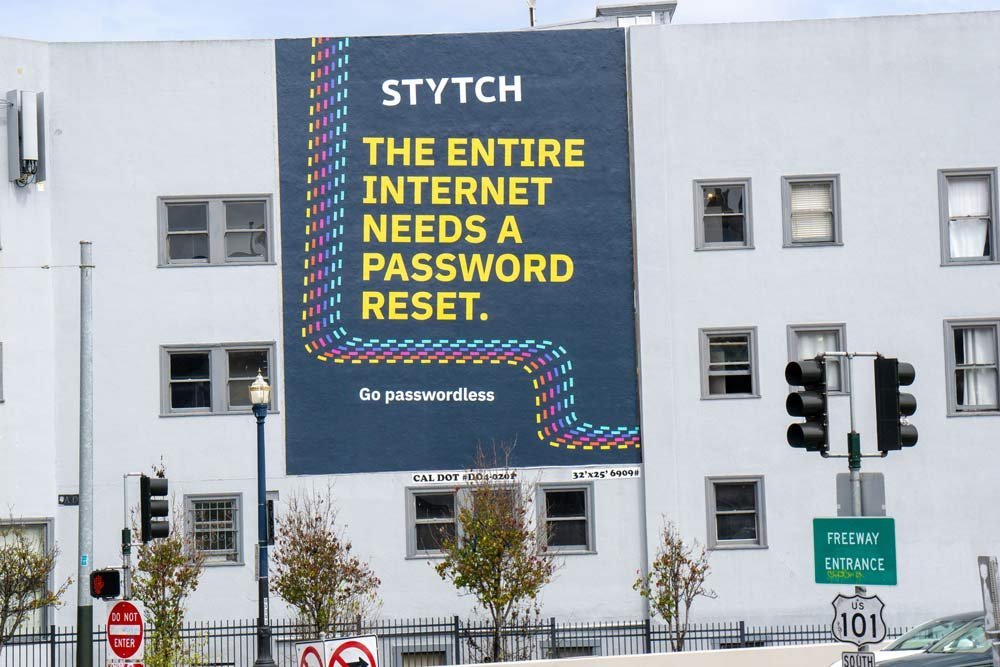
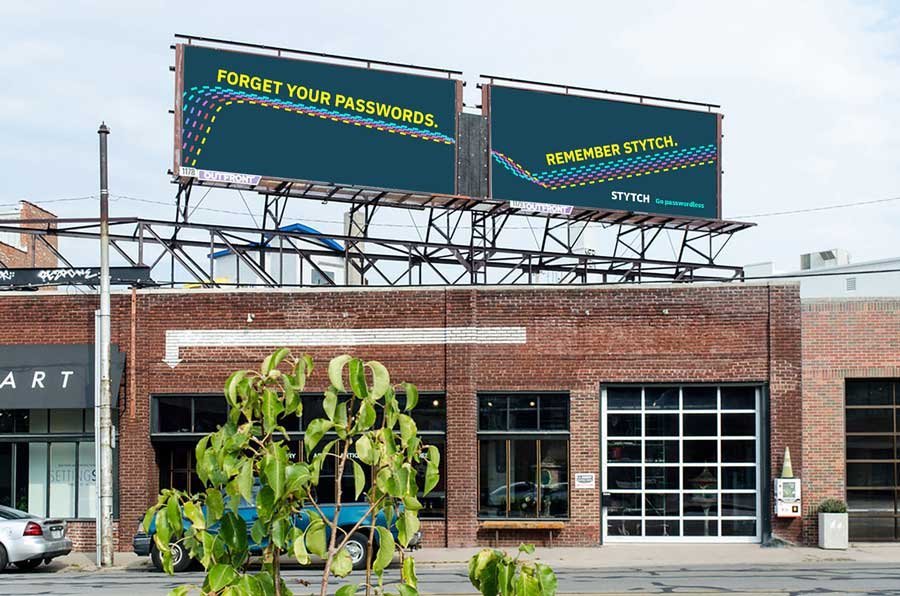
One of the hundreds of OOH boards we created for the tech startup Stytch.

When we dug into the Stytch brand guidelines, we found the stitched color lines on the very last page. This became the basis for our design and campaign, even though Stytch is a pretty blue company. They knew the brand could stretch beyond a single color and that potential customers had no brand experience anyway.

When we worked with PagerDuty, Collins had developed an amazing non-blue brand design that still evoked trust and security, two core tenets of the PagerDuty brand. So when we created the digital and outdoor campaign and re-designed the website, there was no way anyone was gonna use the most basic color on the planet.

Blue stands for trust, but what color is the red Cross logo?

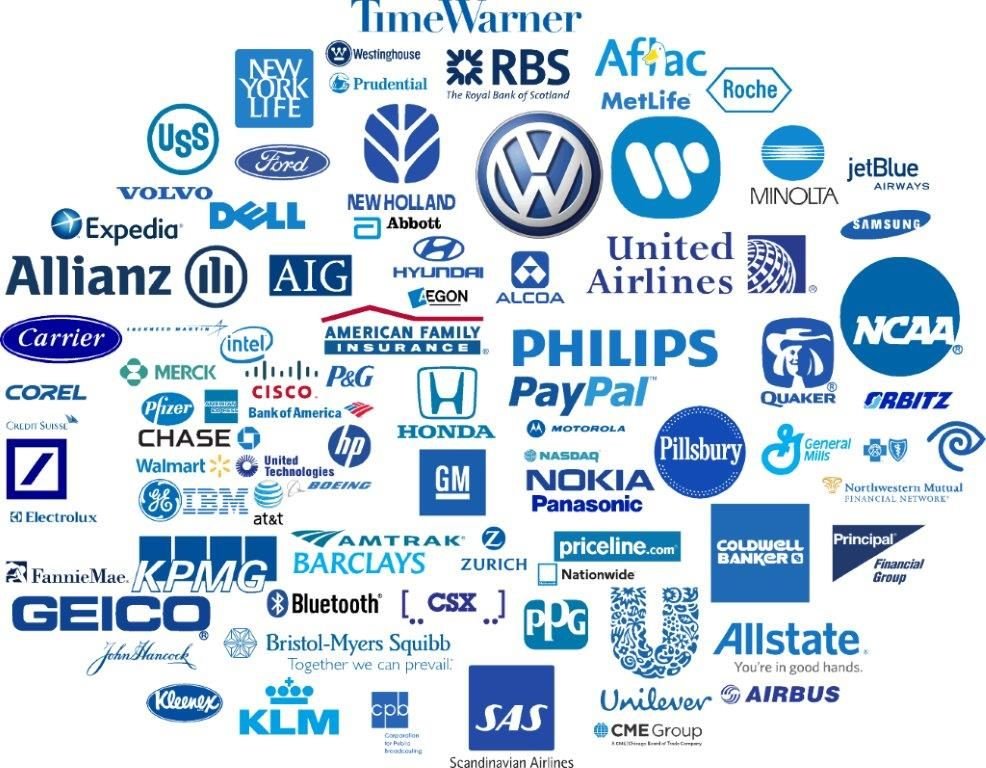
A sea of blue branding.

Just look at a quick Google search of blue brands in the universe. You’re not gonna own the color blue. No one is gonna think of your startup when they see blue. Yes, blue stands for trust. But the Red Cross is red, so?

########

The Small Agency Blog is produced by Division of Labor; a top San Francisco ad agency and digital marketing firm that’s been named Small Agency of the Year twice by Ad Age. The award-winning creative shop services clients on a retainer or project basis. They also offer brand consulting services and hourly engagements for startups and smaller brands. Click here for a free consultation.





How to Create Word-of-Mouth Advertising

Word-of-mouth is the most powerful advertising tool in your marketing arsenal. But much to the dismay of many out there, word-of-mouth is not a free version of advertising you can simply use instead of paid advertising. It’s not one or the other.

Word-of-mouth works because people trust their community and are more likely to listen to their friends than a talking head on a paid commercial. But that doesn’t mean there’s no value in the paid commercial. In fact, there’s huge value in the paid commercial to trigger word-of-mouth. 

When a woman tells a friend that she loves her new antiperspirant because it doesn’t leave streaks on her black shirt, that private moment between gal pals was not the genesis of a word-of-mouth ad campaign. The word-of-mouth was the result of some brand behavior or communication. At some point, the antiperspirant company did something or said something or created something that made your friend want to talk about her antiperspirant.

It’s important to draw a distinction between knowing 1) why word-of-mouth works and 2) how word-of-mouth happens. If you want word-of-mouth advertising, you have to create something worth talking about. To create word-of-mouth advertising, a good digital ad agency or branding agency or anyone internally, for that matter, has to do things that make your brand or product talk-worthy. (Talkworthiness is kind of a dumb name, but we haven’t come up with anything better yet. Please send any suggestions ;)

Making your brand talk-worthy starts at the product name, moves down to the packaging, carries over to your website design, and includes your tone of voice, product extensions, customer service, social media accounts, PR, videos, billboards, swag, really any part of your brand people engage with should have some reason to be talk-worthy.

Below are a few key ways to trigger word-of-mouth. Some are straightforward, some are a bit more controversial. It’s up to you whether you prefer to play it safe or go bold. 

1. Offer Exceptional Customer Experiences:

Outstanding customer service and exceptional experiences are the bedrock of successful word-of-mouth marketing. Nordstroms letting anybody return anything is one example. Trader Joe's being the friendliest bunch of people in the grocery business is another. When customers feel valued, listened to, and delighted by your product or service, they are more likely to share their positive experiences with friends, family, and colleagues. So do something unexpected on social media when responding to a complaint or concern. Offer to name a child after the customer. Invite them to be on your board. Ask for their address and Doordash them a cake. You don’t have to be a big brand to offer customer service worth talking about.

2. Get in trouble.

Break the rules. Know your audience and embrace them and actively ignore not your audience. You need a few haters to have the lovers talk about you. I’m not saying to be a jerk or a liar, just don’t appeal to everyone. If someone gets worried and says, “I’m not sure everyone is gonna like that.” Perfect! You don’t want everyone to like it. You want passionate people to talk about it.

If that means getting in trouble, getting a cease and desist letter, or bringing in some angry emails from people who write angry emails for a living, then do it. We gave away free tattoos for the San Jose Sharks and that didn’t sit too well with some parents. And we painted Sharks fan’s houses teal, which pissed off a few neighbors. But the press was amazing and the fan support was incredible. So a little trouble is well worth it.

3. Talk like a person, not a company

Be social on social media. Don’t be a nameless, faceless, asshole of a corporate tool. Say stuff people might repeat. Be self-effacing. Reply honestly to comments. Share facts about your brand or category that someone might repeat. The word “engaged” and “community” are trite, yes. But interact with people like a person and someone might talk about you like a person.

4. Leverage Influencer Marketing:

Influencer marketing has become a powerful tool for triggering word-of-mouth advertising. Partner with influencers or micro-influencers who align with your brand and target audience. Don’t reach out to celebrities unless you have a lot of money or power or something. If you think it would be cool to have Zendaya love your stuff, wake up. “Influencer” does not mean celebrity.  Also, smaller influencers can authentically promote your product or service to their followers, who trust their opinions.

5. Run Referral Programs

Referral programs are a structured way to encourage word-of-mouth advertising. You’ll want to get software that works seamlessly with your website but Google around, they’re not that expensive. Offer incentives, or rewards to existing customers who refer new customers to your business. “You get $20, they get $20” that sort of thing. This not only motivates your loyal customers to spread the word but also provides an attractive reason for their friends and acquaintances to try your product or service. 

6. Make Videos

Make lots of videos. Helpful ones, instructional videos, funny videos, recipe videos, fashion videos. If you’re a tech brand, make videos where stupid people try to explain your product. If you’re a bread baker, make videos watching dough rise. Whatever it is, use type and your voice to give it a point of view and eventually, people will start talking about one of them. Then they’ll go back and see some others and, voila, you have word-of-mouth. One of the many videos we did for Live Nation got featured on Vimeo and it took off. Rodents on Turntables ended up with millions of views because we kept putting stuff out there and something stuck.

7. Talk About Yourself

If you want word of mouth, start with the words coming out of your mouth. Do interviews, become the category expert, seek out speaking engagements, write articles for magazines and blogs. Get on podcasts. Word-of-mouth advertising remains a potent force in the marketing world and always will. But it needs fuel. Be the word-of-mouth you want.

So there you go. Word-of-mouth.

########

The Small Agency Blog is produced by Division of Labor; a top San Francisco ad agency and digital marketing firm that’s been named Small Agency of the Year twice by Ad Age. The award-winning creative shop services clients on a retainer or project basis. They also offer brand consulting services and hourly engagements for startups and smaller brands. Click here for a free consultation.


Ad Agency or Freelancer? Which is right for your Series B startup?

We get a lot of calls from Series B startups about advertising agency services when really what the client needs is a freelancer or freelance team. Division of Labor does offer the choice of freelance services or full agency capabilities, but it seemed like laying out when one was better than the other might be helpful. Here are a few insights to help you make the right decision. 

Consider Your Budget

Ad Agency: If your marketing budget exceeds $50,000 and you have specific marketing challenges that require comprehensive solutions, an agency might be the better choice. Ad agencies excel at addressing complex problems and have the capacity to coordinate multiple disciplines to execute a seamless marketing strategy. 

Freelancer: If your marketing budget is limited to less than $50,000, hiring a freelancer or freelance team can be a cost-effective solution. Freelancers typically earn between $800 and $2000 a day. So this can be a great choice when you have a smaller budget and require specialized expertise for a defined project or campaign.

Are you buying media?

Ad Agency: If you have an approved budget for paid media and need strategic planning, creative execution, and production for social ads, digital ads, video ads, billboards, broadcast, or other media placements, an ad agency can provide better rates and handle the coordination effectively.

Freelancer: If you have no approved media budget but need to build your brand and create assets for social media, website, or sales meetings, hiring a freelance team can deliver significant value. Freelancers can assist in designing and creating brand assets on a smaller scale for specific projects.

Full Funnel Media Campaign or a few executions?

Ad Agency: If you envision a multi media campaign that builds awareness, drives consideration and initiates conversions across multiple media touchpoints, you want an agency. An advertising agency brings together the strategy, creative, account management, project management, production capabilities and media planning, buying and tracking that you don’t want to try to replicate on your own

Freelancer: If you have one or two media assets for a limited amount of time, hire a freelancer. Maybe you need some out of home or a radio campaign or a couple social campaigns to A/B test. A good freelance team will knock it out faster and for a lot less money.

New Product Launch:

Ad Agency: When launching a new product or service in multiple markets using various media touchpoints, an agency's ability to coordinate PR, social, digital, outdoor, audio, events, and tradeshows becomes indispensable. They excel at managing complex launches and ensuring a coordinated execution across multiple channels.

Freelancer: If you’re just looking for preliminary presentations for internal approval, or want to explore launch ideas without committing to anything, working with a freelance team can offer flexibility. Freelancers can collaborate closely with you, present ideas, and develop presentations to showcase to management before proceeding to production.

Strategy/Research:

Ad Agency: When strategic research is needed to gain insights into marketing problems that require creative solutions, involving an agency ahead of time is recommended. Agencies can offer valuable perspectives on research outcomes and guide you in identifying the most actionable insights to inform your marketing strategy.

Freelancer: If you have an in-house planner who is looking into target audience segmentation, or evaluating current market awareness, hiring a freelancer to assist with implementing focus groups, tallying polls, and tracking surveys can be helpful. 

Website Development:

Ad Agency: If you are planning a multimedia campaign that requires a comprehensive website redesign, along with landing pages linked to various media placements, an agency is better equipped to handle the project. Agencies possess the expertise to integrate multiple disciplines and ensure a cohesive execution of your site build. Additionally, if your existing website has complex requirements, such as extensive content transfer, intricate security measures, or custom design solutions, an agency's expertise becomes invaluable.

Freelancer: If you need a relatively basic website with fewer than 10 pages and have specific examples of designs you like, hiring a freelancer can be a suitable option. Freelancers can quickly design and build a website using platforms like WordPress, Squarespace, Webflow, Shopify, Weebly, IONOS, GoDaddy, or Wix. They can collaborate with a freelance writer to ensure effective content execution and a swift launch.

If you’re still not sure, fill out this form and we’ll tell you which way to go, whether you work with us or someone else. Happy to help.

########

The Small Agency Blog is produced by Division of Labor; a top San Francisco ad agency and digital marketing firm that’s been named Small Agency of the Year twice by Ad Age. The award-winning creative shop services clients on a retainer or project basis. They also offer brand consulting services and hourly engagements for startups and smaller brands. Click here for a free consultation.


Why Series B Startups Should Invest in Marketing

Startups in the San Francisco Bay Area often don’t have the budgets to invest heavily in marketing. Those that have reached Series B level financing have the opportunity to direct funds toward increasing brand awareness, website traffic and conversions. This article talks about the benefits of investing in marketing and the ways to go about it properly.

Read more


Recession is coming? Five reasons not to slash marketing budgets

The sky is not falling. Why slashing marketing budgets when a recession looms is a tactical mistake.

The most important rule of marketing is not to follow the herd. Never ever follow the pack. So why do so many companies instinctively do the exact same thing when the economy slows down? Panic, slash marketing, panic some more, then realize you’re either in business or you’re out of business. So stay in business. Because in actuality, an often overlooked opportunity arises during these challenging periods: doubling down on your advertising spend. While it may sound counterintuitive, allocating more resources to marketing efforts can actually yield significant benefits and propel your business forward. Here’s how.

Capitalizing on Reduced Competition:

During an economic downtown, so many companies slash their marketing budgets or pull out of the market altogether. This creates a huge opportunity for proactive companies to stand out and eat share. By increasing your marketing budget, or at least holding steady, you can capture a larger share of voice in the market, allowing you to establish a stronger brand presence. With reduced noise from competitors, your brand messaging has a better chance of resonating. And as we’ll discuss later, that share of mind space does not dissipate.

Maintaining and Expanding Customer Base:

As inflation rises, consumer behavior undergoes significant changes. That’s a nice way of putting it. We’re all a bit nervous. But nervousness should not dictate business decisions. Yes, people become more cautious with their spending, and brand loyalty may falter as individuals seek value and reassurance. But by increasing marketing efforts, you can maintain a strong connection with your existing customers, reminding them of your value proposition and reinforcing their loyalty. Moreover, well-executed marketing campaigns (and there should be no other kind) can attract new customers who are actively seeking alternative solutions due to shifts in the marketplace.

Leveraging Cost-Effective Channels:

Crappy times often present an opportunity to leverage more cost-effective marketing channels. Traditional advertising rates may decline, reps are better able to negotiate, and digital advertising platforms offer competitive pricing. And everyone is gonna flock to organic social which will make things even more glutted. By strategically investing in bigger channels, you can maximize your marketing dollars, reaching more potential customers at a fraction of the cost compared to boom times.

Exploiting Emerging Opportunities:

Bear markets often bring about changes in consumer needs and behaviors. IE, we all freak the f*ck out a little. As a result, new market segments may emerge. It’s a good time to do market research, identify evolving trends, and tailor your marketing campaigns to capitalize on the shifting landscape. Being agile and responsive during a downturn can help your business not only survive but also thrive in the long run.

Once Top of Mind, Always Top of Mind

This is especially important for startups. Plowing ahead is crucial when your competitors are panicking. Competitors will instinctively “pull back”, “ride it out” and “wait for the opportunity” and you’ll have dominated the market with a massive campaign, increased market share, and set yourself up for a huge windfall when things turn. And the space you’ve carved out in everyone’s mind will not disappear. When everyone else zigs, you zag. Bold, fearless companies act that way and they are rewarded for it.

########

The Small Agency Blog is produced by Division of Labor; a top San Francisco ad agency and digital marketing firm that’s been named Small Agency of the Year twice by Ad Age. The award-winning creative shop services clients on a retainer or project basis. They also offer brand consulting services and hourly engagements for startups and smaller brands. Click here for a free consultation.


The Manifest Presents Division of Labor as San Francisco’s Most Reviewed B2B Leader for 2023

The idea of the B2B Award given to Division of Labor by The Manifest.

Since its inception in 2010, Division of Labor has been providing top-tier advertising and creative services to brands in need. With clients like Dropbox, Roku, Stytch and the San Jose Sharks they’ve made a name known through their commitment to deliver unignorable work that drives results.

Today, we proudly share with you all an exciting award made possible by their clients’ wonderful support. During the recently held The Manifest Company Awards, Division of Labor was officially hailed as one of the most reviewed B2B companies in San Jose and San Francisco, California. 

To give this award more context, The Manifest is a business news resource and buying guide designed to help browsers navigate through different B2B markets worldwide. The site annually holds an industry award to highlight the importance of trust and exceptional client relationships. The winners honored are chosen based on the number of testimonials and recommendations they’ve earned over the preceding twelve months.

Receiving any award is an honor, but earning one because of their clients’ support and feedback makes it that much more meaningful. Congratulations to the clients and partners who cheered on and trusted Division of Labor. Cheers to more challenges and brilliant projects ahead!

What better way to celebrate this than by welcoming more opportunities? Contact Division of Labor and see what else they can do for you. 

########

The Small Agency Blog is produced by Division of Labor; a top San Francisco ad agency and digital marketing firm that’s been named Small Agency of the Year twice by Ad Age. The award-winning creative shop services clients on a retainer or project basis. They also offer brand consulting services and hourly engagements for startups and smaller brands. Click here for a free consultation.


6 Tips for Series B Startups Hiring an Ad Agency

Every Series B Startup needs a marketing plan and a great ad agency to implement it.

Finding the right ad agency partner can be a daunting task for startups, particularly for those in their series B phase. A good creative agency, like the team at Division of Labor, can help a startup reach its target audience and increase brand awareness. But, let’s be real, a crappy ad agency can result in a waste of resources ineffective campaigns, and a short tenure for the chief marketing officer. To keep heads from rolling, here are six tips to help you find the right ad agency for your needs:

  1. Define your goals: Before you start looking for an ad agency, it's important to clearly define your marketing goals and what you want to achieve. This will help you find an agency that specializes in your industry and has the right credentials to meet your needs. You’ll also need to have some ballpark figures on your media, strategy, and creative budget.

  2. Look for a strategic partner: An ad agency should not only create effective ads but also provide valuable insights and strategy to help your business grow. Look for an agency that will work with you as a partner, not just a vendor.

  3. Consider the agency's portfolio: Look at the agency's portfolio and case studies to see if they have experience working with companies in your industry and if they have a track record of success. This will give you an idea of their capabilities and what kind of results you can expect. Analytics that show success with one client’s business are not a guarantee of success for your business. But it’s the strongest indicator that the agency knows its stuff.

  4. Check references: Ask the agency for references from current or past clients. This will give you a better idea of their work and how they interact with clients. Make sure to speak with several references to get a balanced view.

  5. Evaluate the company culture: The relationship between a startup and its ad agency can be a long-term one, so it's important to make sure the agency's culture aligns with your company's values. Look for an agency that shares your passion and understands your vision.

  6. Be realistic about budgets: It's always a good idea to get quotes from several agencies to compare prices and services. This will help you find the right balance between cost and quality, and ensure that you get the best value for your investment. No one wants to overpay for goods and services. But, hey, would you go to the cheapest dentist? Or would you prefer that the person drilling into your tooth charges what they charge because they know what they’re doing? Just a thought.

########

The Small Agency Blog is produced by Division of Labor; a top San Francisco ad agency and digital marketing firm that’s been named Small Agency of the Year twice by Ad Age. The award-winning creative shop services clients on a retainer or project basis. They also offer brand consulting services and hourly engagements for startups and smaller brands. Click here for a free consultation.


Wine, Football and Advertising Promotions.

The Gap sponsoring the gap. Red wine sponsoring the red zone.

One time I was at a San Francisco Giants game and I looked in the outfield and noticed The Gap had placed signs on the outfield wall. But they were placed in the gap between left and center field and right and center field. Genius. The Gap sponsors the gap. It was perfect and has always represented exactly what brands should do to create a successful promotion/partnership.

More recently, I hit pause on Hulu to go to the bathroom, and on the Pause screen was an ad for Charmin saying, “Enjoy the Go.” Even that inane tagline couldn’t stop the perfection of Charmin sponsoring the pause screen.

When promotions work seamlessly, they don’t have to work very hard.

These are just two examples of products not randomly sticking their names on stuff. There’s a connection that makes them both work. That’s the kind of connection we were looking for when our clients at Bogle Vineyards asked us to make their wines an integral part of football season. We needed something that made the pairing a natural, seamless fit. In the course of our creative exploration, we had this one idea that seemed too simple to have not been done before.

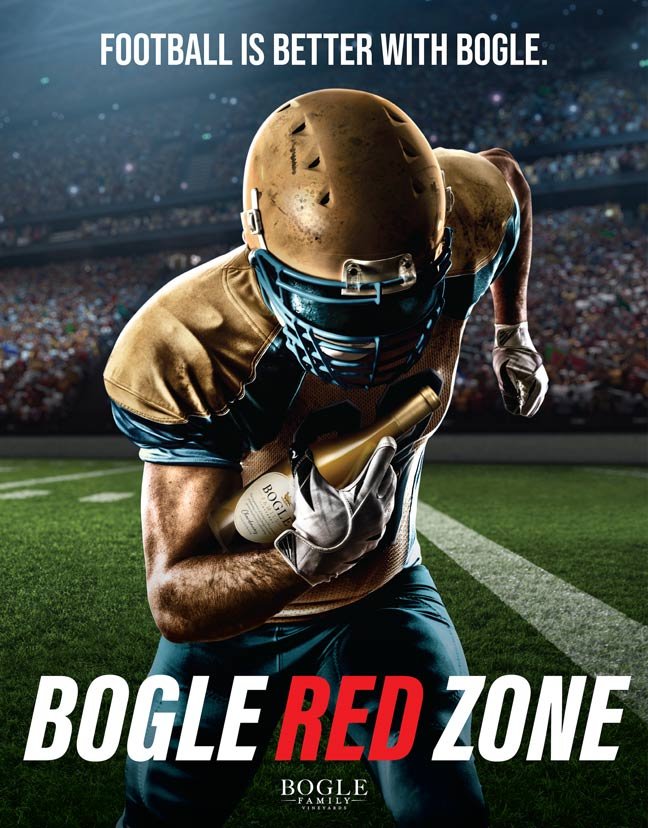
Bogle makes a fantastic Red Blend, Cab, Pinot and Merlot, so we thought, “Let’s sponsor the red zone.” We proposed a special box set of Bogle Reds for game day. When teams get inside the 20-yard line we ask fans to tweet pictures of themselves enjoying Bogle and the game. The Bogle Red Zone would instantly make Bogle part of game day.

We created an in-store campaign, digital InstaCart campaign and for social, to make The Bogle red Zone part of Fantasy Football, we created Start ‘em Sip ‘em - wine advice for Fantasy game day. Now, if you’re a fantasy nut like us at Division of Labor, you know that Start ‘em Sit ‘em advice is a staple of Fantasy. So Start ‘em Sip ‘em advises what wine to start with what appetizer and what heavy, gassy, beer-y drink to sit on game day.

The whole promotion is part of our Better With Bogle campaign which started with pizza, which is Better With Bogle, then extended to Football, also Better With Bogle and will soon take over the world and extend to everything that doesn’t involve driving, flying or operating heavy machinery. Thanks to everyone at Bogle who made this happen.

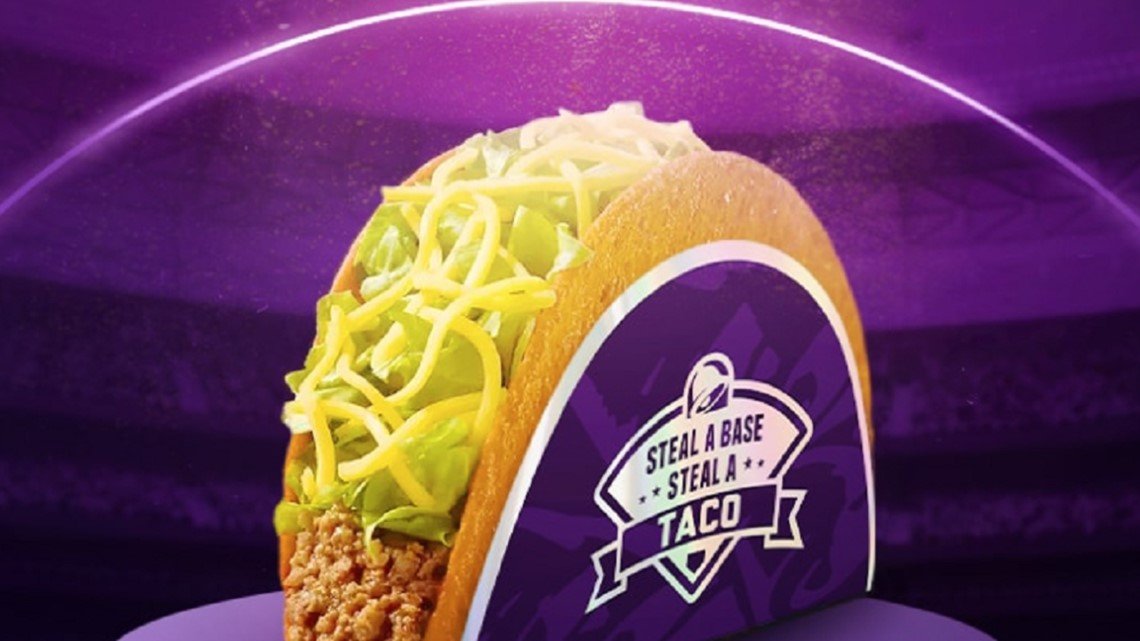
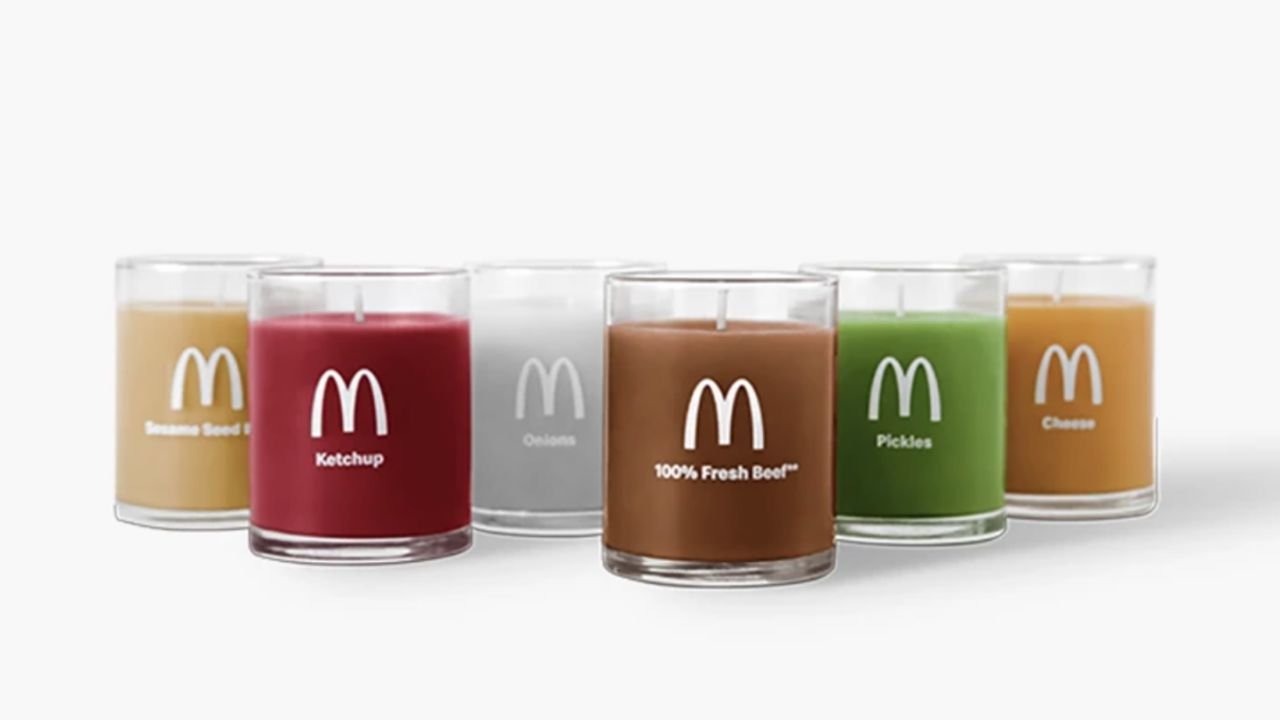
A few more promotions that tie the brand seamlessly to the idea; the Chores Light Laundry Basket for Coors light, McDonalds scented candles, ripped off two years later by Shake Shack and purchased by your truly. (Side note: burger scent is not something you want wafting from your candles.) P&G sponsoring moms during the Olympics and Taco Bell’s Steal a Base, Steal a Taco promotion.

########

The Small Agency Blog is produced by Division of Labor; a top San Francisco ad agency and digital marketing firm that’s been named Small Agency of the Year twice by Ad Age. The award-winning creative shop services clients on a retainer or project basis. They also offer brand consulting services and hourly engagements for startups and smaller brands. Click here for a free consultation.


Beck Covers Neil Young to Promote Brady vs. Mahomes.

Beck cover's Neil Young's Old Man

Halfway through the Sunday Night Football game between the Broncos and the 49ers, there was a break in the action and viewers saw Beck sitting on a stool singing one of the greatest songs of all time. “Old man look at my life I’m a lot like you were” he sang while strumming a guitar.

As he performed the Neil Young classic, footage of Patrick Mahomes began to appear on the screen. And then came footage of Tom Brady and then things started making sense.

The song about an old man and a young man thinking about his life was a perfect way to encapsulate the relationship between the two quarterbacks and to promote their matchup Sunday Night.

The idea was born when NBC turned to Cade Co. in Los Angeles for ideas to promote Sunday Night Football. Founder Nick Cade turned to some old friends to collaborate. Fortunately, one of those collaborators was the guy writing this blog post. (That’s Josh Denberg, in case you’re not a super-fan of the Small Agency Blog, which, we find hard to believe, but OK, whatever.)

As we came up with ideas for the week 4 game, the idea of Brady and Mahomes each winning their first Super Bowl at 24 years old stuck with me. “24 and there’s so much more.”

As Beck sings that line and we see footage of a 24-year-old Brady winning the Super Bowl and then of Mahomes when he won the Super Bowl at the same age, the coincidence is pretty poignant.

The song is actually about an old caretaker on Neil Young’s ranch. He tells the story in this clip from 1972 on the BBC. But it really tells the story of anyone who looks up to their elders. And Mahomes does.

Of course, haters will say, “Mahomes hasn’t come close to doing what Brady has.” No shit, Twitter-verse. But that’s the drama. That’s the tension. Mahomes is considered the only QB who might, maybe, possibly approach Brady. His success at a young age. His poise in the clutch. Plus the young star vs the Old GOAT makes the song perfect for a Sunday night matchup that might be their last. Check out the Yahoo Entertainment article here.

Thanks to Nick Cade and Beck and everyone at NBC for making this happen and especially to Neil Young who has made it clear over the years that he is no fan of advertising or commercialism. While we don’t expect he’d ever allow one of his songs to be used to sell snack chips, oil filters or insurance we appreciate the leniency on this one.

########

The Small Agency Blog is produced by Division of Labor; a top San Francisco ad agency and digital marketing firm that’s been named Small Agency of the Year twice by Ad Age. The award-winning creative shop services clients on a retainer or project basis. They also offer brand consulting services and hourly engagements for startups and smaller brands. Click here for a free consultation.


We Are Not a Healthcare Ad Agency. But We Play One On TV.

We’re not a healthcare agency, we just happen to do some good healthcare advertising. Sometimes our commercials even run during Gray’s Anatomy.


It’s nice when you’re not sure exactly what kind of an ad agency you are. Maybe it means you’re evolving. Or maybe it means you’re taking on challenges you haven’t before. Who knows. But for not being a healthcare ad agency, we sure have done a lot of healthcare advertising lately. 

After projects for UCSF, Lively and Michigan Health Professionals, we got a call to pitch El Camino Health, one of the premier healthcare brands in the South Bay. And what do you know, we won the dang thing.

We had a simple idea that led to a strong collaboration with our clients and ultimately the launch of the biggest brand campaign El Camino Health has ever done. Not that “biggest” really means anything, but it does show the company is behind the work, internally and externally. So, yes, that feels good. 

Of course, Division of Labor never intended to become a healthcare ad agency. And, in fact, we work hard to maintain a diverse roster of clients in order to avoid being pigeonholed into any one category of advertising. But the reality is that healthcare is probably the most emotional category there is. And it deserves more than changing the words to old pop songs and jumping into swimming pools. “Oh, oh, oh, Ozempic!” (Look it up if you don’t know it. I can’t bear to put a link to it.)

The El Camino Health campaign took a while to get out the door because we went through extensive brand strategy work with our partners at Paragraph Project to help everyone understand the key communication points to focus on and ensure any future messaging would be consistent. After developing multiple campaign ideas to bring the brand position to life, we did some consumer testing to get validation.

TESTING PROVES TESTING WORKS

Of course, I’ve never met a creative person who liked concept research. In the wrong hands, it dumbs down ideas and kills creativity. But, in the right hands, with good clients, it helps you make a decision. It doesn’t make the decision; it helps. And when you work with scientists, engineers, tech founders, consumer packaged goods, B2B companies, hell, anyone these days, you’re going to need data. So don’t fight it, go get it.

In the end, the idea that won out was the original ad campaign idea we presented in the pitch. We brought in director/editor Doug Walker to help us bring it to life. And Vince Genovese to help navigate the complexities of filming in a hospital. 

Through it all, our clients navigated us into and around the various complexities and red tape of the medical system to the point where our line producer, Brian Benson offered our client, Holly Trollman a job in production. (She declined, by the way.) 

The body of work was difficult to produce, frustrating at times, and one of the most satisfying and rewarding projects we’ve taken on.  Vineeta Hiranandani is our amazing client who led us through strategy sessions, board meetings, medical reviews, design reviews and final production. While Lydia Antippas ran our entire primary care campaign and the entire digital media campaign. Thank you both. 

Over a year after someone in our office, and I think it was account director Rebecca Reid, said “Accept Nothing Less than El Camino Health”, we are thrilled to see it come to life on TV, streaming, social and digital video, outdoor, radio, and it’s everywhere in the South Bay thanks to our media planner and buyer, Brenda Goodman.

So are we a healthcare agency? No. But we’re really proud of this one.

El Camino Health launch video - Division of Labor


Credits:

ECH - Vineeta Hiranandani, Lydia Antippas, Holly Trollman, Dan Woods, all the El Camino Health physicians, nurses and staff.

Production - Doug Walker, John Ettinger, Brian Benson, Molly Condit, Norman Bondy, Paul Chaput, Ryan Kavanaugh, 1606 Productions, Caruso Films,

DoL - Rebecca Reid, Faruk Sagcan, Ruby Noto, Lauren Chandler, Brenda Goodman, Dawn Margolis, Vince Genovese, Scott Aal, Dustin Smith, John Reid, Lynda Greenberg, Dan Carlton, Jess Sebbo, Chelsey Robertson.


The Ad Agency for Series B Startups 

When a startup gets Series B funding is when it can finally focus a bit more of its efforts and dollars on marketing and advertising. According to Crunch Base, the Series B funding stage, “. . . is typically the point in a startup’s lifecycle when it has proven technology or market traction and is on the cusp of major scaling.” And that goes along with exactly what we’ve seen the past five years or so. Looking back at all the companies we’ve worked with, the calls coincide directly with when Series B funding has come in.

The Series B funding stage is typically the point in a startup’s lifecycle when it has proven technology or market traction and is on the cusp of major scaling.
— Crunchbase

Division of Labor has been fortunate to work with a large number of Series B startups. Our unique business model combined with the proven results of our creative campaigns seems to be a good combination for Series B companies. Certainly, our position in the Bay Area helps, as well. For the past couple of decades, the vast majority of Series B funding has gone to companies in a small number of geographies, dominated by the San Francisco Bay Area. Again, according to Crunchbase, “Bay Area-headquartered companies pulled in roughly 40 percent of all Series B funding. New York and Boston companies together pulled in about 16 percent of capital.”

Every time we start working with a new startup, we get to apply all the learnings from previous startup projects. Of course, not all advertising campaign goals are the same, nor are all tactics applied equally across companies. But we’ve seen what works and what doesn’t and we’ve discovered the basis for a pretty successful formula that can be broadly applied in many cases.

Our ad campaign for Series B-funded startup Stytch took over San Francisco at the beginning of April.

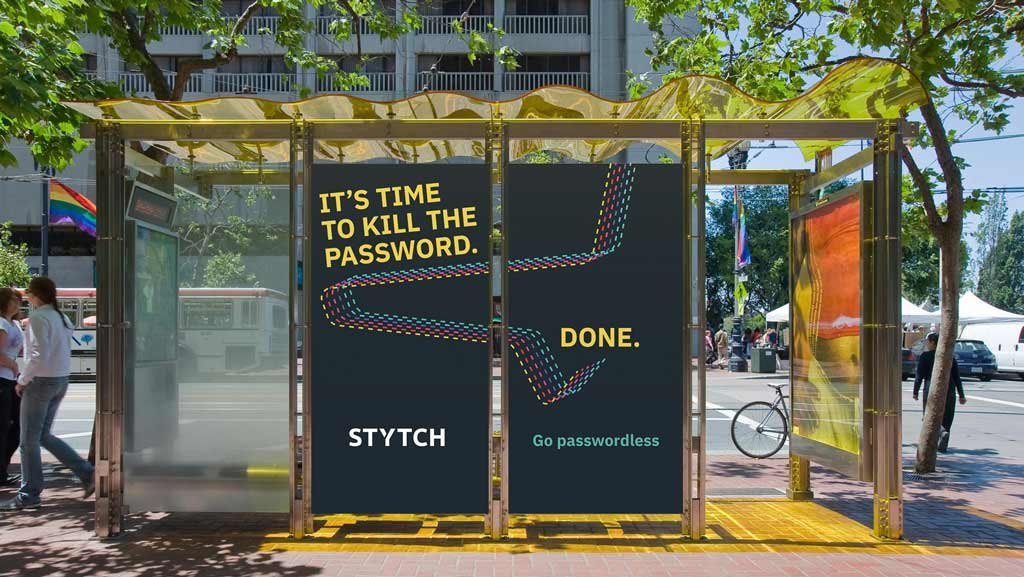
Stytch - Our latest ad campaign for a Series B start-up took over the streets of San Francisco. From buses to billboards to painted walls and bus shelters, this ad campaign not only took over the city, it connected with people emotionally focusing on a single universal truth: we all hate passwords. But Stytch knew that who you sell to and who you target with advertising are not the same thing. They were incredibly smart in separating out those two notions and creating advertising that hit with consumers and at the same time, resonates emotionally for developers and IT Decisions Makers who have the same hatred of passwords as the rest of us.

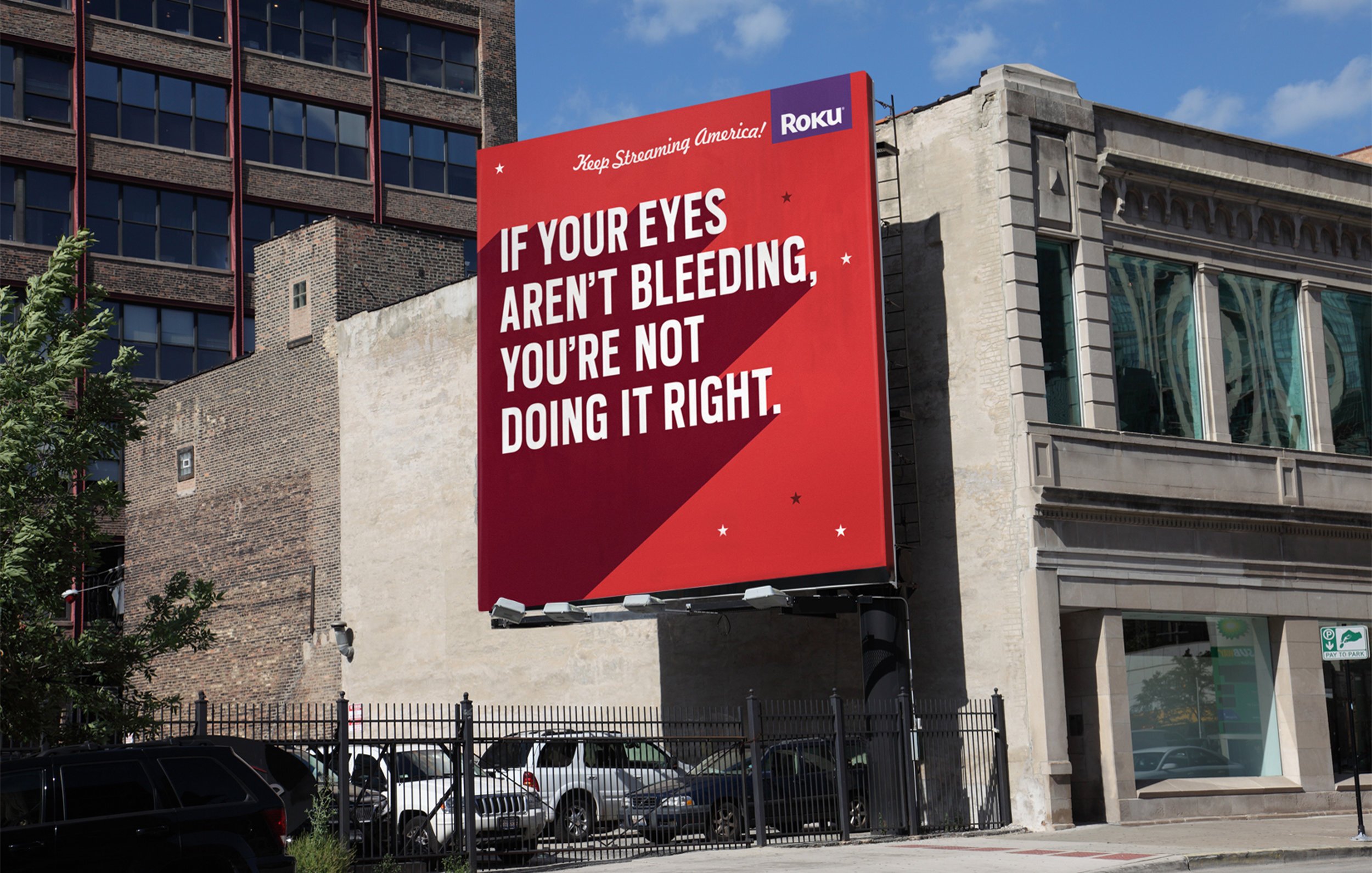
Roku - This is a Series B ad launch from back when streaming was understood by less than 7% of the market. Roku needed to become synonymous with the category knowing that more and more players would soon be entering. So product differentiation was not the goal. Focus on product benefits was not the goal. Becoming the category leader was the goal, even though 93% of people had no idea what the category was. Check out the campaign here.

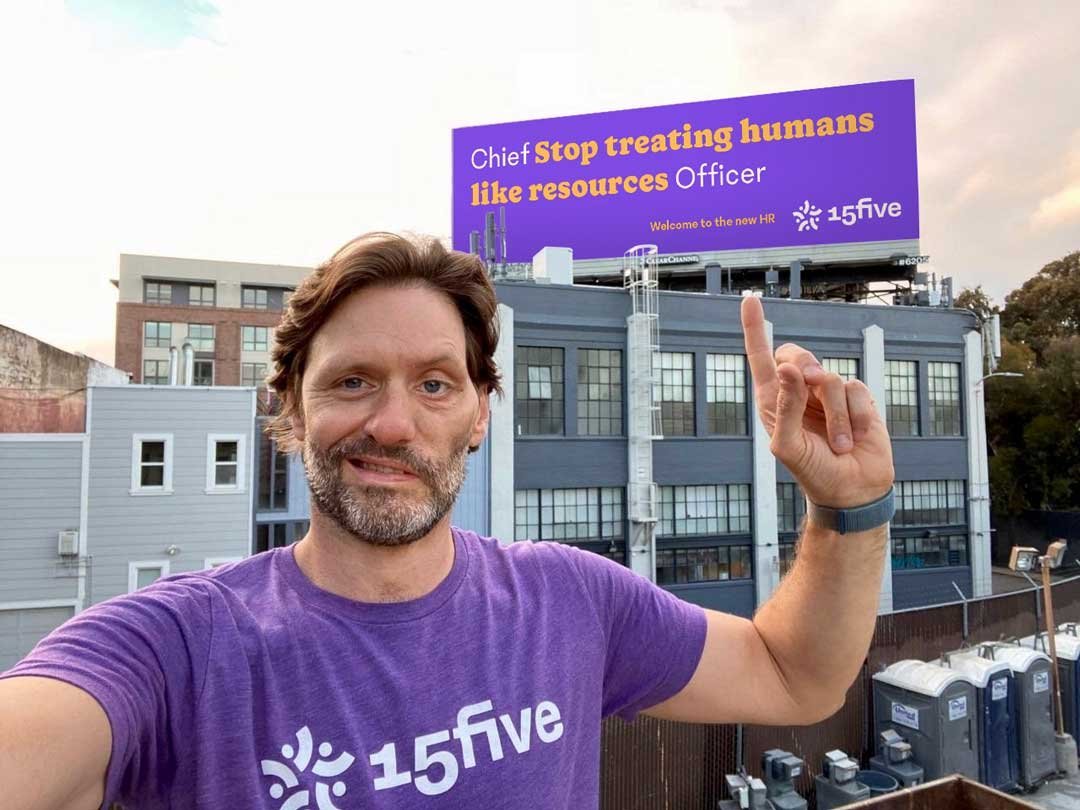
15Five - 15Five got their Series B and came to Division of Labor to take over the performance management software space. We quickly launched a campaign in San Francisco, measured the effectiveness and expanded to New York. They also quickly solidified the importance of good decision making. They, like all great clients, make decisions quickly and make them decisively. And with that, we moved fast, learned fast and did really, really well. See the campaign here.

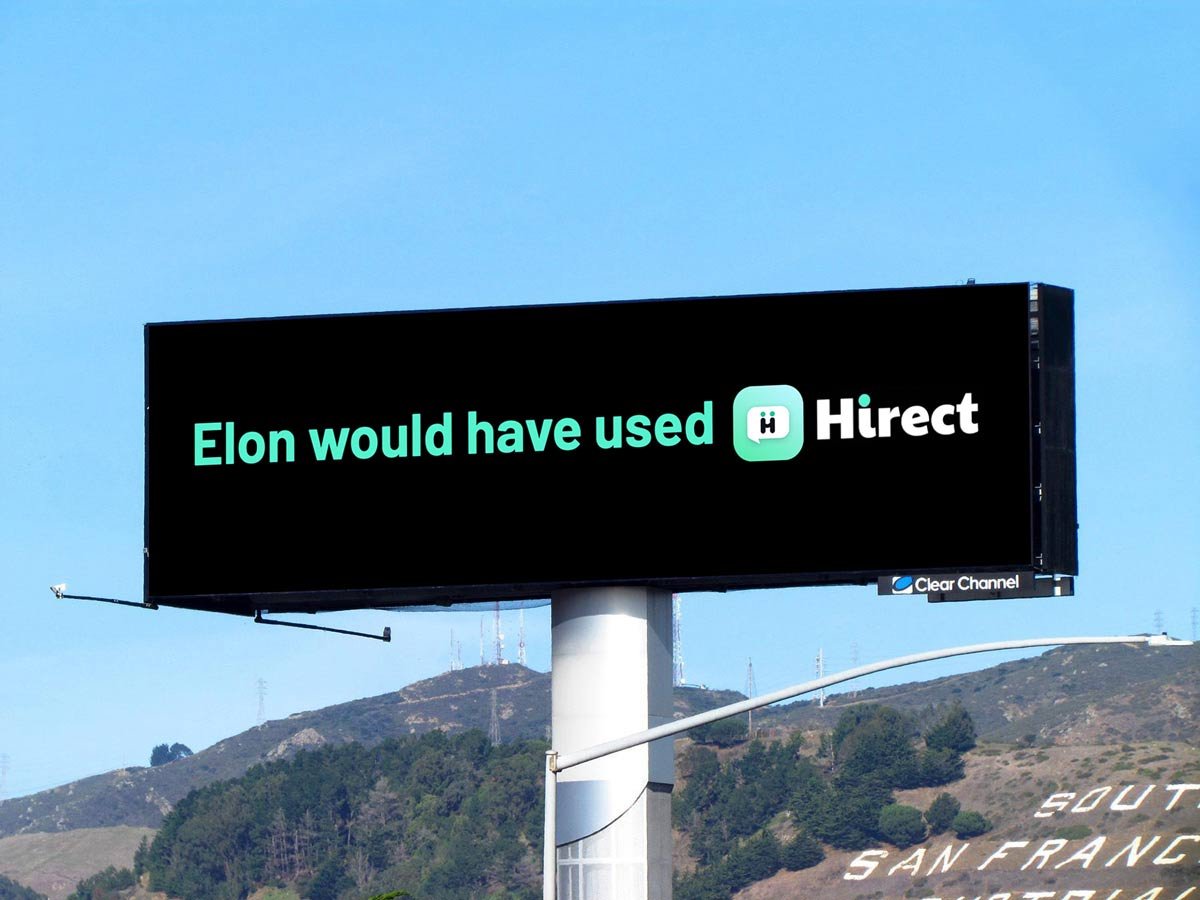
Hirect - This was one of the fastest turn-around projects ever. And it’s where we solidified our most crucial rule to working in this space: have direct access to the founders. The reason we took on a project over the holidays with insane timelines is that Annie Zhang, one of the co-founders, was the one who called. She was ready to work fast and wanted to make a splash, so we were too. Without direct founder involvement, it’s much more difficult to create something that makes an impact. Check out the work.

Dropbox - Dropbox was launching Dropbox for Business after their Series B funding and they invited us to pitch. I just looked back at that presentation deck before writing this and it was good work! But what Dropbox wanted then was very different from what, say, Stytch or Hirect was after. They were already quite well known and needed to reposition in the mind of IT Decision Makers. So the ad campaign was much more tactical and under the radar but still massively effective. It ran for well more than two years, (long after we were no longer working on the ad campaign.) And while we did not have direct access to the founders on this one, we did have direct access to an amazing client who remained our client even after she went on to another startup. View the campaign.

Opendoor - After the aforementioned client left Dropbox to have a baby, she came back and joined Opendoor which had just gotten Series B funding. So she called us and we were off. For this campaign we honed in on that single, emotional truth about trying to sell your home; it’s a looooong, frustrating process. And we devised messaging that brought that process to life and allowed Opendoor to be the solution to a universal problem. See the campaign here.

Lively - When Lively reached out to Division of Labor, they too had just received their Series B funding. Like Roku, they were in a category that few had heard of. Like Stytch, they had their roots in both the consumer and B2B space. But with health saving accounts, we quickly realized that we also needed to educate the consumer on what this was, why it mattered, and how someone might use it. Healthcare is already inherently frustrating, but the universal truth around HSAs was really that no one knew how they might use one. Here’s the work.

Of course, every marketing problem is different and every solution is unique but there are a few things to keep in mind if you just got Series B funding and you’re thinking of building awareness.


1) Start in one or two cities and perfect your message and media plan before expanding.

2) Spend properly on media; 500k minimum per tier-one city (less in smaller markets) 1m is the sweet spot and 1.5 if you can swing it.

3) Involve your founder from day one. If they don’t believe in marketing, it’s not worth the effort.

4) Justify your decisions. Series B funding is still someone else’s money. Do the research and spend it wisely.


########

The Small Agency Blog is produced by Division of Labor; a top San Francisco ad agency and digital marketing firm that’s been named Small Agency of the Year twice by Ad Age. The award-winning creative shop services clients on a retainer or project basis. They also offer brand consulting services and hourly engagements for startups and smaller brands. Click here for a free consultation.

Lively + Series B + Division of Labor


Post-it Notes, Passwords and the Future of the Internet.

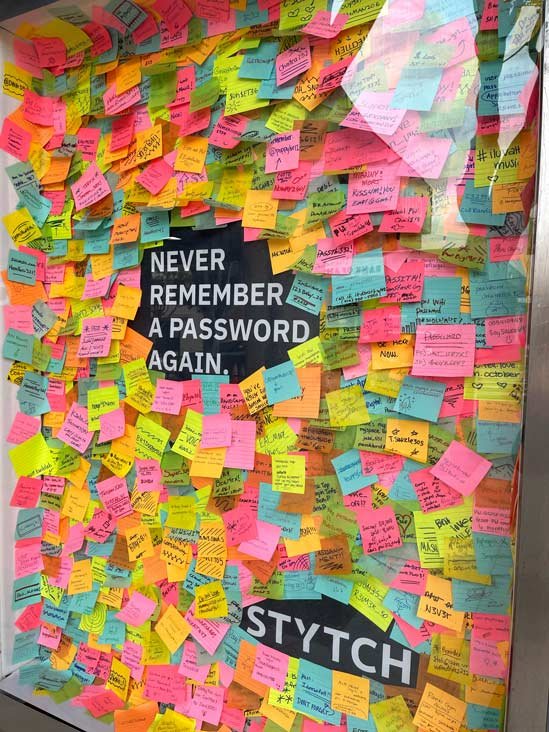
Our newest out-of-home ad campaign: More than 1,000 hand-written Post-it Notes make up each poster covering the streets of San Francisco letting people know they will soon “Never remember a password again” thanks to Stytch, secure, passwordless login technology.

Hatred of passwords is universal.

No matter what color state you live in or what language you speak, you speak ill of passwords. From the technophile to the Luddite, Gen Z to Gen X, Forever Trumpers and Never Trumpers, one of the few things the internet can actually agree on is our collective hatred of passwords.

That universal truth, that thing we can all agree on, that’s what we look for in advertising to create campaigns that make an emotional connection with people. Find that little piece of truth and make it big. That’s all great advertising does. It makes people feel something they already feel and then promotes something related to it.

Don’t you hate it when there’s just a drop of milk in the carton? Why yes, I should get off my fat ass and just do it. Finding that universal truth is what ad people do.  And the truth is, passwords make the internet a frustrating, incongruous collection of sputtering starts and stops - Login, reset, verify your account, enter this code, re-login, incorrect password, ping customer service, scream profanity, wake your sleeping spouse. You know the drill because we’ve all been there. And we all hate passwords.

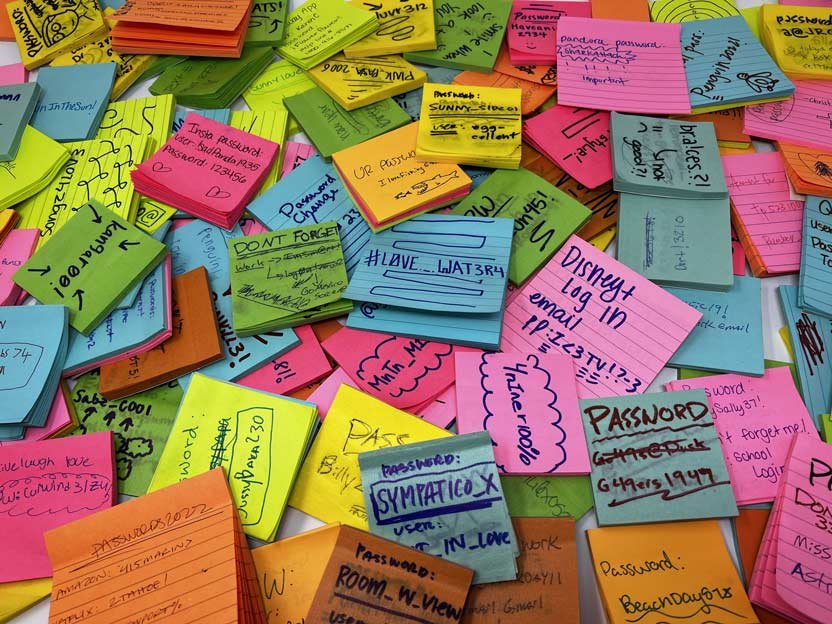
Hundreds of Post-it Note pads all hand-written.

A billboard from Stytch, Go Passwordless campaign by Division of Labor.

Enter Stytch, a San Francisco startup that just closed series B funding, with a billion-dollar valuation. Stytch founders Julianna Lamb and Reed McGinley-Stempel come from Plaid, so they know the sector, have the product, and are confident in their vision of a passwordless future. Their brief to us was a simple blog post with the title #KillThePassword. And that title is the strategic underpinning for our latest campaign.

One of the ways people try to remember all the passwords they have crammed into their brains is by writing them down on Post-it Notes and sticking them to computer screens, bulletin boards and cubicle walls. And we thought it would be pretty amazing to take all those sticky notes and cover billboards with them. A brilliantly colorful hodgepodge of notes, reminders, and passwords. An analog announcement that the world was going to be changing. Not a picture of Post-its or a computer-generated recreation, mind you, thousands of handwritten Post-its stuck onto billboards around the city. 

A reminder from Stytch and Division of Labor: Your dog’s name123 is not a password.

When we presented it they were like, “Yes! We love that idea!” And we were like, “Yes! Of course, you do because you’re amazing and smart and you have a billion-dollar startup as proof!”

So then we had to make it happen.

To do that you need a media guy like Kasper Koczab. Kasper arranged custom-built glass enclosures to house the hand-made boards. He arranged execution tests to ensure the backlighting would be right and got a local artist to assemble each board by hand. Then we ordered 10,000 Post-it Extremes and Post-it Super Stickies and got to work writing.

We brought in about 25 production assistants to create the notes during three marathon sessions with more multicolored Sharpies than I’d seen since high school art class. But by the deadline, we were still short by over a thousand notes. So we arranged one final Friday night Shabbat charity session, invited friends and donated $400 per finished Post-it Note pad to the relief efforts in Ukraine. Thirteen pads amounted to over $5000 raised and pushed us over the number of Post-its needed.

Ron Lester at Iron Maverick is a San Francisco artist and metal worker who took on the task of arranging each board and layering the thousands of notes so people could just barely read the headline “Never remember a password again.”

There are also buses covered in cryptic, password-style headlines like, d0nTUh8pA55w0rD5L1kETh15? And K1LLpA55W0rD5oNcE&4aLL! Plus about a billion other billboards, bus shelters and bulletins with reminders like “Your dog’s name123 is not a password.” And “The average person resets passwords more than they have sex.” The whole thing starts launching early April to tell the world they will soon be able to forget their passwords, permanently.

Trying to remember passwords does trigger a lot of profanity. But you can’t actually cuss on a billboard.

We’re so proud of this ad campaign. Huge thank you to everyone involved:

Julianna Lamb, Reed McGinley-Stempel, Ali Pulver, Aiden Forest

Rebecca Reid, Faruk Sagcan, Dom Haury, Vassil Vassilev, Dawn Margolis

Kasper Koczab, Ron Lester

All our Post-it Note creators:

Anita Avila, Maia Sullivan, Henry Denberg, Raney Wolfers, Hennessy Boyarski, Lincoln Brown, Gabriel Aal, Jordyn Okumura, Shivani Amin, Sachie Ohara, Dani Steinberg, Bella Hann, Dahlia Zail, Gabriel Lobet, Sophie Letts, Brit Norris, Julia Sigel, Masina Tufa, Julia Dearing, Colton Kitan, David Wong, Mary Friedman, Vanessa Friedman, Deb Toizer and Eric Toizer, Ellie and Lydia Reid, Nils Krueger, Nikita Sriram, Lauren and Cora Arebalo, Emma and Katelyn Daniel, Emma, Eva and Elissa Holyoke, Alessandra and Guiliana Mancini.


########

The Small Agency Blog is produced by Division of Labor; a top San Francisco ad agency and digital marketing firm that’s been named Small Agency of the Year twice by Ad Age. The award-winning creative shop services clients on a retainer or project basis. They also offer brand consulting services and hourly engagements for startups and smaller brands. Click here for a free consultation.


THE LARGEST OUT-OF-HOME CAMPAIGN EVER IN SAN FRANCISCO

To view more campaign executions click HERE.

As 2021 was winding down, our small, but mighty San Francisco-based ad agency got a call from a startup company called Hirect. They were already the number two hiring app in India. Annie Zhang, the co-founder, and her partner founded the app in her dorm room in 2018 and now have over a million-and-a-half registered users. 

We hadn’t heard of them because they hadn’t launched in America yet. Hence the call. Given our experience and Bay Area location, our ad agency gets a fair number of calls from startups. But this one was different. First off, it was Annie calling directly, not a marketing associate or assistant. This is her company, she’ll make the calls.

Second, she and the company were about to launch what’s believed to be the largest outdoor ad campaign in San Francisco history; over 500 pieces of creative throughout the city and around the Bay Area. And they needed an ad campaign. Fast. (Just to be clear, we don’t usually track out-of-home campaign spending dollar amounts, but Out of Home Today does. So we’re passing it on.)

Oh, did I mention this all happened the week before Thanksgiving and we were about to close up shop and leave town? Ya, that. But after we got off the call, we were impressed and intrigued. The product is a chat-based hiring app that lets founders connect directly with job candidates and vice versa. No portals or middle people or recruiters or “Let’s set up a Zoom call to start you on a long interview road to hell.”

One of the first boards to go up talked directly to startup founders. See more of the campaign HERE.

Just text with talent and hire them. Or text with founders and get hired. People get responses in seconds, not days, and hires happen in days not weeks.

The buy was starting in ten days and would launch fully in January. So they needed finished ideas in less than two weeks with copious amounts of turkey to be eaten in between. That’s an insane timeline. But if they were up to the challenge, so were we. 

We hung up, put a scope of work together, and sent it over around 5 pm. Just before midnight, we got back a signed copy and we were off. Twelve hours from meeting to scoping to signing. (I loved these people already.)

We quickly set out to learn everything we could about the company, the sector, the problem, and the target.  All this was occurring on planes, trains, and automobiles en route to our holiday gatherings. Did it put a bit of a crimp in our vacation plans?  For sure. But, on the bright side, working over the holidays gets you out of awkward family dinners and when your loved ones start talking politics it’s an excuse to duck out.

A few days into vacation we presented roughly ten campaign directions with 8-10 executions in each. Certainly, that’s overkill for a few launch boards, but we were gonna need a lot of executions to fill out the media plan. It was done by Kasper Koczab at Hirect’s financial partner, Brex, via their Billboard Rewards program. The plan was excellent. Well thought out with dramatic executions paired with consistency all over the city.

Another board was on a first name basis with the startup founder of all startup founders. See more HERE.

When we presented, Annie was on every call. Collaboration was easy and honest. They wanted to make a splash and be true to the brand they were building. Before we’d eaten any turkey or watched a lick of football, everyone had marching orders and directions were set. 

The first few boards hit the streets of San Francisco before I even made it back in town. And the rest was tied up and locked a few weeks later. Hundreds of executions went up across the city talking to startup founders, hopeful workers, and anyone else who had their eyes open.

Often times it takes months, and yes, sometimes even years for clients to commit to an idea and execute it. Hirect, true it its mission, knows how to get things done fast. So far, all measurements point to a hugely successful U.S. launch for the company. Congrats to a great client on a great campaign. See more of the campaign HERE.

########

The Small Agency Blog is produced by Division of Labor; a top San Francisco ad agency and digital marketing firm that’s been named Small Agency of the Year twice by Ad Age. The award-winning creative shop services clients on a retainer or project basis. They also offer brand consulting services and hourly engagements for startups and smaller brands. Click here for a free consultation.


Drinking wine is now work - Bogle Vineyards + Division of Labor

Understanding our client’s product is rule number one at Division of Labor. To that end, we moved the agency to Dropbox when we started working with the cloud storage company. We bought Roku’s for every TV when they were our client. And we went electric for our EV clients, Drive Clean Bay Area and VELOZ

And now that we’re working with Bogle Vineyards, it’s our job, our responsibility, actually, to sample every wine the vineyard produces. And, yes, it’s a tough job. But, we have a dedicated team that’s always willing to go that extra mile. That means blocking off time on our Google calendar for Pinot tasting. And, if necessary,  agency status meetings might get pushed to 4:30 to allow for more “tutorials.”

The Bogle + Division of Labor partnership kicked off in September and includes duties on all the signature Bogle wines as well as the Phantom brand. Our partnership is perfect because our personalities are very similar. Bogle isn’t one of those highfalutin vineyards that makes you feel uncultured because you can’t taste the “hints of rose petal and toasted almond notes.” Huh? And we’re certainly not that kind of ad agency. 

The classic Bogle Cabernet Sauvignon is a crowd pleaser. The Phantom Red Blend is also a winner.

52745P-Bogle-nv-Red-Phantom-Color.jpg

Bogle is a family vineyard, still run by the Bogle family and they make the best $10 bottle of wine on the market. Yep,  the humble $10 bottle is their bread and butter. They want wines that are approachable and easy to drink for regular folk.  And they sell it at Target, Cost Plus, Safeway, and Trader Joe. (But don’t worry, people who shop at Whole Foods will find it there too.) And Bogle gets plenty of internet media love as a standout in the great-tasting, affordable wine category. Food and Wine, for example, gave our client a shout-out last spring on a list of affordable red wines under $15.  Ditto for Good Housekeeping who mentioned Bogle in a piece titled 21 Wines that are Cheap in Price, But Not in Taste. 

Bogle has a strong strategic platform already in place. They know their market. They know their buyers and their retail distribution is well established. But wine at this level is often an impulse purchase. Eighty percent of the decision-making happens at the point of purchase while looking at labels. And with retail becoming more and more digital, the purchase process is longer, with more consumer touchpoints along the way. 

And that’s where a good ad campaign can really influence outcomes. Becoming top of mind earlier and remaining in people’s thoughts longer can influence a consumer’s reaction to in-store materials, including the label. We’ll be developing campaigns with multiple touchpoints around promotional messages that are uniquely Bogle.

Finding wine brands that stand out these days is tough. The reality is that wine advertising has been lacking in attitude and ideas for years. Lot’s of bottle shots, pour shots, vineyard shots and grape shots, yes. But, in the end,  not a lot of big ideas. 

There are exceptions, of course, like this campaign by Chiat in London during the heart of the pandemic lockdowns for Hun.

Hun wine campaign is an example of great advertising.

Hun wine campaign is an example of great advertising.

Of course, the vintage wine posters from back in the day are a treasure. Like this one for Prunelle Du Velay. And who could forget Orson Wells for Paul Masson? “Paul Masson will sell no wine…DEEP DRAMATIC PAUSE…before it’s time.”

But for now, we’re raising a glass to our new clients at Bogle and expecting some great campaigns that sell a lot of hooch in 2022. In the meantime, we’ll be hard at work “testing product” and tweaking the creative.  We’ll keep you posted on our launch. 

80879.jpg
paul-masson.jpg

########

The Small Agency Blog is produced by Division of Labor; a top San Francisco ad agency and digital marketing firm that’s been named Small Agency of the Year twice by Ad Age. The award-winning creative shop services clients on a retainer or project basis. They also offer brand consulting services and hourly engagements for startups and smaller brands. Click here for a free consultation.


How to Launch a Brand in Three Short Months

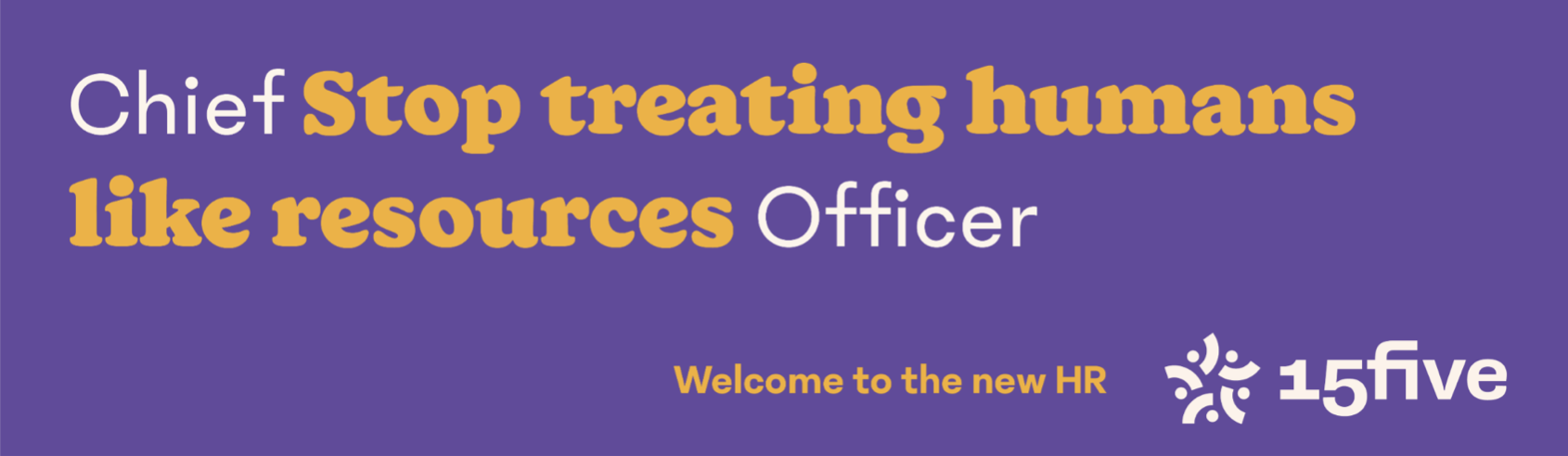
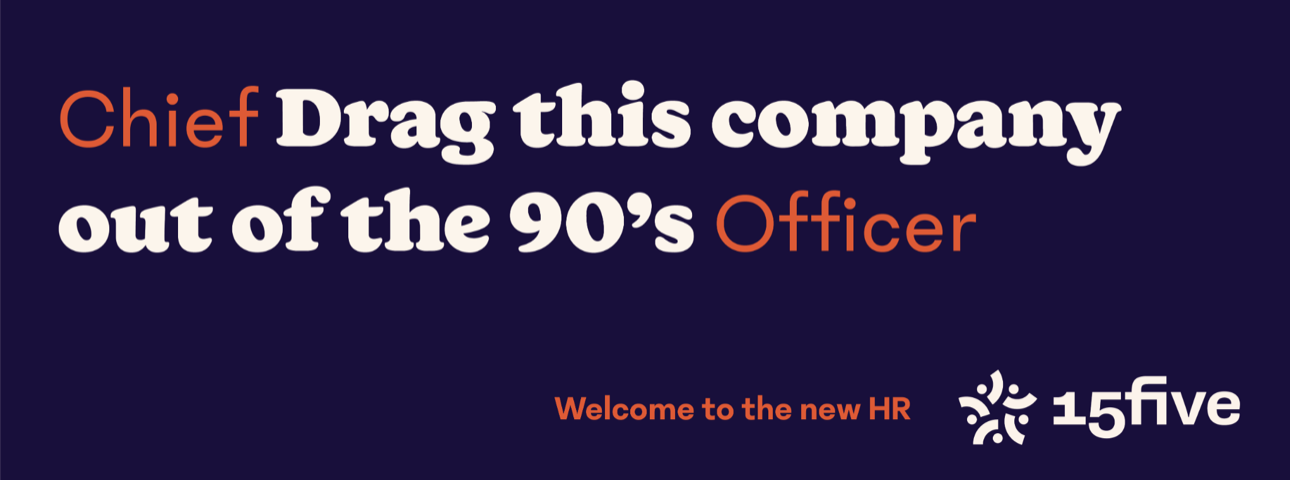
Division of Labor’s new ad campaign for 15Five.

Division of Labor’s new ad campaign for 15Five.

We won some new business this past April and launched our new client’s first-ever brand campaign this past August. The process from award to launch was incredibly efficient, which is rarely the case. Why? Well, to launch a campaign quickly, there is one major thing that must be done over and over again throughout the process. What is that thing?

Job One: Make Decisions

The client we’re talking about is 15Five. They're a major player in the employee engagement space. They’ve got a great product, but they’ve also got something many companies do not have; a decisive management team. Decisiveness is what separates the good from the great. The brunt of efficiency problems comes from delayed decision-making, or making decisions and then changing decisions. Or making decisions, changing the decision, and then showing what was intended to be the final decision to someone higher up the corporate ladder who actually has the final say. And then this new decision-maker eighty-sixes all the previous decision-maker’s decisions and now you’re back to square one. Sound familiar?

A well-run brand launch is best approached as one big decision tree. As you move through the process, you have to be decisive and never look back. This latest process was three-plus months start to finish:

Strategy workshop in May. 

Develop creative in June. 

Production in July. 

Launch in August. 

Make a shit-ton of hard decisions along the way.

Out of home advertising from Division of Labor and 15Five

Out of home advertising from Division of Labor and 15Five

The strategy workshop brought all the company players into one virtual room where we explored everything they could possibly say or stand for. (We run good strategy workshops; fast, fun, insightful plus there’s coffee cake.) From there, they had to decide on targeting, brand persona, archetype, main purpose, and a ton of other things that are all important but must be prioritized.

The next step is the creative brief which compiles the results of the workshop into a simple, pointed document used to brief creative teams. Give the brief to any team and they will know everything needed to communicate the brand. (It’s easy to un-decide things in this phase, so be careful.)

Four creative campaigns were presented and the team quickly eliminated two ideas and kept the two that they loved. They did not ask us to bring in other elements from other campaigns. Nor did they consult with their book clubs, spouses, therapists, investors, advisors, children or spiritualists. They decided which they liked best, and stuck with it.

Media plans were developed based on the creative and creative was revised to accommodate media. The client had to get serious about media spend and decide on a budget level for launch. This is a crucial point where delays can happen as the reality of spending money kicks in.

We then presented a production plan and prepared to brief our digital artists, designers, and producers. We presented everything via Google Sheets and in a Slack Channel and all along the way our clients could make comments, choices, and decisions.

They built out landing pages, prepared PPC, SEO, and organic planning. Then we all built out tracking and analytics plans and launched the campaign.

When does this decision need to be made?

Making decisions is easier when you know the effect of your decision. Is it permanent? Is it reversible? Is it crucial to the timeline? In every meeting they asked questions like:

What decisions do we need to make now?

Can you post our options and deadlines in the Slack channel?

What will you be doing next and what decisions will we need to make next?

These are the kinds of questions that need to be asked if you want to launch a campaign quickly. And if you want to make good decisions along the way. In the end, we have a shiny new campaign and, wait… what does 15Five do, actually? Ah, thanks for asking. 

Basically, 15Five helps companies treat their employees better. And helps HR people revolutionize what we all think of HR. Their software helps learn what your employees actually think and does away with the yearly review process. 15Five will increase employee retention and engagement while helping companies behave better.

The entire employee engagement space has been blowing up the past five years as evidenced by all the articles out there including this recent one in Forbes, which is far more relevant and trustworthy than the blog of a small, independent ad agency.

So there you go. How to launch a brand campaign efficiently and some news about the employee engagement space and 15Five.

Thank you Julia Stead and Greg Hewitt and everyone at 15Five. Plus Dustin Smith, Rob Lee, Faruk Sagcan, Rebecca Reid, 29 Black, Rigved Sathe, Resize Guys etc.

The Chief Human Resources Officer is evolving. And 15Five is leading the way.

The Chief Human Resources Officer is evolving. And 15Five is leading the way.

########

The Small Agency Blog is produced by Division of Labor; a top San Francisco ad agency and digital marketing firm that’s been named Small Agency of the Year twice by Ad Age. The award-winning creative shop services clients on a retainer or project basis. They also offer brand consulting services and hourly engagements for startups and smaller brands. Click here for a free consultation.




Toddler interrupts Ad Agency Zoom call. Staffers Feign Interest.

A creative director’s toddler interrupting the ad agency Zoom meeting.

A creative director’s toddler interrupting the ad agency Zoom meeting.

A San Francisco ad agency status meeting was brought to an abrupt halt Monday by an attention-seeking three-year-old who also happens to be the son of executive creative director, Tom Goodman.  

The child boldly entered the meeting dressed as Spider-Man and wielding a sippy cup full of oat milk. 

At first, he could only be seen at the edge of the frame spinning in circles and muttering something akin to “Dada boo boo, Dada boo boo.” Eventually, he got so dizzy, he fell to the ground and bumped his head,” notes production assistant Cathy Callaway. “But then he caught a second wind, popped up, and began licking the laptop camera.”

Agency staffers, initially caught off guard by the interruption, didn’t know how to react. “We assumed Tom would holler for the nanny to collect the kid, but instead he began clapping along, singing the Spider-Man theme song,” says junior copywriter, Jenny Evans. 

While those in attendance undoubtedly found the intrusion annoying, they embraced the opportunity to suck up to their boss by feigning interest in the child’s onscreen antics. 

Kelly Bauer, account exec on the coveted Scaredy Cat Kitty Litter account, jumped in first with comments like,  “Wow, is that really Peter Parker?” and “Don’t wrap me in your web, Spidey!” The toddler, who goes by the name Satchel, responded to Bauer’s pandering with the nonsensical retort, “I’m wearing  poopie shirt.” Satchel then squealed and dragged his grubby fingers across his father’s keyboard. Then, for no particular reason, he added: “You a toilet face.”  

A few of the action figures displayed during the meeting: Aqua Man, Green Lantern, and the Waldorf-inspired Stick Man.

A few of the action figures displayed during the meeting: Aqua Man, Green Lantern, and the Waldorf-inspired Stick Man.

Emboldened by the attention, however, the child seized the opportunity to introduce the group to his rather large collection of action figures while his father kept repeating, “And who’s that?” The beleaguered staff listened attentively as the kid ticked off the names of nearly a dozen superheroes, including Aqua Man, the Green Lantern, and Stick Man—a Waldorf-inspired figurine that’s really just a hunk of driftwood. 

Undeterred by the toddler’s incessant rant, one digital marketing firm staffer, Dwayne Clutterbuck went so far as to request, “Spider-Man, will you help us with an ad campaign!” Satchel wisely ignored this request.  Those in the know speculate that the toddler may have instinctively known that Clutterbuck has a reputation for passing his work off onto others. 

The interruption was going on nearly five minutes when project manager, Denise Cartwright Blurted out “Your Spidey Sense should tell you we have a lot of work to do.” Asked about it later, Cartwright said, “I thought I was on mute, but I’m kinda glad he heard.” 

At press time, Cartwright had not yet been passed over for a promotion for suggesting her boss's child should be seen and not heard.

########

The Small Agency Blog is produced by Division of Labor; a top San Francisco ad agency and digital marketing firm that’s been named Small Agency of the Year twice by Ad Age. The award-winning creative shop services clients on a retainer or project basis. They also offer brand consulting services and hourly engagements for startups and smaller brands. Click here for a free consultation.