How Much Does it Cost to Hire an Ad Agency?

How much does it cost to hire a top San Francisco Ad Agency?

How much does it cost to hire a top San Francisco Ad Agency?

We get this question a lot. And it sure would be nice if you could price an ad campaign like a rump roast or a haircut or a bikini wax, But it really does depend on a number of factors. That said, what a product costs shouldn’t be a secret. So we’re gonna do our best to give you a simple answer.

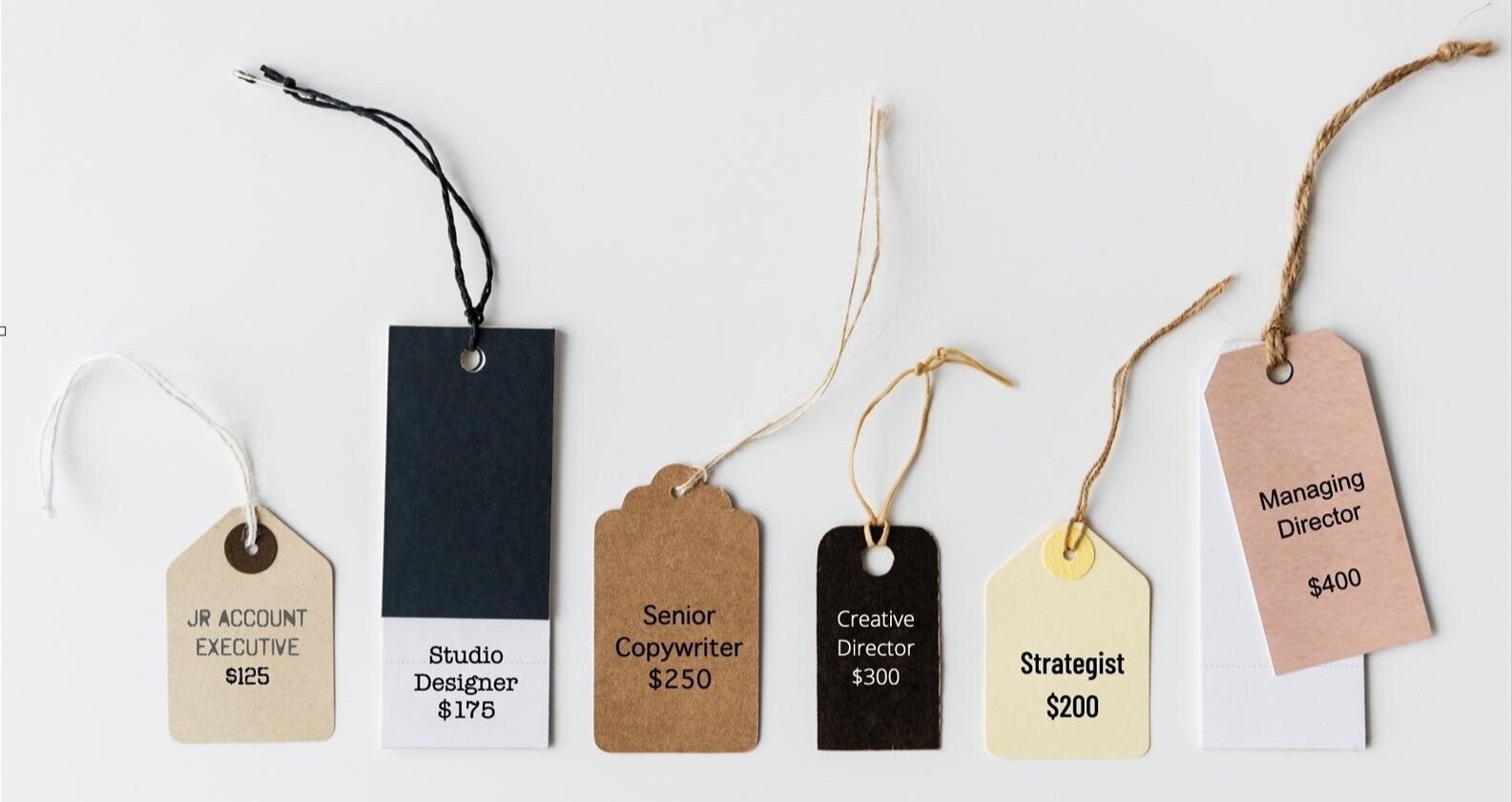
Ad agencies and digital marketing firms charge clients an hourly rate for each person working on the client’s project. Every person at the ad agency is billed out by the hour. Every agency has a rate sheet you can request. You just need to know you can ask for it. (You know, like animal-style fries at In N’ Out Burger.) Junior account executives might be $125 an hour while a managing director might be $400. Ask for the agency’s blended rate to get their average hourly, which is somewhere between $225 and $300 these days.

That’s what an agency costs. But how much will it cost you? Now, this is where it gets tougher. Tell the agency what you need to accomplish, a general marketing budget, and they’ll give you a Scope of Work outlining the services they’ll provide along with a proposed timeline for deliverables and an estimated cost for each deliverable.

NOTE: There’s no charge for beer, gummies, video games, hipster beard cream, or ironic T-shirts.

Generally speaking, bigger agencies’ hourly rates are higher than smaller independent shops, because they have a lot more overhead. Also, a client spending only on social media ads would pay an agency a lot less than a client doing a multimedia, national campaign. Because the latter requires a lot more time and money to develop, produce and execute. 

Ironic T-shirts are included within the hourly rates of ad agency and digital marketing firm fees.

Ironic T-shirts are included within the hourly rates of ad agency and digital marketing firm fees.

Some agencies, Division of Labor among them, will take on small projects for a flat, package rate. This allows us to engage with startups and companies with smaller budgets. We also break from traditional agency pricing and offer consulting and in-house freelance services.

Couldn’t I do it myself for tons less?

You can.  Everything you ask an agency to do, you could do much cheaper on your own. You could go to Facebook or Instagram, pull down their ad campaign tools and start making ads. You could buy a lightbox, photograph your products, pull them into Photoshop to create designs, and write headlines and copy that bring your brand to life. You could write a script and ask your TikTok-making daughter and her friends to shoot a video for you and pay them a fraction of what you’ll pay an ad agency. 

Some companies have had tremendous success creating and producing amazing videos and ad campaigns on their own; DollarShaveClub is brilliant, for example. If you have a gregarious founder and can write and produce something on your own, go for it. If it sucks, you can hire an agency later. If it’s great, fuck the agency.

But, generally speaking, the people who know how to create a product, manage a staff and scale a business (clients) have a totally different skill set than the people who know how to market a business (ad agencies). 

Dollar Shave Club made their first video on their own and have since built up an amazing internal department.

Dollar Shave Club made their first video on their own and have since built up an amazing internal department.

Why should I Pay an Ad Agency Before I See What Ideas They Have?

This is a great question. Why should you? 

Restaurants don’t cook meals for you hoping you’ll like the food and decide to pay them. Lawyers won’t work on your case for six months hoping you like the outcome and decide to pay them. Accountants don’t do your taxes hoping you like the way the math works out and decide to pay them. (This section could go on longer, but you get the idea.)

The fish counter doesn’t work like this.

The fish counter doesn’t work like this.

You’re paying an ad agency for their thinking, their strategic planning, their problem solving, design skills, writing, and most of all, for their ideas. So they can’t do it for free.

But there is another way. Try this; Search “top ad agency San Francisco” or “best digital marketing companies San Francisco” or something else in the Google. Look at what each agency has done for other clients and narrow it down to a few agencies you like. Have a call with each and ask for a credentials presentation.

Then hire two or three agencies for the same small project. Pay each agency for the project. And agree to give the agency you like best a larger project after you’ve worked with each of them. It’s a great way to see what they’re really like and what they’re capable of. 

How do I know what our budget should be?

When figuring out your marketing budget, know there are three different things you pay for: Paid Media, Production, Agency Fees

Paid Media is usually the biggest cost. This is how much you pay to a TV network or a streaming service to run your commercial. Or how much you pay Facebook or Instagram to run your promoted video or ads. 

Ad agencies develop media strategies, create media plans, buy the media, measure effectiveness, optimize the campaign, give you weekly reports and use their knowledge to secure the best media at the best rates. For that, the agency takes a percentage as a fee; typically between 5% and 18% depending on the media and depending on the agency.

Production costs are what you need to spend to make your campaign. Filming the videos, recording the commercials, photographing things for billboards, coding banners and social media, developing digital and social executions of all shapes and sizes. Agencies oversee production and hire all the production companies needed to get everything made in all the required sizes and formats and then distribute all the assets to the media outlets. Agencies are paid for their time to oversee production and/or they can mark up the production costs.

Agency fees are the hourly costs you pay the agency for their time to do strategy sessions, digital planning, workshops, creative presentations, research, revisions, Zoom calls and late-night panicked phone calls. Plus SEO, SEM, PPC, social channel management, all the meetings, and anything else you might ask the agency staff to do for you.

So that’s how much an ad agency costs. If you made it this far without the costs making you throw up in your mouth, check out DivisionofLabor.com 

########

The Small Agency Blog is produced by Division of Labor; a top San Francisco ad agency and digital marketing firm that’s been named Small Agency of the Year twice by Ad Age. The award-winning creative shop services clients on a retainer or project basis. They also offer brand consulting services and hourly engagements for startups and smaller brands. Click here for a free consultation. 


New Ad Campaign Helps San Francisco's Foster Kids Find Local Homes

Illustrations for Foster Child Placement ad campaign.

In late February of 2020, we launched our first campaign for Foster SF and San Francisco’s Human Services Agency. The goal: Find foster families and foster homes for the city’s most vulnerable citizens.

 The campaign hit all the marks in terms of website traffic and inquiry calls. But it’s tough to reach your full potential when you launch an outdoor campaign during a pandemic-induced lockdown. “Much of the media buy was OOH, which doesn’t work so well when the city was asked to shelter in place,” explains Josh Denberg, Division of Labor Advertising’s chief creative officer.

Then came the crashing economy, riots, and record-setting wildfires, these external forces didn’t exactly help in our quest to find viable foster homes. And when there are no homes available in San Francisco, these already traumatized kids were forced to move out of the city for placement elsewhere. It’s a tragedy on top of tragedy because, in addition to being separated from their parents, they also get separated from friends, classmates, teachers, and a familiar community.  And, to that end, it’s Foster SF’s mission to do everything they can to prevent that from happening.

Last year’s messaging relied heavily on humor. But for this year’s campaign, the creative team agreed that a change of tone more in keeping with the state of the world was imperative. “We needed an approach that was both strategic and empathetic,” says Denberg.

Social media images from Foster-SF advertising campaign.

DOL’s, creative director, Faruk Sagcan, quickly figured out how to do just that. His idea focused on what happens when Foster kids are forced out of The City. He proposed illustrations of San Francisco’s most iconic landmarks, but with a piece of the landmark removed. The message: “When Foster Kids are placed outside San Francisco, we lose a piece of The City.” Executions include the Golden Gate Bridge minus one tower, a gateless entrance to China Town, and the Painted Ladies sans one of its ladies.

 For media, we focused almost entirely on digital and social, plus a few pole banners strategically placed along main city arteries. Hopefully, we can get the caregiver families needed to get these kids back to San Francisco. After all, it’s been a tough year for everyone. But even tougher on foster kids.

We’re honored to work with the San Francisco Human Services Agency and have high hopes for this year’s campaign.

########

The Small Agency Blog is produced by Division of Labor; a top San Francisco ad agency and digital marketing firm that’s been named Small Agency of the Year twice by Ad Age. The award-winning creative shop services clients on a retainer or project basis. They also offer brand consulting services and hourly engagements for startups and smaller brands. Click here for a free consultation. 


OOH Today Features Division of Labor Advertising as its Agency of the Day.

Quick shout out to OOH Today for featuring Division of Labor as the Agency of the Day. We always welcome positive press. And it’s an especially gratifying way to begin the new year. As we mentioned in our last blog post, we have high hopes for 2021, as a company, but also for the ad community, our country, and the world at large. So cheers to 2021 and starting off the year right. And, special thanks to reporter, Will Farmer for taking the time to write this piece.

One of several billboards in an OOH ad campaign for Lively HSA.

One of several billboards in an OOH ad campaign for Lively HSA.

The Ad Agency. Not the Government Agency

By No Fear No Favor Last updated Jan 4, 2021


Screen Shot 2021-01-04 at 2.04.08 PM.png

by Will Farmer
OOH Today
Media and Communications Manager

Division of Labor is an independent, San Francisco advertising agency. They develop strategies and creative campaigns to promote brands and sell products across all media platforms, including out of home.

Josh Denberg, founder and chief creative officer at Division of Labor Advertising.

Josh Denberg, founder and chief creative officer at Division of Labor Advertising.

Josh Denberg is the chief creative director and founder of Division of Labor. On top of his work with Division of Labor, Denberg also directs commercials and wrote a book titled “Stop Tweeting Boring Shit.” Additionally, he changes lightbulbs when they go out in the office. He’s a pretty good guy.


We had the chance to talk to Denberg. Here’s what he had to say about his company:

Interview with Josh Denberg, Founder and Creative Director at Division of Labor

 Will Farmer: Could you tell us about Division of Labor. How long have you been in business? Staffing? Size? Specialties? Billing? Regional Offices?

Josh Denberg: Division of Labor started in 2010 with projects from Microsoft and Nike and has worked with clients like Dropbox, Roku, Ford Motor Company, Live Nation TBS and the San Jose Sharks. We are between 6 and 10 people in the office before COVID but have project workers and freelancers around the world.


WF: What would you like brands and the OOH Industry to know about your shop?

JD: Our philosophy is, “Drop a bomb in the room and then throw in the leaflets.” Meaning, get attention with something big and emotional first and then follow up with rational benefits. We believe outdoor is the perfect medium for a digital age because it gets attention and gets people to Google. Digital and social can support from there.

One of DoL’s out-of-home billboards for Headlands Brewing in downtown San Francisco.

WF: Do you work with clients directly and/or through agencies? What is the percentage breakdown?

JD: As an ad agency, we work directly with clients and outdoor is often part of the integrated campaigns we create and produce.


WF: Any comments or suggestions for OOH reps in approaching or working with your company?

JD: Being able to see the locations both on a map and from a consumer perspective is most helpful.

advertisement for Wrapify

 WF: What is your most memorable new business pitch?

JD: Our latest pitch win for Keen Shoes was most memorable because at 10 pm the night before the pitch, someone hit a button on the shared digital presentation and all the slides started disappearing!!! After some panic and %$#@ing, we found the digital restoration in our Time Machine, and life came back to normal.

 WF: What differentiates your business from others?

JD: We focus on great creative and results. Both are required in every project.

Out-of-home was used along with social and digital to build awareness for PagerDuty.


WF: How do you obtain new business?

JD: Clients often find us just by searching “Best Creative Agency San Francisco.” Our past work and reputation are what we rely on.


WF: Can you discuss some recent OOH campaigns?

JD: We’ve been creating award-winning and effective outdoor campaigns for over 20 years. We can turn around ideas in just a few days. Have a look at some of the outdoor we’ve done over the years: 

The SFMOMA See Them Both campaign increased museum traffic by nearly 50%.

For the San Francisco Museum of Modern Art, we created a simple, visual campaign that matched famous San Francisco tourist attractions with famous works of art from the museum.

 This Roku outdoor campaign went up in six major cities. Bold design and getting people to laugh were the keys to a 30% holiday sales boost in every city that had a campaign.

This holiday ad campaign was a game changer for Roku making them the leader in streaming TV.

This holiday ad campaign was a game changer for Roku and digital streaming as a way to view TV.

Sticking your logo on a billboard is not enough to stand out these days. Today’s outdoor can also be a digital video. And taking advantage of great media placement with compelling creative is often the difference between success and failure.

 Website
http://www.DivisionofLabor.com

Industry
Marketing & Advertising

Company size
2-10 employees

Headquarters
Sausalito, CA

Type
Privately Held

Phone
415-944-8185

Email
Info@divisionoflabor.com

#######

The Small Agency Blog is produced by Division of Labor; a top San Francisco ad agency and digital marketing firm that’s been named Small Agency of the Year twice by Ad Age. The award-winning creative shop services clients on a retainer or project basis. They also offer brand consulting services and hourly engagements for startups and smaller brands. Click here for a free consultation. 


Who Says Traditional TV Advertising is Dead


There is strong evidence that TV is still incredibly relevant as part of an overall advertising media mix.

There is strong evidence that TV is still incredibly relevant as part of an overall advertising media mix.

This post is from our partners at Palisades Media. If TV advertising was dead, they’d know it.

While the industry continues to discuss the demise of traditional” TV as we know it, has anyone bothered to share this information with the top streaming video services looking to gain awareness and viewers? 

If so, based on recently reported spending within the “dying” medium, the streaming services are not listening. The biggest streaming platforms – Amazon Prime, Apple TV, Disney+, HBO, Hulu, and Sling TV, collectively spent half a billion dollars on “traditional” TV and Cable platforms in the past three years.  The most recent 12-month period represents the highest TV and Cable spend to date at $252MM, a 137% increase over the previous 12-month period.

Screen Shot 2020-10-22 at 9.53.41 PM.png

Streaming advertisers continue to join in on National TV activity, even with the pandemic. Those who added National TV activity to their mix for the first time during the first half of 2020 include AT&T TV, Quibi, Peacock, and HBO Max, who collectively spent about $90MM during their first advertising foray into the medium at the beginning of this year according to a recent VAB report.

Screen-Shot-2020-10-22-at-9.53.59-PM.jpg

This might resonate for anyone who watched the Emmy Awards on Linear TV in September and recall seeing any number of streaming advertisers in the Primetime show, including Peacock, Apple+, HBO Max, Showtime, Hulu, Disney+, and Amazon Prime - just to name a few.

And it is not just the streaming services who are in on the game.  According to Moffett Nathanson Research, big brand technology companies like Amazon, Alphabet, Apple, Microsoft, eBay, and Facebook spent an estimated 20% of their media budgets on television in 2019.

So, what is the secret?  Why dump so much money, effort, and messaging into a decaying dinosaur of a medium that nobody watches?  Could it be, perhaps, that there is a large audience still watching? Sure enough, the numbers prove that most Americans are still spending the majority of their free time watching TV the old-fashioned way.  While industry reports tend to focus on the increased growth of streaming video viewing, which is correct, the reports tend to offer little in context on the size of the growing streaming audience versus the size of the shrinking TV audience.  

According to Nielsen, as of Q2 2020, streaming comprised one-fourth of all television minutes viewed.  True? Yes.  Impressive, maybe?  However, the flip side gives some additional context: Live+Time Shifted TV still comprises 75% of all television minutes viewed.  That’s nearly 4 hours and 30 minutes per day for the average A18+, compared to 1 hour and 6 minutes of streaming. 

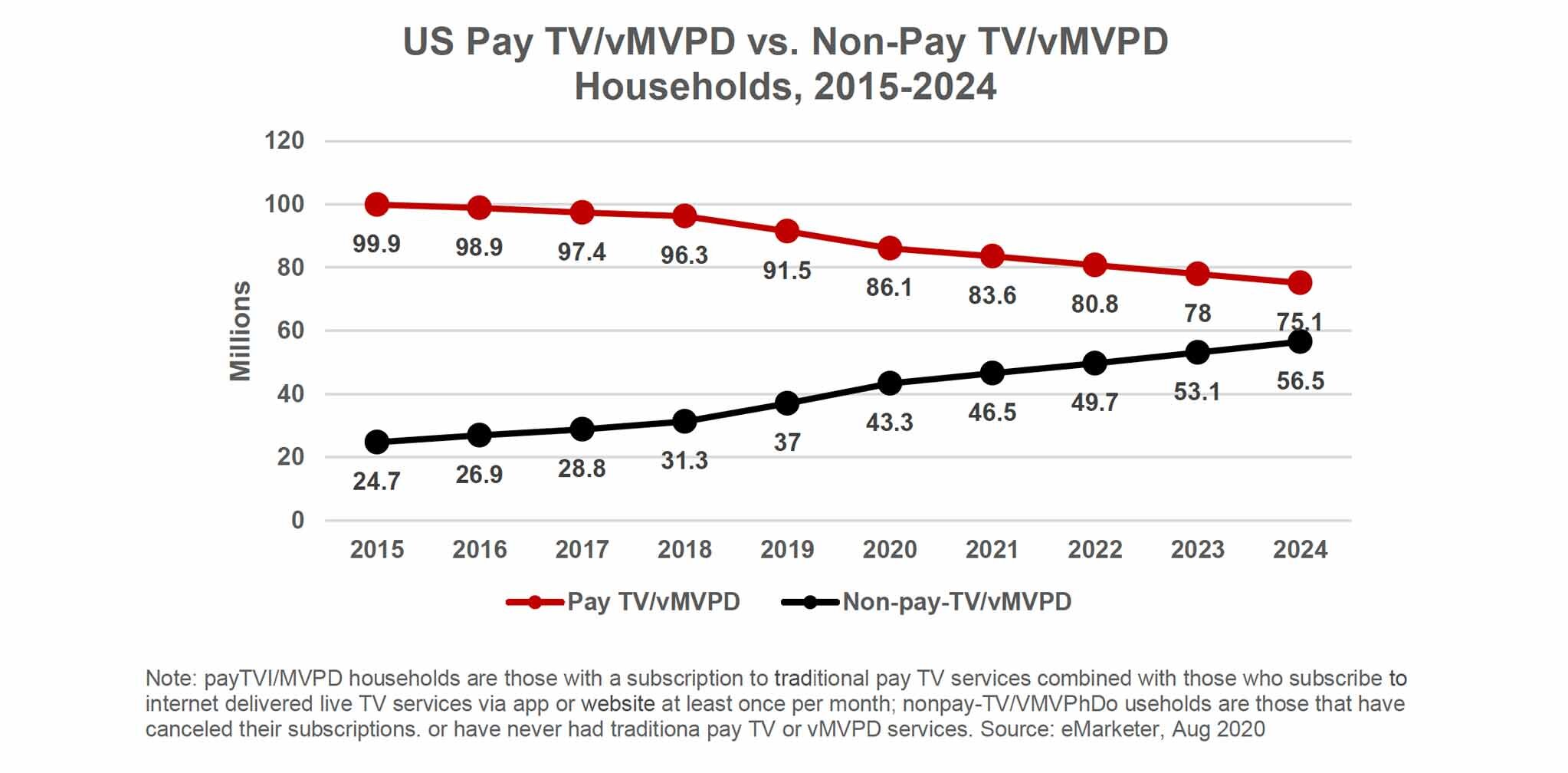
As eMarketer recently reported, this year 86.1 million US households will have Pay TV/vMVPD, a 5.9% year-over-year decrease.  Even with this decrease Pay TV/vMVPD households remain double that of Non-Pay TV/vMVPD households.  And, looking ahead to 2024, it is projected that Pay TV/vMVPD will still be in 33% more households than Non-Pay TV/vMVPD. 

And audience size matters.  According to Nielsen, as of Q1 2020 Live + Time-Shifted TV reaches 85% of A18+ on a weekly basis, compared with 49% reach for an Internet-Connected Device.  TV remains the dominant video platform to maximize reach. 

Screen-Shot-2020-10-22-at-9.54.13-PM.jpg


The emerging content platforms that the industry claims are going to be the death of traditional television continue to build and promote their brands and programming the good old-fashioned way.  If TV helped build awareness for Disney+, who is estimated to hit 72.4 million US monthly viewers in 2020, just think what it can do for your brand message.  So, don’t listen to the naysayers. TV is NOT dead by any stretch of the imagination. 

This guest post from our friends at Palisades Media Group. Thanks, Genevieve Wiersema, SVP, Group Director of Strategy, for sharing your POV with Division of Labor Blog readers.


###

The Small Agency Blog is produced by Division of Labor; a top San Francisco creative agency and digital marketing firm that’s been named Small Agency of the Year twice by Ad Age. The award-winning creative agency services clients on a retainer or project basis. They also offer freelance services and fixed-rate projects for startups and smaller brands.


Five Tips to Perfect Your Advertising, Award Show Humblebrag

Photo Caption: Make sure your humblebrag sucks up to your co-honorees. Read on for details.

Photo Caption: Make sure your humblebrag sucks up to your co-honorees. Read on for details.

When it comes to smoke and mirrors the advertising industry is second only to magicians and illusionists. So it should come as no surprise, that no one has perfected the humblebrag like a seasoned ad executive. Nonetheless, in an industry glutted with self-congratulatory award shows, how can you make sure your ad exec humblebrag stands out from the competition?

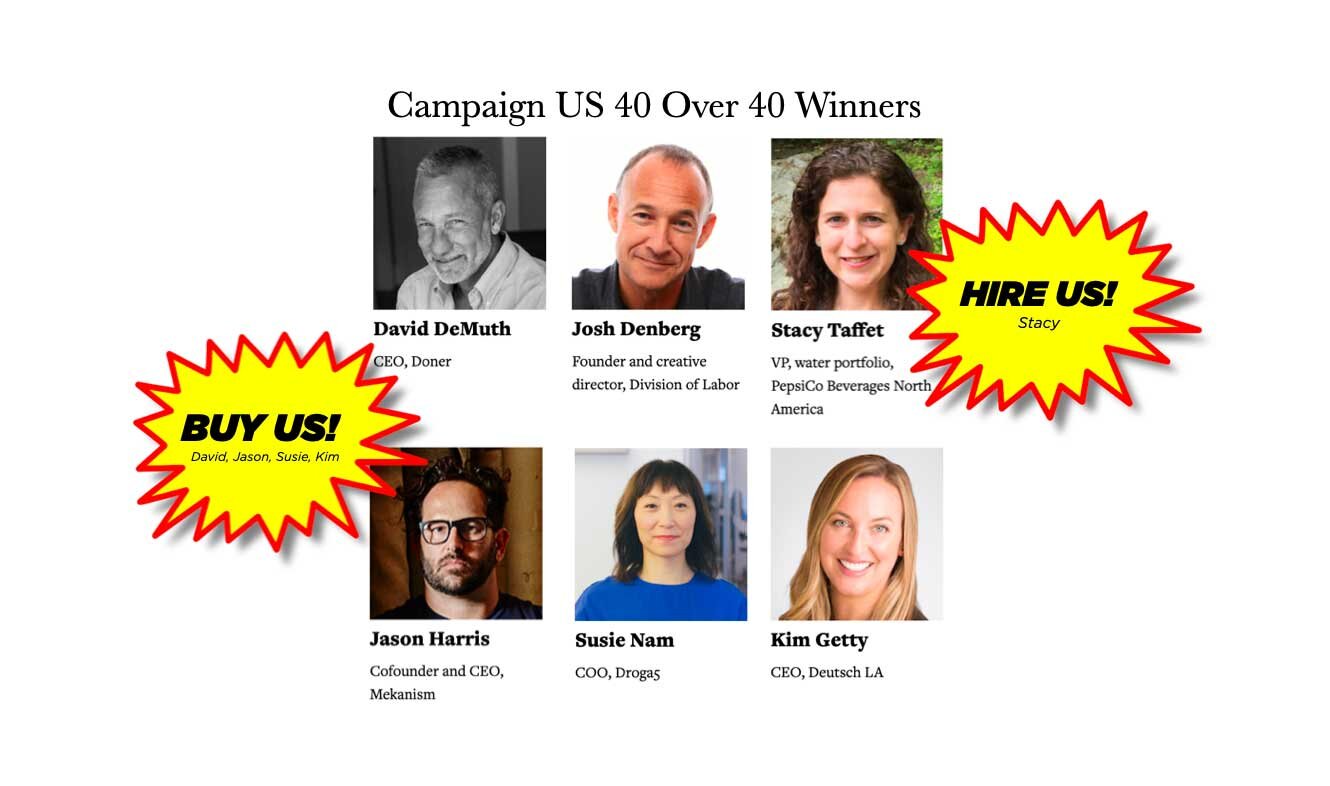
Let’s say, for example, you run a boutique ad agency in San Francisco and you’ve won something kind of awesome, like, I don’t know. . . say . . . Campaign US’ Forty Over Forty award. Well, there are numerous ways one might approach the announcement of the said accolade. 

 No. 1 - The Simple, “Proud and Humbled”

The Proud and Humbled is the classic humblebrag and should accompany a link to the award announcement with a headline like, “Proud and humbled to be honored on Campaign US’ Magazine’s 40 over 40 list.” Variations include the “Surprised and Honored,” “Stunned but Thrilled. ” It’s, of course, also customary to post your humblebrag along with a picture from ten plus years ago creating the misimpression that you are not only successful, but also aging better than your colleagues. The beauty of the “Proud and Humbled” is the way it fits perfectly with the advertising industry’s ethos of being just barely half true. Because if you were actually humbled, you wouldn’t post anything at all.


No. 2 - The Self-Promotion with a Side of Suck-Up

This technique takes the simple “Proud and Humbled” a step further by also stroking the ego of a co-honoree who might further your career at some future date. If, for example, you’re the founder of a small, independent ad agency and would like nothing more than to get bought by a larger firm for gobs of money, switch up the wording a bit and suck-up to specific co-honorees with something like, “Proud and humbled to be honored on Campaign US’ 40 over 40 list, along with some of our industry’s greatest talents, including Kim Getty at Deutsch, Jason Harris at Mekanism and Susie Nam at Droga5.”  Alternately, use the opportunity to brown-nose a potential new client with: “Proud and humbled, to be honored by Campaign US’ 40 over 40 list, alongside Stacy Taffet, VP of PepsiCo’s Water Portfolio.  

No. 3 - Force Your Employees to announce It For You

Worried you’ll sound like a douche bag tooting your own horn? It’s easy to circumnavigate this problem and still get the publicity you crave and let’s face it, you deserve. As the boss, you can subtly suggest to your direct reports to use their social media feeds to promote your not-quite a Pulitzer accomplishment. (This method works particularly well during a pandemic when employees are scared shitless about losing their job.)

 No. 4 - Pay an influencer

Why just force your employees to humblebrag for you when you can get complete strangers to do it for you? All you need is a few dollars and a true commitment to your ego. There are plenty of advertising blogs that would love to tell their readers about the Campaign US’, 40 over 40 honorees list, and every one of them will improve your SEO by adding backlinks and will give you an additional humblebrag opportunity to use your, “Thanks for the mention” humblebrag technique.  Or, you could experiment with sites like Grin, Brandbassador, or Instagram and pay influencers to Tweet about you for a few thousand dollars. Ultimately, isn’t it really a fraction of what it probably costs you in entry fees to “win” your award to begin with?


Photo Caption: Make sure your humblebrag photo is from at least 10 years ago.

Photo Caption: Make sure your humblebrag photo is from at least 10 years ago.

No. 5 Write a Self-Deprecating Blog Post to Mask Your True Intent

If you’re the founder of a small, ad agency and digital content studio, you could simply write a blog post about the art of the humblebrag never mentioning the fact that you are the one who has been chosen as a 2020 Campaign US 40 over 40 Honoree. If you go this route, it is important to wait until the very end of the blog post to combine all the techniques into one final line that says something like, “Hell yes, it’s about friggin time I got some recognition, Kim, Jason, Susie, we’re good and for sale. Stacy, how about a project? And everyone at Division of Labor, feel free to repost this blog, or you’re fired. And Campaign US, how about you post this? Do it and we’ll send you a deli basket from Zabar’s.”  


###

The Small Agency Blog is produced by Division of Labor; a top San Francisco creative agency and digital marketing firm that’s been named Small Agency of the Year twice by Ad Age. The award-winning creative agency services clients on a retainer or project basis. They also offer freelance services and fixed-rate projects for startups and smaller brands.


TEN THINGS TO KNOW ABOUT WORKING WITH AN AD AGENCY 

There are a lot of good agencies out there. A lot of good clients too. But as you’re looking for that perfect agency, remember how important you are to the project’s success.

From selecting the agency, to briefing them, to reviewing work, giving feedback, handling production and dealing with the costs, there are a few things to know to get the most out of your ad agency engagement.

And if you’ve never worked with an ad agency before and never produced an ad campaign before, that doesn’t matter. What does is that you’re forthcoming with your agency about your novice status. This leads us directly to point number one.

1) Honesty is Everything

Be honest about what you know and what you don’t know. Be honest about the budget, your internal structure, office politics, the approval process, how you’ll be judged etc. 

Be honest because that’s how you’ll get the most out of your ad agency relationship. Your ad agency team doesn’t know your business. You don’t want them pretending. You want them to ask questions and learn from you. If you do the same, you’ll have a great relationship, which in turn improves your ad spend’s performance. 

How do you find an agency?

2) Start with a paid project

Don’t waste time trying to get a lot of free thinking from a lot of agencies. Find a few you like (just look at their past work, and ask for case studies and a credentials presentation). Then give one or two a paid project. Reward the one you like with more work. The money you spend on a couple of paid projects will be far more valuable than wasting time with RFPs and pretend assignments. 

Once you have an agency, how do you brief them?

3) Remember, nothing is more complicated than simplicity.

Ask for something simple and you’ll get something great. Ask for something complicated and you’ll get a steamy pile of poop. Make sure your brief contains any research, past work, past findings, testimonials etc. And put them all in one Google Drive or Dropbox. If you have the time and budget for a kickoff workshop, do it. Then it’s the agency’s job to distill everything down into a cohesive story. Once they do that...

4) Don’t “Ya, but. . .”

So when the agency boils the strategy down into one sentence, don’t say, “Yes, but we need to remember the secondary target and retail sales channel support blah blah blah.” The job of the ad agency is to boil it down to one message. 

What’s the best way to measure success?

5) Have one clear project goal. Yep, one.

You can measure awareness pre and post, or track site visits, downloads, click-throughs, sales in one market vs another. But the overall goal needs to be singular. And it can be as simple as, “Get people to our website.” Or “Increase brand awareness.” Or, “Get people to read our blog posts down to point number 5.” Of course, each piece of an integrated campaign has a different role to play. But each piece of communication down the funnel, whatever it’s doing, should be in service to the one, clear project goal.

How do I judge the work?

6) React like a consumer, not a client.

Advertising interrupts people who don’t care what you have to say. Whether it’s a social post or pre-roll video or TV spot. Try to judge an idea like it’s interrupting something you’d rather be seeing.

Who should I run decisions by? 

7) More opinions do not equal more help.

Your opinion matters. So does your CEO’s and your head of sales. But don’t ask your friend who studied marketing in college to weigh in. And don’t ask your spouse. The more people you consult, the more opinions you’ll get and the more fear people will instill in you. “Hmmm, I like it, but I just worry what (insert group of people here) might think.” Worry and fear create bad advertising.

How do I keep criticism constructive? 

8) Compliment before you criticize.

Always start your feedback with what you like. Toss in the word “brilliant” and your creative team will work their tails off for you. (No matter what you say next.) We don’t suggest this just to be nice, though it is a decent thing to do. If you’re positive and encouraging, the team will be more engaged and more receptive to your changes.

How do we avoid mediocrity? 

9) Great work has to yield great results

Ask your agency to push you to do something breakthrough. Demand the unexpected, the unique and different. You can always do additional executions, alternative media and more conservative pieces to support the campaign and shape it to sell like crazy. 

Can you prove a campaign will be successful with data? 

10) There is no algorithm for great work.

Every startup wants to use data to break the advertising code. If there was a formula, we’d all be using it. (And half of the startups wouldn’t fail.) So if you want to get the most out of your agency because you love their work and their results, consider trying it their way. 

Now, go hire an agency. Division of Labor is one of the top ad agencies in San Francisco. Divisionoflabor.com


How Our Ad Agency Found Joy in Getting Fired

Division of Labor is proud to have donated its Keen Footwear retainer fee to GLIDE, a leading social service organization, a social justice movement, and a spiritual community that has served those most vulnerable for more than 50 years.

Division of Labor is proud to have donated its Keen Footwear retainer fee to GLIDE, a leading social service organization, a social justice movement, and a spiritual community that has served those most vulnerable for more than 50 years.

Running an independent ad agency is not for the faint of heart. You have up years and down years.  There’s no big holding company to bail you out when the going gets tough. And last year, Division of Labor was having an up year. (That’s not a humble brag cuz the previous year sucked balls.)

Things were humming along. We’d landed two big retainer clients to go with a steady stream of project work, social media production, commercial production, and a strong showing in the ad agency fantasy football league.

Then came the shit storm known as Covid 19. Blah blah blah, whine whine whine, bye-bye profits.

Given the enormity of the situation, we shouldn’t have been shocked when our two new, hard-won clients, along with several others, called to say they were slashing their marketing budgets, laying off their own staff, and putting marketing contracts on hold.

We usually have a 60 day out clause in our contracts, which gives us time to get our own house in order when clients leave. And, in normal times, clients are good with that and we adapt. 

But these aren’t normal times or normal clients. One of the greats, for example, is Keen Footwear. Besides the fact that they’re probably the most environmentally-conscious shoe company on the planet, I’ve known the GM for over 10 years and he’s a great guy. The whole company is hell-bent on doing good whenever they can and our relationship is a lot more important than a month of payment.

So, we got on a Zoom call, poured a cocktail, talked about it, and came up with an idea: Since they were long on product and tight on cash, why not get paid in shoes? And then we thought, “What the hell are we gonna do with all those shoes?” Then we realized we knew a guy who had the answer.

Rabbi Michael Lezak the staff rabbi at GLIDE Center for Social Justice since 2017. Yes, a rabbi works for the church. And if you’ve ever been down to GLIDE in San Francisco at mealtime, you know they’re doing God’s work no matter how you choose to pray. (GLIDE is one of the leading social service organizations, a social justice movement, and a spiritual community that has served those most vulnerable for the past 57 years in San Francisco.)

By the second cocktail, we had devised a plan: Roughly half our retainer fee would be paid in shoes and 220 pairs would go to GLIDE. The Rabbi and his team would oversee the distribution of men’s and women’s shoes to the people hit hardest by this pandemic. Another 40 pair of shoes would be donated to a local shelter in Marin county called Mill Street, run by the non-profit Homeward Bound. About 40 residents live at Mill Street at any one time and they’re working to get back on their feet, no pun intended. Free shoe codes were donated so each resident will be able to select the pair of shoes that works best for them.

It was a win for everybody. Keen is a values-based company that back in March donated 100,000 pairs of shoes to workers on the front lines and those hardest hit by the pandemic. And, more recently, after shifting one of their factories into a mask-making facility, donated 100,000 masks to frontline workers.

So donating to a worthy cause while conserving cash was instinctual for them. And, for us: Let’s just say it takes the sting out of being fired. Under normal circumstances, we don’t have the disposable income to make large donations like this one. But these are not normal circumstances. And when we take inventory of all that we do have, we know we’re more fortunate than most. Essential workers are out there risking their lives to keep society functioning, while all we’ve been asked to do is wear a mask and practice social distancing. So, facilitating a shoe donation makes us feel slightly less useless.   

It sucks losing business, and we know it’s only temporary, but this feels like a pretty good outcome, for us, for Keen, and for so many who will be grateful for the gift.  

#######

The Small Agency Blog is produced by Division of Labor; a top San Francisco ad agency and digital marketing firm that’s been named Small Agency of the Year twice by Ad Age. The award-winning creative agency services clients on a retainer or project basis. They also offer freelance services and fixed-rate projects for startups and smaller brands.


ADVERTISING ON TIKTOK IN A TIME OF CRISIS

From doctors on the front lines to people stuck at home; TikTok is keeping people sane and advertisers are expanding their reach.

From doctors on the front lines to people stuck at home; TikTok is keeping people sane and advertisers are expanding their reach.

We are in a time of protest, upheaval and, hopefully, change. However, we are also still in a pandemic. The world is starting to open up, but a huge majority of the country is spending a lot of time at home. And TikTok can prove it.

In The United States alone, TikTok had 22.2 million mobile unique visitors in January of this year. 23.2 million in February, 28.8 million in March and then, wait for it, 39.2 million in April, according to the most recent Comscore data as reported in Adweek.

So as the world closed down, TikTok exploded. Analytics platform Sensor Tower reported that TikTok crossed the 2 billion download mark globally by the end of April. And had generated the most downloads for any app ever in a quarter with more than 315 million installs globally across the App Store and Google Play, according to Adweek. 

So what’s everyone watching on TikTok while we’re stuck inside? Well, as @AriDennn, AKA TikTok Queen, likes to point out, there’s far more than one TikTok. Apparently I get fed “Dad TikTok” while she gets fed “VSCO Girl TikTok” and my son gets fed “Jock Tok.” The algorithm sends different people different videos based on other videos they’ve watched and liked. “There’s also, for example, “Gay TikTok” “Sorority Girl TikTok” and, of course, “Kink TikTok” for the thriving BDSM community.

Now, on to the videos; as we did during the holidays, we’re bringing back Ari Denberg - @aridennn, to tell us what’s happening on the world’s fastest growing platform that no one over the age of 30 quite understands yet. Her insights take this top digital marketing agency in San Francisco beyond just the numbers when we’re considering marketing campaigns for TikTok. And, now, on to the videos.

“I’m just a kid and life is a nightmare…” Recreating childhood photos via TikTok.

“I’m just a kid and life is a nightmare…” Recreating childhood photos via TikTok.

ALBUM COVER RECREATIONS

A common trend on TikTok now is to recreate album covers and songs as they apply to you. These recreations have included a diverse range of artists including the Jonas Brother, Drake, and this example, Hozier.

Every video uses the same music, oddly enough, a Dave Brubeck track called Kathy’s Waltz, and most of them use the meme culture structure, “When blah blah blah” and then the scene they’ve recreated to reveal an album cover and title that answers the structure. Check out some more examples.

GOOGLE TRANSLATE / ROSES ARE RED

Another popular quarantine trend is to use the Google translate feature combined with a popular movie or TV reference to narrate a homemade poem. In this example. The creator chose the popular reality television series, Keeping up with the Kardashians. https://vm.tiktok.com/K1JMFa/  The poems start with “Roses are red” and then a second line, then cut to a video clip to make it rhyme. Here’s one from @aridennn that’s had over 80k views.

RUBBER BAND WRAPPER

This popular creator has content devoted to wrapping rubber bands around objects with the goal of getting them to explode. The most popular item of choice is watermelon, but he has also done this with gallons of milk and cans of Coke. Watch.

The Rubberband Wrapper and a chain reaction TikTok.

The Rubberband Wrapper and a chain reaction TikTok.

I’M JUST A KID

A popular trend that precedes quarantine is the “I’m Just a Kid” challenge in which people use the song by Simple Plan to recreate their favorite childhood photos. While this started before the pandemic, it seems to have grown as families have been brought back together and are bat-shit crazy for something to do. Watch.

CHAIN REACTIONS

Combining old school Rube Goldberg with TikTok is perfect for people stuck at home with time to kill. Chain reaction TikToks are different than other TikToks. They’re not polished. They’re usually shot multiple times until everything works just right, so you can always hear the uncontrolled excitement of the creators in the background when things actually work. Check out the montage. 

TIKTOK AND MUSIC

TikTok is, at its core, a video creation and sharing service. But music and discovering music has become a big part of the platform and the app’s identity. Now I don’t know if @joealbanese uploaded Lion Sleeps Tonight or found it, but who cares. This video gives it new life in a funny series of videos.

A FINAL WEIRD ONE

Keeping up with the song theme, this trend uses the song “Come Get Her” by Rae Sremmurd to joke about bad dancing in real life. This example takes it to the next level with a squirrel climbing and twirling on a stop sign, as the lyric suggests “dancing like a stripper.” Until the next time - @aridennn

#######

The Small Agency Blog is produced by Division of Labor; a top San Francisco ad agency and digital marketing firm that’s been named Small Agency of the Year twice by Ad Age. The award-winning creative shop services clients on a retainer or project basis. They also offer brand consulting services and hourly engagements for startups and smaller brands. Click here for a free consultation.



Social Distancing for Better Collaboration

This horrific pandemic does have its upsides. It’s made collaboration with our clients better. The walls are down. The curtain is wide open. All our flaws, mess, horrible pajamas and lack of showering are on full display. And that all makes sharing ideas and being honest, easier.

As a small San Francisco Ad Agency we’ve been figuring out new ways to adapt and change since we started in the last economic meltdown. Today is bizarre and sad and pretty damn scary, but we still have to adapt.

This new adaptation is happening right alongside our clients at KEEN. The brand launch we’ve been planning for months (%$#@ mutha $%#kers!) was shelved as we started from scratch to figure out the best way forward.

So every day, we get together on Zoom. They’re scattered around Portland, some within a few blocks of each other, we’re scattered around San Francisco, some within a few blocks of each other. But we get on every day, often multiple times a day, often in the clothes we slept in, to write, think, design and produce content together. Not as an agency for our client. But together.

We use the platform as the production space. KEEN employees are the actors, artists, illustrators and photographers. 

We write, screen shot, motion capture and mix it all together, into gifs and video that captures what we’re living right now and puts on display where we hope to be living soon.

KEEN started this pandemic by giving away 100,000 pairs of shoes to front line workers and people in need. And the process was a labor of love that kept us busy and occupied helping others so we didn’t have a free moment to panic about the state of the world.

Then we settled into this stay at home culture and started coming up with ways to promote shoes as KEEN continued to figure out ways to distribute and discount them.

Every agency is doing it right now. We’re not special in that way. Virtual Easter Egg hunts from Cutwater. A gorgeous rip video from Droga5. We’re all using the same tools, drawing from the same F%5@ked up reality. But the way we’re able to work more closely together, even though we’re further apart, is the inspiring thing.

Who knows how long this all goes on for. But it’s helping shape how Division of Labor evolves. We’ve thrived through the changes in the industry because we keep finding new ways to do things. Today, while very different, is no different.  Thanks, KEEN. Stay healthy everybody.

The Small Agency Blog is produced by Division of Labor; a top San Francisco ad agency and digital marketing firm that’s been named Small Agency of the Year twice by Ad Age. The award-winning creative shop services clients on a retainer or project basis. They also offer brand consulting services and hourly engagements for startups and smaller brands. Click here for a free consultation.


Nobody Cares What a Small San Francisco Agency is up to During a Pandemic.

Companies like GrubHub, Instacart and Costco are killing it. Others like the cruise industry will need a massive brand relaunch if they hope to be resuscitated. Division of Labor is here when you’re ready.

Companies like GrubHub, Instacart and Costco are killing it. Others like the cruise industry will need a massive brand relaunch if they hope to be resuscitated. Division of Labor is here when you’re ready.

As we think about those businesses that are deemed essential during this pandemic, it is hard to believe that an industry like advertising was left off the list. I mean, when you think “essential business” you immediately think about healthcare, food, pharmacy and digital marketing agencies. You know, staples. Oh, and drycleaners are considered an “essential businesses” for some reason. A bit confused by that one. Does the government fear healthcare workers will arrive at the hospital wrinkled and frumpy? God forbid.

But, alas, we have grown comfortable with our non-essential lot in life, and this San Francisco ad agency is strictly adhering to California’s Shelter in Place Orders. Oh, and even if we were located in one of the dumbass states that refused to invoke a shelter in place order, we still would have decamped. It’s the right thing to do.

That said: We’re happy to report that all of our employees are safe, healthy, and working from home.  If we’re being honest, no one really gives a shit what we’re up to, but here’s what we’re up to:

As a small creative shop, we are nimble, scrappy and working to create marketing opportunities for our clients with daily Zoom calls, plenty of time to think, and a shit-ton of digital tools and software to put stuff together.

Our latest digital ad campaign for Keen footwear offers loyal fans a 25% discount with the message “Keep the Love Going”, which follows up our initial effort that helped KEEN and their fans give away 100,000 pairs of shoes to workers on the front line and others in need. And now, inspired by that collective compassion, they’re offering everyone a 25% discount. No, it won’t save the world, but it’s something.

For our restaurateur client, True Food Kitchen, we had to pivot. With all but a handful of locations temporarily shuttered, we eighty-sixed the Easter brunch, Earth Day, and Mother’s Day messaging and are currently tweaking it to target summer offerings.

For the San Jose Sharks, whose season was cut short, we are beginning our plans for next year’s campaign with hopes that life is normal enough to care about sports again soon. It’s the Shark’s 30th season so our Teal Together campaign will be pulling out a few new surprises.

We also completed projects for Foster SF, Cloudflare, Roadie, Lively and Bay Area News Group as the world shut down. Of course, no one knows whether life will return to normal by summer, or at least something approximating normal. But all we can do is prepare for the worst and hope for the best.

Regardless, we are here for our clients. We look forward to the day when the Division of Labor can reunite in person. But for now, we are thankful for good health, extra family time and Zoom conference software.

 Happy Passover. Happy Easter. Happy non-denominational weekend.

********

The Small Agency Blog is produced by Division of Labor; a top San Francisco ad agency and digital marketing firm that’s been named Small Agency of the Year twice by Ad Age. The award-winning creative shop services clients on a retainer or project basis. They also offer brand consulting services and hourly engagements for startups and smaller brands. Click here for a free consultation.


How to get more foster parents in San Francisco

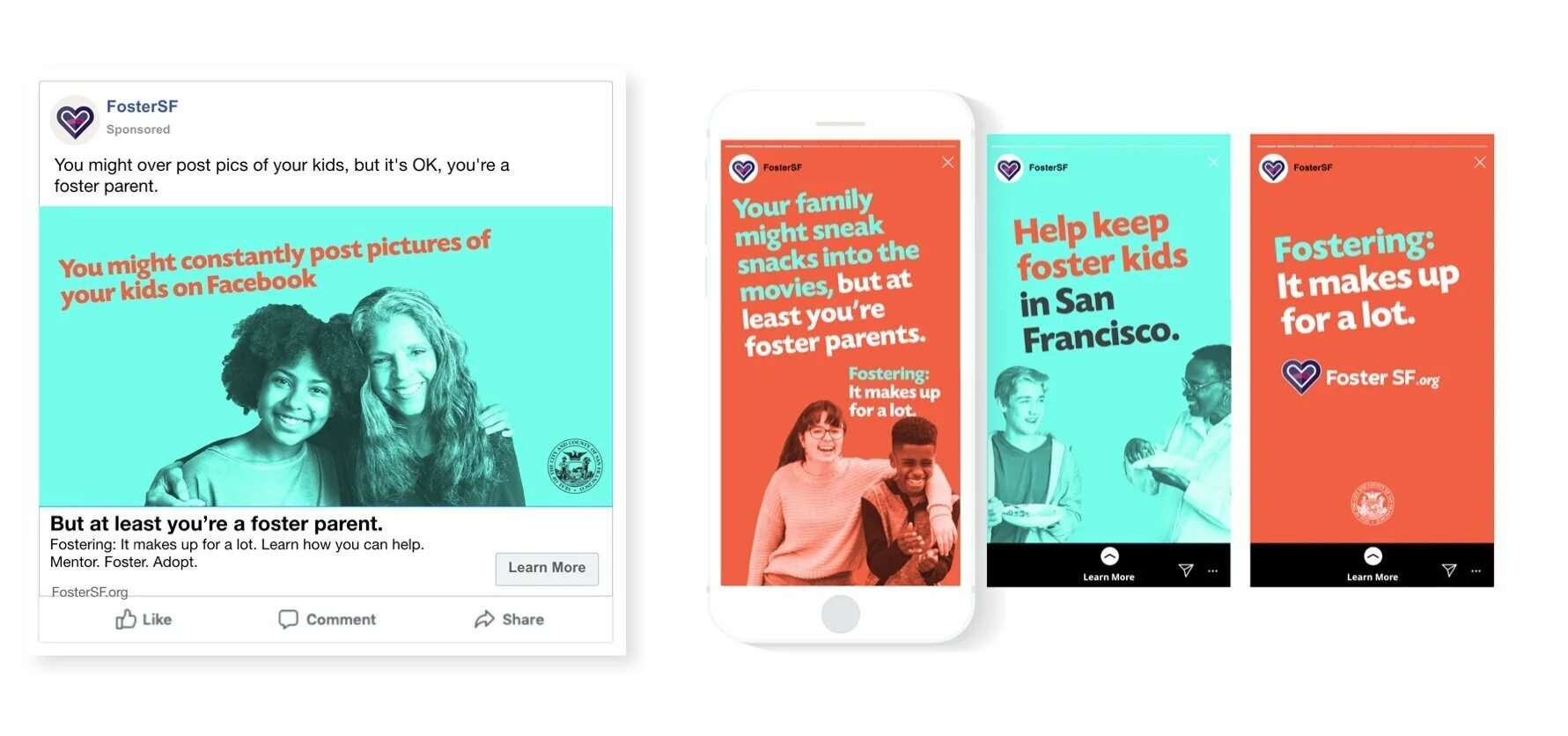
One of the many executions in a new campaign seeking foster families in San Francisco.

One of the many executions in a new campaign seeking foster families in San Francisco.

San Francisco’s housing crisis impacts everyone in the city, including long-time residents who can no longer afford rents and young families forced to move away to buy homes. But one of the under-reported tragedies: It’s also having a devastating effect on foster children.  

Right now there are hundreds of kids waiting to be placed into homes in the city. And without a steady stream of  volunteers, those kids will be forced into homes far from the only city they’ve ever known.

So how does a government agency get fresh recruits? They team up with one of San Francisco’s top ad agencies, Division of Labor. 

The creative brief set forth by the San Francisco Human Services Agency was simple:  Create an attention-grabbing ad campaign that recruits 100 new foster families to join the cause. 

The ask is huge. It’s not like getting people to try a new laundry detergent or switch to a low-fat peanut butter. Becoming a foster parent is a life-changing decision. To that end, we needed an emotional hook that would get people to pay attention.

Inspiration hit while someone on our creative team was walking through a parking lot. He saw a huge SUV taking up two compact spaces. Not surprisingly, his first thought was:  “What a jerk.” But his next thought was “Unless that jerk happens to be a foster parent. In that case, they can park wherever the heck they want!” 

That idea really rang true with everyone on the project. It resulted in an edgier, more humorous campaign that changed people’s perspective on fostering and got them to think about it in a new way.

There are over 40 different executions across billboards, bus shelters, digital banners and social media platforms and they’re all based on the horrible, but not-so-horrible things we all do that can be made up for by being a foster parent. Things like, you might be a serial re-gifter or you might only tip 10% or you might eat all the m&m’s out of the trail mix, but at least you’re a foster parent. The tagline across the campaign: Fostering. It makes up for a lot.

The San Francisco Chronicle did a piece on the campaign launch, along with the perspective of a family who has fostered multiple kids over the years, including a medically-fragile baby they’ve since adopted.

And while ad agencies love free press, in this case, we’re hoping the free press attracts new families, not new clients.

#######

The Small Agency Blog is produced by Division of Labor; a top San Francisco ad agency and digital marketing firm that’s been named Small Agency of the Year twice by Ad Age. The award-winning creative shop services clients on a retainer or project basis. They also offer brand consulting services and hourly engagements for startups and smaller brands. Click here for a free consultation.


Ad Campaign Killed Following Feedback From CEO’s Wife’s Book Club.  

Pictured above: Beth Clutterbuck’s Book Club eating chips, dip and passing judgement.

Pictured above: Beth Clutterbuck’s Book Club eating chips, dip and passing judgement.

Production of a major advertising campaign was abruptly halted today following negative feedback from the CEO’s wife’s book club. Word came down at the start of day two of a three-day-shoot as the crew and ad agency gathered near the craft services truck to feast on breakfast burritos and kale smoothies.

The company’s CEO, Dwayne Clutterbuck, had just called with instructions to shut the commercial production down as a result of feedback he’d gotten from his wife Beth, and six others in her book club. Five of the six book club attendees had made negative comments about the advertising campaign after hearing it described by Ms. Clutterbuck while they were waiting for Margie and Dale to get back from the bathroom.

Clutterbuck’s company, Clean GreenTopia, had spent nearly four months, and invested more than $250,000 in consumer research for the ad campaign. But the random musings of six, mildly-intoxicated people who are not in the target market really made Clutterbuck rethink his marketing team’s approach.

“When you get a perspective of people that aren’t actually seeing the finished campaign but are reacting to one person’s third-party description of what she kind of remembers the campaign to be, you have to take it seriously,” said Clutterbuck. 

The book club attendees spent a full 15 minutes dissecting Tara Westover’s best selling memoir, Educated, before conversation veered in another direction. “We were talking about her family’s tincture business, and this lead into a discussion of alternative wellness products, which then dissolved into us tearing apart Gwyneth Paltrow’s company Goop,” says Beth Clutterbuck. 

Three of the dozens of titles kind of talked about, but mostly glossed over in Beth Clutterbuck’s book club.

Three of the dozens of titles kind of talked about, but mostly glossed over in Beth Clutterbuck’s book club.

“It really is a stupid name for a company. But it also lead us into a bigger discussion about corporate responsibility. And, well, that’s when I mentioned Dwayne’s new global ad campaign for organic bleach.” 

Ms. Clutterbuck, initially gave the ad campaign idea the thumbs up, lauding its light-hearted and whimsical approach to dirty laundry.  However, when she explained the premise to the book club, they weren’t having it. “There is no place for humor when you’re dealing with the destruction of the planet.” said Kathy Taylor who is currently unemployed but took some marketing classes in college. “Why would you make light of something as serious as global warming?” she asked seemingly unaware the advertising campaign has nothing to do with climate change.

After processing their feedback, Mr. Clutterbuck became concerned that the professionals he’d put on the project, who had nearly 500 years of marketing experience between them, just didn’t get it. “Sometimes you have to question people who do advertising and marketing campaigns for a living and go with the gut instincts of people who consistently offer opinions on things they know little about.”

The book club attendees, who meet quarterly, have two master's degrees in art history, a PHD in French cuisine and a certificate in canine grooming among them. Along with global marketing decisions, the group regularly advises the Clutterbucks on topics ranging from vacation destinations, gluten free restaurant options, or what to do when your child gets lice.

With regards to the latest digital marketing debacle, the group advised Clutterbuck to keep it simple. “Don’t waste time being clever or funny. When people want humor, they can watch a funny movie. When they want bleach, they just want to know how the manufacturing process affects our carbon footprint,” said Jill Friedlander, the one in the club that never bothers to read the book. 

Anita Milton also voiced concern. “There’s too much money influencing our kids today. Corporations need to do a better job of focusing on responsible practices,” she explained without offering details on what her gripe has to do with a bleach commercial. 

The one dissenter was Janelle Patterson. She actually thought the ad campaign was memorable and effective. “I thought it was hysterical,” says Patterson. “It made a boring product feel hip and cool.” 

At press time, there were unconfirmed reports that Patterson would not be invited back for next quarter’s book, Where the Crawdads Sing.

#######

The Small Agency Blog is produced by Division of Labor; a top San Francisco ad agency and digital marketing firm that’s been named Small Agency of the Year twice by Ad Age. The award-winning creative shop services clients on a retainer or project basis. They also offer brand consulting services and hourly engagements for startups and smaller brands. Click here for a free consultation.


Client Asks For “Out-of-the-Box” Thinking. Subsequently Demands Return to Box.

The Marketing team at Atom Analytics panicked today after their advertising agency delivered on the company’s request for “out-of-the-box” thinking. Pandemonium erupted following the initial creative presentations. Senior executives immediately scrambled to shove all the “out of the box” thinking back into the box. 

“When I said “out of the box,” I didn’t mean way outside,” said chief marketing officer Dwayne Clutterbuck. “Like, if the box were a house I wanted the ideas to be, maybe, like in the tool shed.” 

Top brass who sat in on the meeting were even more blunt. “This is not the type of out of the box thinking we’re used to,” said Connie Jennings, director of Status Quo. “We see out of the box thinking every day, and it never looks like this.”

Middle managers, however, hoping to quickly restore order initially gushed over the marketing plan and then mercilessly picked apart the presentation, blaming the agency for delivering precisely what they’d asked for.

The team from Atom Analytics reacts to their new agency’s presentation.

The team from Atom Analytics reacts to their new agency’s presentation.

The plan included a number of thought provoking ideas along with a robust digital marketing plan and some stunts that would most certainly garner publicity. “There was something with Dennis Rodman walking on a tightrope over Times Square. It was just way too attention grabbing for us. You don’t need ideas to get attention when you have a great product,” said Clutterbuck completely contradicting the entire purpose of brand marketing and advertising.

Executives across the board feared that these new ideas might actually make the company appear different from the competition. Following the meeting, a feedback email from Atom Analytics to the agency read: “We were talking about next steps, and decided a safer approach would be to make TV commercials that point out our features and benefits like you know, those Ped Egg commercials. Would you be able to get us a script by Tuesday?”

Days later, Atom Analytics again asked the agency for “out-of-the-box” thinking, as if they completely forgot everything that just happened.

#######

The Small Agency Blog is produced by Division of Labor; a top San Francisco ad agency and digital marketing firm that’s been named Small Agency of the Year twice by Ad Age. The award-winning creative shop services clients on a retainer or project basis. They also offer brand consulting services and hourly engagements for startups and smaller brands. Click here for a free consultation.


Drive Clean Bay Area Featured in Campaign Magazine

Our work for Drive Clean Marin was just featured in Campaign Magazine. So, of course, we’re bragging about it and patting ourselves on the back. Campaign is a staple in the industry and when they like our work enough to feature it, that really means something.

Division of Labor launched this ad campaign to help Drive Clean Bay Area with its mission to get more drivers into electric vehicles. They’ve partnered with Cartelligent, a concierge car buying and leasing service, to offer group discounts on some of the hottest EVs on the road. 

This is the second non-profit client we’ve worked with in the electric vehicle space. So, I guess you could say we’re getting to, kind of, be experts in the area. The ad campaign is focused on the idea that people in the Bay Area do so many things to help the environment but the biggest thing any of us can do is go electric.

The work has been showing up in Instagram and facebook feeds for the past few weeks now and digital and mobile executions are out there too.

Check out the article here and if you want a massive discount on a new EV, check out the campaign landing page. Thanks to Elaine Underwood and the staff at Campaign.


Ad Agency Hires Explainer Video Company to Explain the Idiocy of Explainer Videos.

A scene from our explainer video explaining the drawbacks of explainer videos. See full video below.

A scene from our explainer video explaining the drawbacks of explainer videos. See full video below.

Last week we wrote a tongue-in-cheek blog post about how every tech startup seems to use the same style explainer video to launch their company. But there was some confusion as we noted a number of people were debating whether the article was parody or real. 

This speaks volumes about where we are in the industry. We were blatantly making fun of a fake company called Woo Woo and how they had a pitch for their 100 million dollar business but instead hired a kid named Dwayne to make a cartoon for $500 bucks.

And as ridiculous as it sounds, so many of us in the industry have watched dumbfounded time and time again as startups have made this same marketing mistake. 

So we at Division of Labor decided to hire an explainer video company to explain why marketing executives should not use an explainer videos in place of proper branding and advertising.

We were nervous at first that explainer video companies wouldn’t take kindly to our little experiment. After all, hiring someone to create a video that makes fun of what they do for a living might not go over too well.

But the company we hired saw nothing strange about what we were doing and charged us the standard $400, which incidentally is one hundred bucks cheaper than our fictitious explainer video mastermind, Dwayne Clutterbuck.

So what did we learn? The service was seamless. Our contact was professional and willing to make whatever tweaks we suggested. And, in the end, we got what paid for: A crude, formulaic, 2-D animation video that looks exactly like every other explainer video that’s now ubiquitous on the internet. 

And while disruptor culture certainly makes it easier to do things, faster and cheaper. It’s ironic that the end product is in no way disruptive. (Save for the tree shrews eating people’s brains and our main character pole-dancing to a cash shower.)

There’s certainly a place for explainer videos in the world. As a way to detail a complex product in simple, disarming language, it’s a technique. But not if you want to set your product or brand apart from everyone else. These sorts of videos do nothing to differentiate, nothing to establish a voice, and nothing to set your product apart or make anyone remember you. 

If one marketing executive or startup founder watches our “explainer video on why not to use explainers videos” and finds merit, it was worth the investment. Though, admittedly, we’d be even more delighted if said marketing executive or founder offers Division of Labor the opportunity to properly position their brand for optimal success.

#######

The Small Agency Blog is produced by Division of Labor; a top San Francisco ad agency and digital marketing firm that’s been named Small Agency of the Year twice by Ad Age. The award-winning creative shop services clients on a retainer or project basis. They also offer brand consulting services and hourly engagements for startups and smaller brands. Click here for a free consultation.


Cheap, Animated Cartoon used to Launch Billion Dollar Startup

Woo-Woo’s soon-to-launch explainer video looks nearly identical to every other explainer video out there. But the company notes their trademark “Boyyoyyong!” Sound effect is 37% more effective than traditional “Boyyoyyong!” sound effects.

Woo-Woo’s soon-to-launch explainer video looks nearly identical to every other explainer video out there. But the company notes their trademark “Boyyoyyong!” Sound effect is 37% more effective than traditional “Boyyoyyong!” sound effects.

After inviting four top San Francisco ad agencies to pitch for its business, Silicon Valley tech giant Woo-Woo changed course and instead contracted with 19-year-old Ben Clutterbuck, a Chico State sophomore who creates low-quality explainer videos with rudimentary cartoons and operates out of his dorm room.

Woo-Woo recently obtained nearly 100 million dollars in series B funding from four different venture capital firms and earmarked five million dollars for marketing and advertising.  But after sitting in on the pitches, Woo-Woo’s most seasoned intern, Valerie Peabody, offered up an alternative approach. “The agencies were quoting costs of $300,000 to $5000,000 in creative fees alone,” notes Peabody.  “And I thought, ‘that’s insane’ when my brother’s buddy, Dwayne could do the creative and production for, like, $500 bucks.”

Peabody arranged a SnapChat group so Clutterbuck could get to know the marketing team. After exchanging multiple dank memes, it became clear Clutterbuck understood Woo-Woo’s corporate culture exponentially better than any of the pitching agencies. “It wasn’t hard to see that crude animations and the occasional “Boyyoyyong!” sound effect would be just as effective as anything a full-service agency could produce,” says Woo-woo company spokesperson Victoria Pheferman.

Clutterbuck’s business model, which focuses on creating antiquated, two-dimensional style animations on the laptop his parents bought him, definitely appears to resonate with millennial tech executives who neither understand, nor value the complexity of an advertising and marketing strategy.

Clutterbuck, who runs his company out of the Royal Arms dorm-style apartment complex, says he’s stoked to be tapped. “This is lit,” Clutterbuck hooted. “Hundo P we will crush this.”  

Woo-Woo, a Silicon Valley darling since late 2018, has developed an innovative, new, cloud-based, SaaS procurement optimization portal module. “The product has a universal appeal,” says Phefferman. “This kind of innovation practically sells itself.”

The bold decision to 86 the company’s marketing budget was ultimately approved by Woo-Woo’s senior management team, which, incidentally, consists of five 26-year-old virgins with zero business experience.  “Every one of the guys in our c-suite is an Ivy League grad,” says Phefferman. What’s more, she notes: “Three of the five earned admission without bribes, fake athletic credentials, or cheating on their ACTs.”

And while the decision was a cost-cutting measure, it was also a change more in keeping with strategies at other large tech companies. “Our board said it was time to grow up a little,” says Phefferman. “And nothing says captain of industry like an animated explainer video with ukulele music.” 

The explainer video will have a soft launch on the company website and will be tweeted out extensively on Clutterbuck’s social media feed. “I post all my client’s videos on my Instagram page. For an extra $20 bucks, I’ll even talk you up on my finsta page,’” says Clutterbuck.

####

The Small Agency Blog is produced by Division of Labor; a top San Francisco ad agency and digital marketing firm that’s been named Small Agency of the Year twice by Ad Age. The award-winning creative shop services clients on a retainer or project basis. They also offer brand consulting services and hourly engagements for startups and smaller brands. Click here for a free consultation.


AD AGENCIES IN CRISIS AS THEY RUN OUT OF THINGS TO CALL THEMSELVES

Running-on-Empty-Gas-Tank-min.jpg

AD AGENCIES IN CRISIS AS THEY RUN OUT OF THINGS TO CALL THEMSELVES

Ad agencies have officially run out of new things to call themselves so as not to call themselves, “ad agencies.” The news comes as small agency founders launching new ventures discovered they could not come up with any pseudo-intellectual gibberish to replace the phrase, “Advertising Agency.” This reality has left the entire industry flummoxed.

“Creative Consultancy, Brand Collective, Content Company, Digital Workshop, Experience Agency, Design Studio, Engagement Lab, we’ve tried em’ all,” says one of the eleven former big ad agency creative directors currently running a design experience consultancy/brand engagement studio out of a WeWork.

The crisis has come as a shock to industry veterans who claim to not make advertising or anything resembling advertising, even though they totally do.

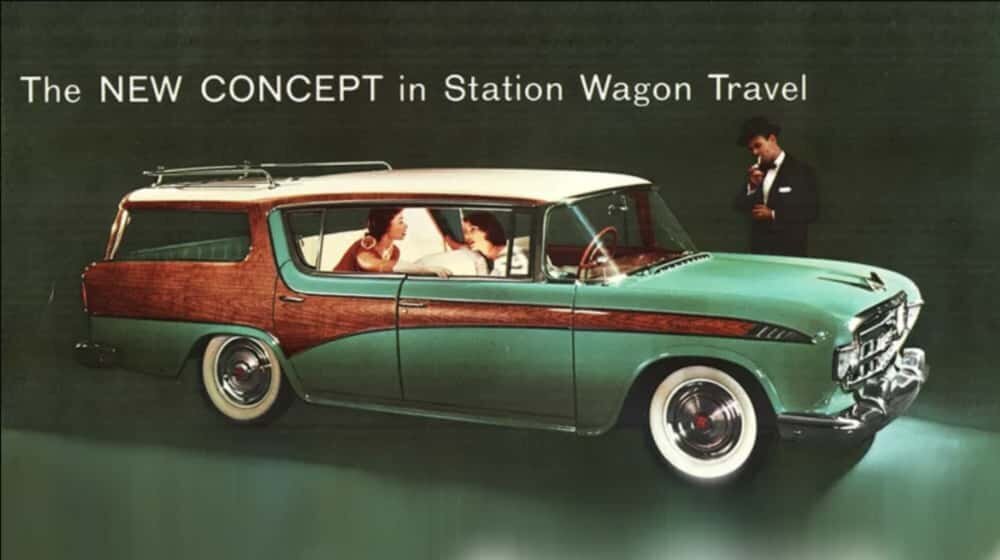
“Advertising professionals made Halitosis a disease, turned station wagons into Sport Utility Vehicles and got a whole generation freaked out by, “Ring around the collar.” Surely, we can come up with some new nonsense to call ourselves,” says Division of Labor Creative Director, Josh Denberg. Division of Labor is one of the top advertising agencies in San Francisco and the agency is just fine with being called an ad agency since, well, that what Division of labor is. It’s an ad agency.

Screen+Shot+2019-11-01+at+2.20.11+PM-min.jpg

A group of copywriters from some of the most respected ad agencies that don’t want to call themselves ad agencies have come together on a Google Doc to solve the crisis. But the first session was marred by debate over whether Google Docs was the right vehicle to use and whether Slack, Asana, or a shared Keynote was better. Immediately, TikTok videos were made belittling the process.

“The English language has been exhausted. But what about other languages?,”  asked Drew Weber, a copywriter at Division of Labor who calls himself a “content creator” and is currently searching for another term for “Guru” to use on his LinkedIn profile.

Desperate American advertising agencies have contacted foreign ad agencies to inquire about using their language in their titles. While talks with the Germans and Italians have gone well, the French have taken offense to the proposal.

“Just because you don’t have enough words in your stupid language doesn’t mean you Americans can come in and steal ours,” said one cliché, condescending Frenchman from a company we can neither spell nor pronounce.

Meanwhile, concern is growing between America’s shores that these businesses may have to revert back to the archaic title of “advertising agency.”

“I mean, I guess we could call ourselves an ad agency. But we don’t make ads; we make content and experiences that surprise and delight consumers,” said a representative from one of the billion shops that claim to not do exactly what they get hired to do.

But with options running thin and time running out, ad agencies may have no choice but to call themselves what they really are. “It’s a dark day for the industry,” says Denberg. “But we will find other ways to obfuscate and deflect. It’s what we do.”

####

The Small Agency Blog is produced by Division of Labor; a top San Francisco ad agency and digital marketing firm that’s been named Small Agency of the Year twice by Ad Age. The award-winning creative shop services clients on a retainer or project basis. They also offer brand consulting services and hourly engagements for startups and smaller brands. Click here for a free consultation.


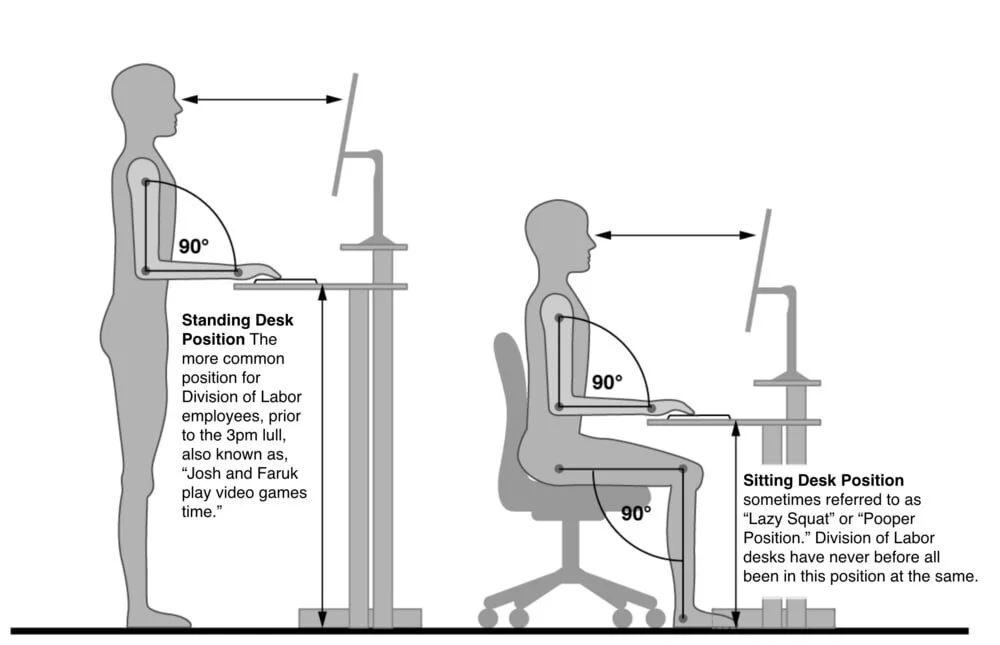
Ad Agency Embarrassed to Discover All Standing Desks in Sitting Mode

Screen+Shot+2019-10-07+at+10.57.57+AM-min.jpg

In an unexpected turn of events, the San Francisco advertising agency Division of Labor reported that shortly before noon, on October 14th, all the standing desks in the office were discovered in the sitting position. 

The phenomenon was first noticed by copywriter Drew Weber, who was, incidentally, in the sitting position at the time.

“The office just looks so much more open,” said Weber, who pointed out he had uninterrupted sightlines for the first time since joining the agency. It was also his first time seeing everybody on level ground. “I just thought everybody was really tall.”

The agency-issued white Stand Desk with matte grey frame, deluxe memory handset, 10 outlet power strip and squishy, mall security guard stand pad is set to sitting mode by touching a keypad—often accidentally. But, until today, there has yet to be an occasion when all employees have chosen this configuration simultaneously.

“I’ve never hit that button on purpose,” said designer Ryan Lockhart, who also noted that he could see the back wall unobstructed for the first time. “It made me realize one of the posters on the opposite wall isn’t level, which, as a designer, is super annoying.”

The company, known for digital marketing campaigns, brand strategy and humorous digital video content, had trouble explaining the moment of serendipity. 

Much of the blame for the incident was placed on creative director Josh Denberg, who usually has his office-appointed desk in the standing position, believing it makes him healthy or something.

“Sitting is the new smoking,” chirped Denberg, citing an internet cliché that has little scientific merit but something the advertising agency executive has no problem repeating anyway.

Denberg has long been a fan of the standing desk, believing it makes him morally superior to those who sit.  “When people drop into a conversation that they don’t own a TV, it’s easy to put them in their place by casually mentioning that I stand at work, like, 90 percent of the time,” says Denberg.  

The standing desk trend has taken the advertising agency scene by storm in recent years as agencies attempt to behave more like startups, minus the VC funding and gluts of excess cash. “We don’t offer our employees catered meals, in-office massage, or free afternoon yoga classes, but when clients walk into the office and see that every employee has their own stand desk, well, the ad campaigns pretty much sell themselves,” says creative director, Faruk Sagcan. 

At press time, all employees had their desks back to the standing position. 

####

The Small Agency Blog is produced by Division of Labor; a top San Francisco ad agency and digital marketing firm that’s been named Small Agency of the Year twice by Ad Age. The award-winning creative shop services clients on a retainer or project basis. They also offer brand consulting services and hourly engagements for startups and smaller brands. Click here for a free consultation.


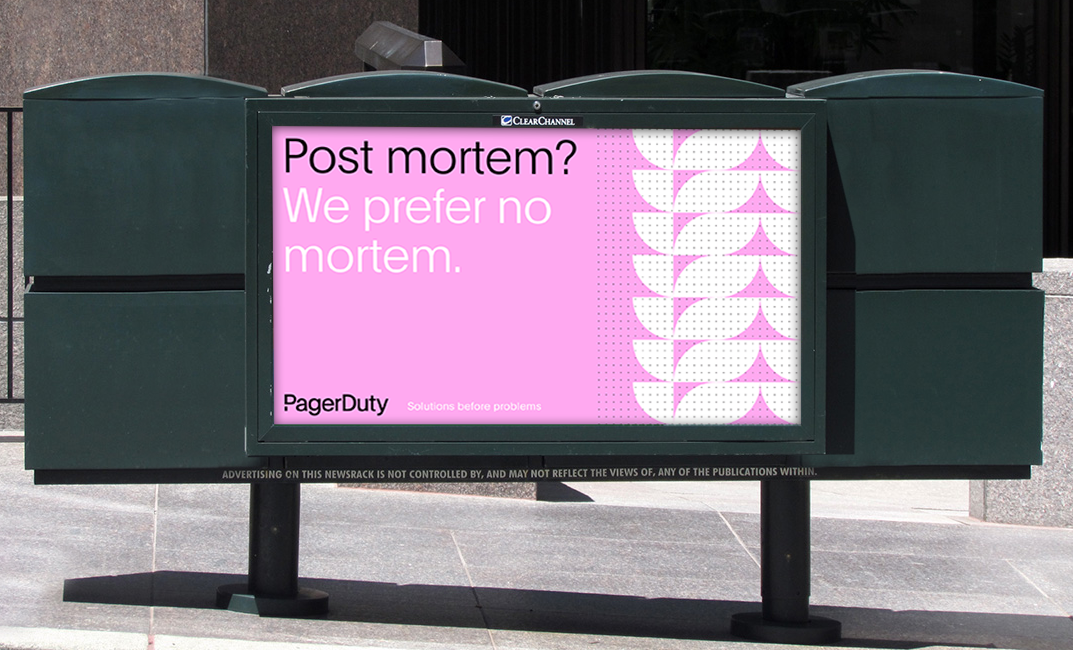
New Brand Awareness Marketing Campaign for PagerDuty

If you’ve ever gotten one of those “Aw Snap” screens from a website then you know how annoying it is when technology doesn’t work like it’s designed to. Or if you’ve ever tried to buy something online and you get to the end of the process and the shopping cart doesn’t work? I mean, not the end of the world, but it’s irritating none the less.  

And things that are irritating to consumers are potentially devastating to companies. The business of digital operations management is massive because all companies rely on technology and when there’s something wrong with their network, they’re screwed.

Enter PagerDuty. A digital operations management company that works with Fortune 500 companies, startups, government agencies and even non-profits to ensure incidents are handled expeditiously. Developers can use PagerDuty a bunch of different ways but the main thing is that PagerDuty analyzes signals and data on digital networks of a company and can detect when potential issues might surface and then alerts the developer, or anyone else for that matter, to the incident so adjustments can be made before any problem ever reaches a user. 

A simple example I use because it’s one my tiny advertising brain can process is; let’s say Division of Labor creates an amazing digital video that funnels a ton of traffic to our client’s website. And since our video is so good and funny and emotionally compelling, the increase in traffic threatens to overload our client’s website. (We are that good.) 

But PagerDuty detects the increase in traffic, alerts the developer so she can increase server capacity and avoid any disruption. PagerDuty also learns over time and can implement network adjustments on behalf of the developer or predict future issues so the developer can prepare for them. Developers have even said they won’t work at a company unless they can have PagerDuty. Pretty cool company.
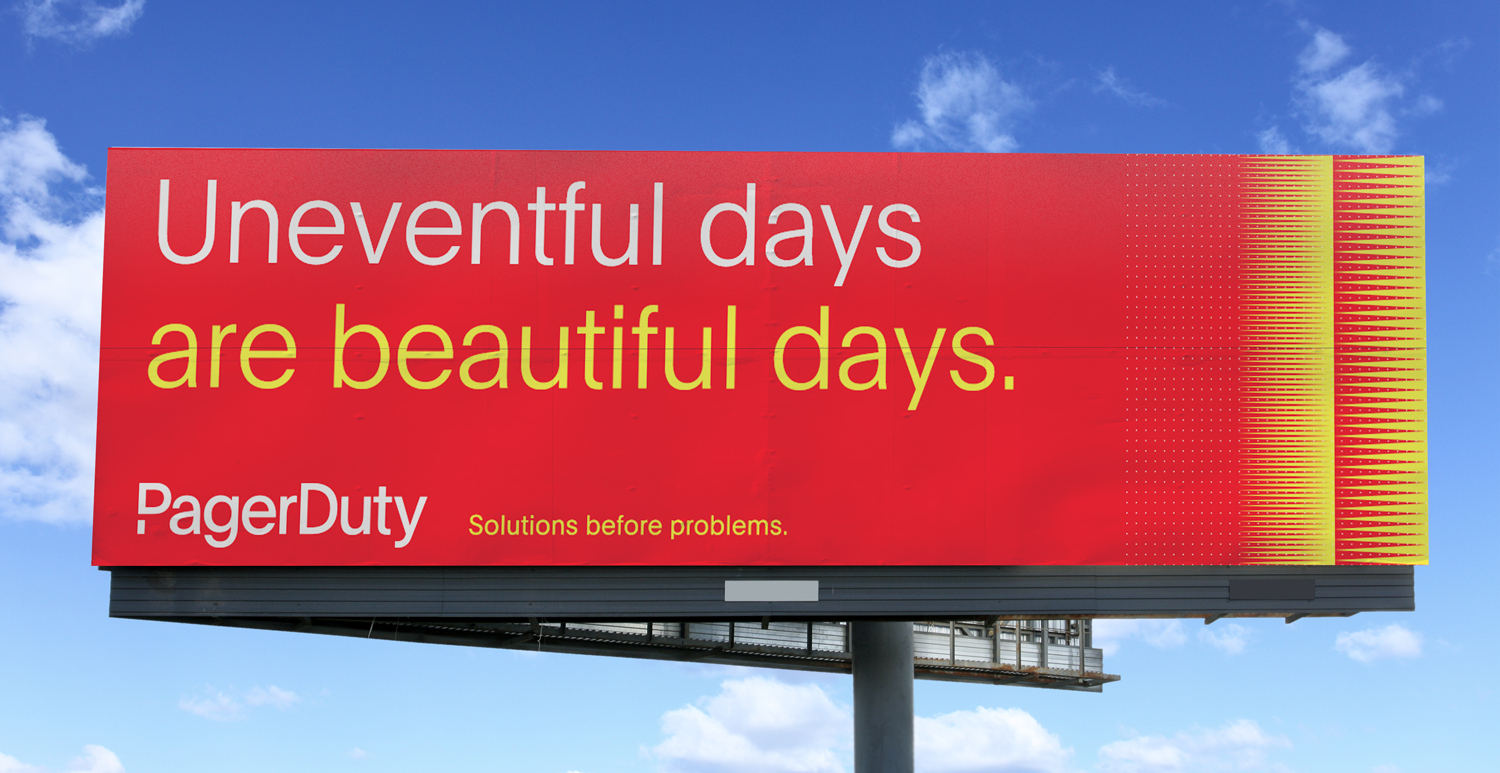
But not enough people know about them. So they asked Division of Labor to help with an awareness campaign to increase brand recognition and drive trial ahead of their big PagerDuty Summit19, held at the end of September in Union Square.

At its core, PagerDuty solves problems before they become problems. So we launched their first brand awareness and digital marketing campaign anchored with the line: Solutions Before Problems.

Division of Labor worked in close collaboration with the folks at PagerDuty along with our partners at MediaSmith. But we also inherited some beautiful brand design work from the folks at Collins. Collins created a palette and brand template for us to work with allowing us to focus on developing the messages and simplifying the communications; from digital and out of home to podcasts and a completely redesigned and rewritten website. The campaign launched in San Francisco and New York with executions in Times Square and Madison Square Garden.
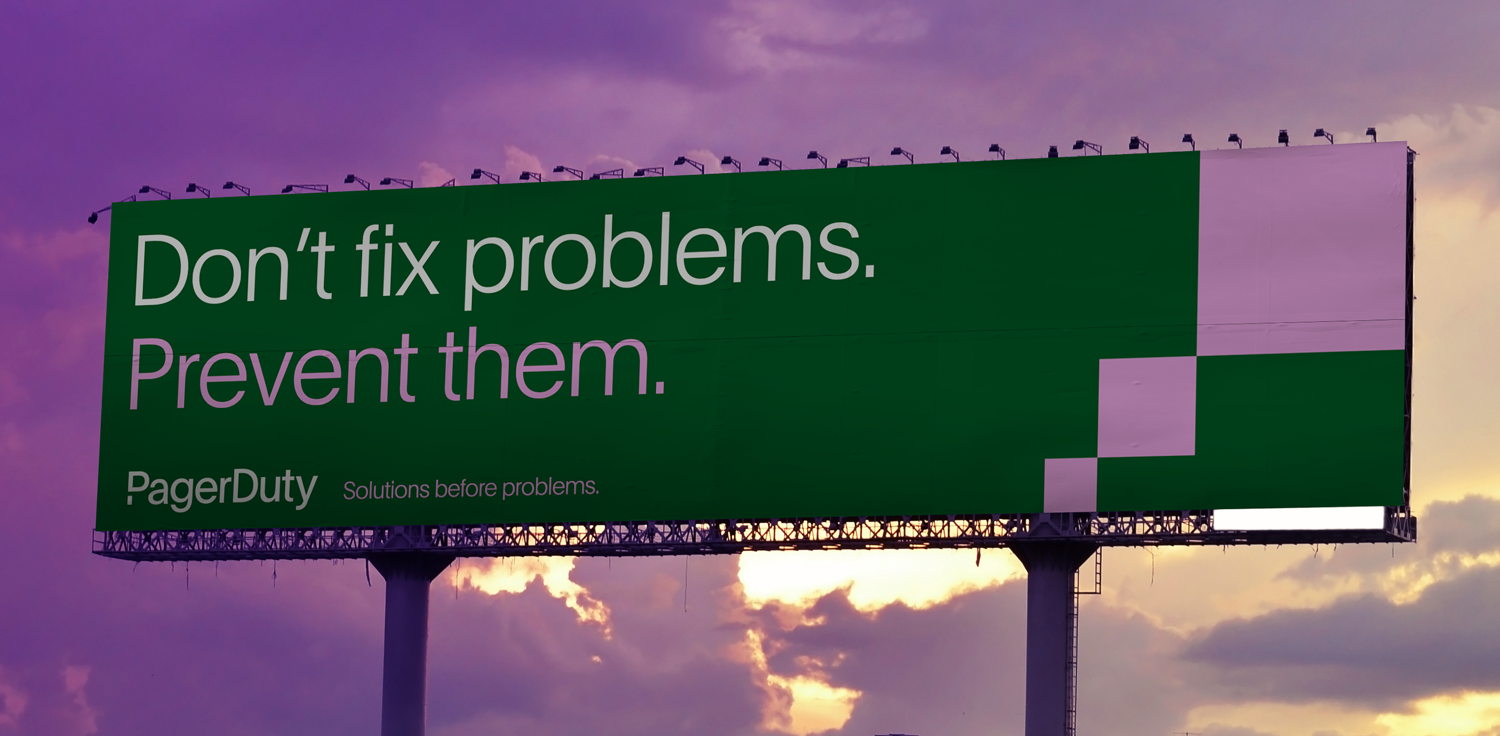
We are now preparing for phase two, but check out PagerDuty if you’re a developer and see what you think. Thanks to all who made this campaign happen.
####

The Small Agency Blog is produced by Division of Labor; a top San Francisco ad agency and digital marketing firm that’s been named Small Agency of the Year twice by Ad Age. The award-winning creative shop services clients on a retainer or project basis. They also offer brand consulting services and hourly engagements for startups and smaller brands. Click here for a free consultation.