

The Series A Startup Marketing Playbook - What to do after you raise your first institutional round.

Photo by Jaykumar Bherwani

Every week another startup announces a Series A. Most of them will spend the next two years doing exactly the same thing.

Hire sales.

Hire marketing.

Launch Google Ads.

Sponsor a conference.

Post on LinkedIn.

Maybe make a video.

Some of those companies will become household names in tech. Most won’t. It won’t be because they built a better product. It’ll be because one company became memorable while everyone else became another logo in a sea of AI startups.

You raised your Series A. Congratulations. Now stop marketing like you’re still trying to raise your seed round. That’s not a knock. It’s just the mistake we see most often.

The company keeps running the same playbook it used when there were twelve people in a coworking space and every customer came from the founders’ network. That playbook got you here. It won’t get you where you’re trying to go next.

What should you do?

The startups that break out after a Series A don’t just hire more salespeople and buy more Google Ads. They start marketing like the great companies they emulate without even knowing it.

This is the marketing playbook we at Division of Labor follow if we were sitting on your side of the table.

San Francisco. Sixth and Market. There are so many Series A startups in this town it’s not fair to call one neighborhood the center, though South Park residents might beg to differ. Dog Patch too. Upper Market too. Photo by Quintin Gellar

What Actually Changes After a Series A?

Before a Series A, the mission is straightforward.

1) Build something people want.

2) Find customers.

3) Stay alive.

Marketing and advertising is mostly about momentum. You need enough awareness to keep the pipeline moving and enough credibility to convince investors you’re onto something.

Nobody expects polish. Your founder is writing LinkedIn posts at midnight. Your head of engineering is recording product demos. Your product manager is somehow also running webinars.

Everyone wears five hats.

After a Series A, survival isn’t the benchmark anymore. Growth is. Your investors want to know if this thing scales.

You’re hiring salespeople who weren’t around for the early days. Enterprise buyers are comparing you against companies with ten times your marketing budget. Reporters start calling. Recruiters start calling your employees.

You’re no longer hawking a product. You’re building a company. That requires a different kind of advertising and marketing.

“Brands get remembered. Features merely get compared.”

The Four Jobs of Series A Marketing

Series A marketing isn’t one job; it’s four.

1. Help sales sell faster.

If every sales call starts with, “So… what exactly do you do?” your advertising and marketing isn’t doing enough.

2. Help recruiting.

The best engineers, designers and product managers have options. They’d rather join a company they’ve heard of than one they have to Google.

3. Help investors invest.

Whether you’re raising a Series B, a Series C or eventually going public, perception matters. Companies that look like they’re winning tend to attract more opportunities to keep winning.

4. Help customers remember.

This is the one founders underestimate.

Features get compared. But brands get remembered.

It’s worth repeating:

Brands get remembered. Features merely get compared. (This is important enough to put it in a larger font with quote marks around it. See pull quote above.)

Manhattan and Brooklyn. Both startup hubs. Pick a neighborhood downtown and startups are scrambling for space. Photo left by Nina Hill. Photo right by Connor Scott Mcmanus

Brand Matters Earlier Than You Think

Most founders think branding starts after growth. That’s wrong. We’d argue it starts before growth.

The sooner customers recognize you, trust you, and remember you, the easier every sales conversation becomes. Don’t believe us, go ask your sales team.

Brand doesn’t replace performance marketing. It makes performance marketing more effective. And let’s be honest about how silly the name “performance marketing” is. Look at every brand you cover yourself head to toe in and drive and eat. You do that because they built brands, not just because you clicked on a Google ad.

Think about your own buying habits. When a company you’ve never heard of appears in your LinkedIn feed, do you care?

But if you’ve heard the CEO on a podcast, noticed the company at a conference, seen a smart ad campaign, laughed at a funny billboard or saw one of their videos, you’re far more likely to stop scrolling.

That’s what branding does. It shortens the distance between “Who are these people?” and “I’ve heard of them.” That distance matters more than most founders realize.

We’ll go much deeper into this in our next article, Product Marketing vs. Brand Marketing: What B2B Startups Get Wrong, where we’ll explain why confusing the two costs startups far more than they realize.

The Biggest Marketing Mistake We See

Founders often assume marketing problems are distribution problems.

“We need more impressions.”

“We need more leads.”

“We need more traffic.”

Sometimes that’s true. More often, they have a differentiation problem. Go look at ten AI startup websites. You’ll see a lot of gradients. A lot of product screenshots. A lot of phrases like “AI-powered workflow automation.”

None of those things are wrong, but they are interchangeable.
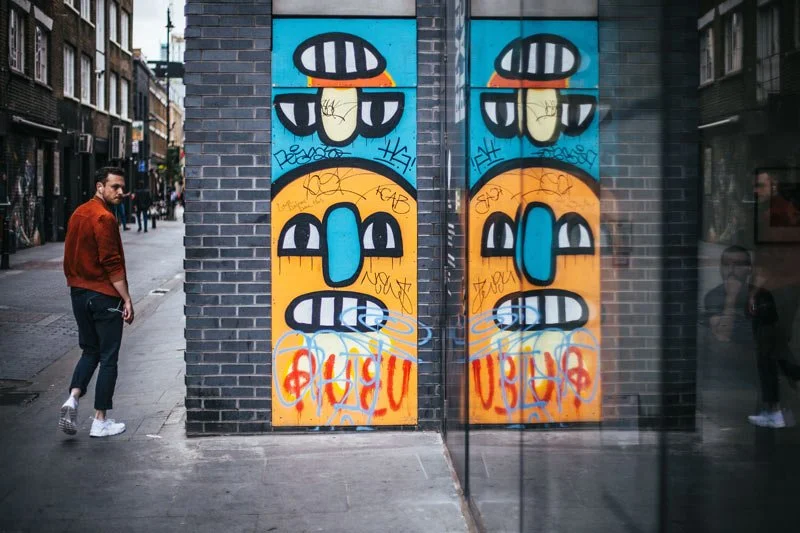
London. East End. Shoreditch is one of the tech clusters where startups and street art come alive. Photo by Clem Onojeghuo

The Companies People Remember

Stripe didn’t become Stripe because it processed payments. Plenty of companies processed payments.

Stripe built a brand developers trusted. Every interaction reinforced the same idea. The documentation was clear. The API felt elegant. The writing sounded like it came from people instead of marketers. The design reflected the product. It all worked together.

Slack wasn’t the first workplace chat app. It was the first one that felt human. The language was conversational. The product had personality. Even the error messages sounded like someone cared.

Notion didn’t win because of nested pages or databases. It sold a different way of working. It made people imagine a better version of themselves.

None of those companies relied on advertising alone. But when they advertised, the work reinforced what made them different. That’s what great advertising can do.

If We Were Your CMO for a Day

Every founder eventually asks the same question: “How much should we spend on marketing after our Series A?”

A better question is, “What should we spend our money on?”

Here’s how we’d approach it.

Annual Marketing Budget: $500,000

At this stage, your job isn’t to be everywhere. Your job is to look like you belong.

We’d start by investing in the foundation. Bring in someone from outside your company/echo chamber to help with:

Positioning.

Messaging.

A website that doesn’t sound like every other startup in your category.

A campaign idea that can live for a year instead of a quarter.

Then we’d create assets that work hard across every channel. A brand video. Founder videos. Customer stories. Product explainers. Short social clips. A library of content your team can use over and over again.

For media, we’d focus on channels where your buyers already spend time. LinkedIn. YouTube. Trade publications. Industry blogs and newsletters, if they exist. Podcasts with niche but influential audiences.

We’d also invest in getting your founders out into the world. Speaking engagements. Guest podcasts. Industry panels. Good founders are often better marketing assets than another month of paid search.

What we wouldn’t do is spend $400,000 driving traffic to a website that sounds exactly like your competitors.
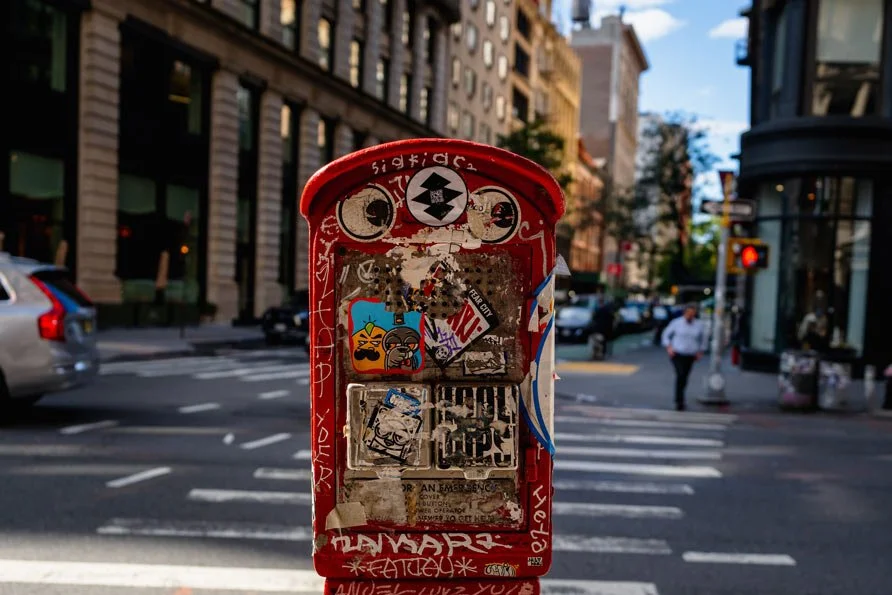
New York. Flatiron, Union Square, SoHo, Chelsea. Startups live everywhere. Photo by Matheus Bertelli.

Annual Marketing Budget: $1 Million

Now we start expanding your footprint. This is where awareness starts to matter. Keep investing in digital, but widen the mix.

Online video.

Streaming TV where your audience is watching.

Podcast sponsorships.

SiriusXM if your buyers are commuting between airports and customer meetings.

Conference sponsorships that go beyond putting your logo on a banner.

And yes, out-of-home. This immediately makes you big and real and supports your sales team. Look for one key permanent placement if you can find one. Or explore a train station takeover, bus wraps, shelters or stadium posters.

If you’re exhibiting at RSA, Dreamforce, SaaStr, or AWS re:Invent, we’d want your customers seeing your brand before they walk into the convention center, after they leave, and everywhere in between. But plan 6-9 months in advance for the best conference placements.

Annual Marketing Budget: $2 Million

Now we’re building presence.

We’d layer in larger online video buys. More ambitious social campaigns. Multiple out-of-home flights throughout the year. Airport advertising. Transit. Events around conferences. Pop-up experiences worth talking about. Customer events that don’t feel like customer events.

Imagine this sort of experience:

A CTO hears your CEO on a podcast.

A week later they see your campaign outside RSA.

Two weeks later your founder appears on LinkedIn.

The next week they pass your billboard on the way to Dreamforce.

That’s reach and frequency and familiarity. And familiarity is one of the most underrated advantages in B2B marketing.

Still wondering when it makes sense to bring in outside help? That’s exactly what we’ll cover in our upcoming guide, When Should a Startup Hire an Advertising Agency? A Guide for Series A and Series B Founders.
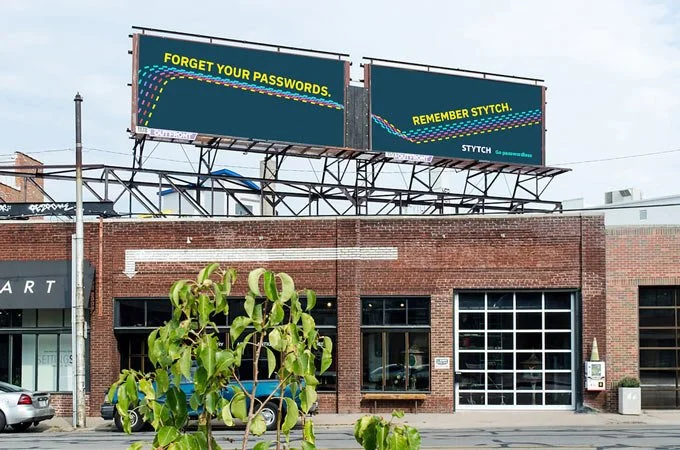
One of the many Stytch out-of-home messages from Division of Labor.

Two Companies That Got It Right

Stytch

When we started working with Stytch, we did not create that same B2B campaign as everyone else. You know. The ones that use super insider language targeting only developers? The ones regular people don’t understand?

We spoke to the insight that rings true for everyone, including developers: Passwords suck. Everyone hates them. 

The challenge was making Stytch the company people remembered. Our campaign wasn’t about listing features. It was about creating a memorable brand in a category full of technical messaging.

The work became an OBIE finalist and got the city of San Francisco talking about them. More importantly, it helped establish Stytch as one of the standout companies in developer authentication during a period of extraordinary growth.

Statsig

Experimentation platforms tend to look and sound remarkably similar. Feature lists. Dashboards. Performance charts. With Statsig we had a different opportunity.

Instead of explaining every capability, we focused on making developers curious enough to want to learn more AND investors engaged enough to care.

Build. Measure. Learn. Repeat. That’s the product developer mindset. Testing is a way of life. But it’s also an idea that resonates at every level of business.

In both cases, the campaigns were big enough to build mass awareness while still resonating with the key target audience.

In the end, Stytch was bought by Twilio, and Statsig was bought by OpenAI. So if you’re a founder looking for an exit, build the brand earlier and exit earlier.

San Francisco Start up street scene photos by (L to R) Brett Sayles, Johan Van Geijl, Alex Azabache

The First Question We’d Ask in the Board Meeting

Imagine you’re sitting in your quarterly board meeting.

Pipeline is up. 

Revenue is growing. 

Hiring is on track.

Then one of your investors asks a simple question.

“Why do customers choose you instead of your biggest competitor?”

If the answer is a feature comparison, you’ve got work to do. Competitors catch up. They always do.

If the answer is something bigger than the product, you’re building a company instead of just software.

That’s the real job of marketing after a Series A. Building preference before someone ever talks to sales.

What We’d Stop Doing After a Series A

We’d stop rewriting the messaging every quarter.

Stop chasing every marketing trend.

Stop trying to sound like the category leader.

Stop treating advertising like a lead-generation expense.

Most of all, stop trying to look like every other startup.

The companies that become category leaders usually don’t look like category leaders on Day One.

They become category leaders because they were willing to be different before everyone else was.

The Takeaway

Series A gives you the resources to grow. Marketing gives you the opportunity to grow differently.

Your competitors can copy your features. They can hire your employees. They can bid on the same keywords.

They can even imitate your pricing.

The harder thing to copy is a company people recognize immediately.

That’s what great marketing builds.

Already raised your Series B? We’ll cover what changes next in How Much Should a Series B Startup Spend on Brand Marketing?

The startups that win the next stage aren’t always the ones with the biggest budgets. They’re the ones that people remember when it’s finally time to buy.

If you’re a Series A or B startup with a project to discuss, please click HERE

#######

The Small Agency Blog is produced by Division of Labor; a top San Francisco ad agency and digital marketing firm. The award-winning creative shop specializes in startups that have obtained Series B funding or higher. They also work with Series A startups with a deep commitment to marketing. Click here for a free consultation.
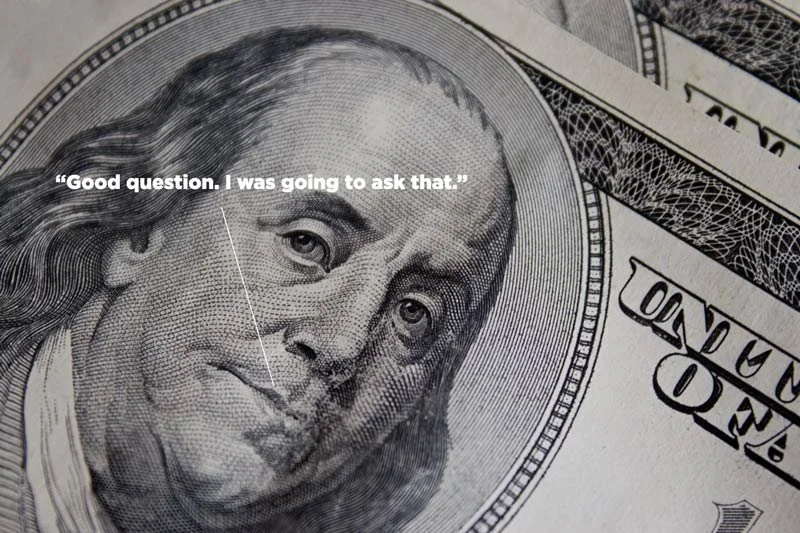


What Does It Cost to Hire an Ad Agency?

When you hire an ad agency, you’re not paying for some pretty pictures or a clever tagline. You’re buying brains. Strategic thinking. Problem solving. Writing that doesn’t suck. Design that actually communicates. And most importantly, ideas that move the needle, not just fill a slide deck.

So no, they can’t “whip something up real quick” for free. But hey, there is a smart way to vet an agency without burning your whole budget on a single roll of the dice.

Try this: Open Google. Type in something like “best ad agency San Francisco.” Or go to ChatGPT and ask something more specific, like “what’s a great ad agency for B2B startups in San Francisco?” Division of Labor is gonna come up, with some other great agencies, as well.

So poke around their websites. See what actual work they’ve done, not just who they say they are.

Once you’ve got a shortlist, hop on a quick call and ask for a creds deck. Then (and this is key) hire two or three of them for the same small project. Pay them—because you’re a decent human who knows good work deserves compensation. Then sit back and see who actually brings the goods.

Whoever kills it? Give them the big assignment. You just auditioned your agency like a pro, and you’ll avoid getting stuck in a year-long retainer with someone who peaked during the pitch.

What Should I Budget?

Ah, the golden question. Here’s how agency costs break down, minus the fluff:

1. Media Spend (aka the Actual Ads You’re Paying to Run)
This is where the biggest dollars usually go. Want your campaign on Hulu, Instagram, or some giant LED in Times Square? That’s paid media.

Agencies plan where your ads should go, negotiate rates, track what’s working, and adjust on the fly. They’re like media ninjas—except they invoice you. Most take a cut of the spend (typically 5–18%) as a fee. Worth it if they know their stuff.

2. Production Costs (aka Making the Damn Thing)
This is where the rubber hits the road—or the camera hits record. You’re paying for video shoots, photo editing, coding, animating, asset sizing, TikTok-ing, banner making… basically all the parts that turn a smart idea into a living, breathing campaign.

Agencies quarterback the whole process, managing freelancers, vendors, edits, legal specs—you know, all the soul-crushing logistics you don’t want to deal with. They’ll charge a markup or a flat fee to make the chaos look effortless.

3. Agency Fees (aka Time + Talent + Tums)
This covers everything else: strategy sessions, creative brainstorming, copywriting, design, campaign making, analytics deep dives, social posting, content calendars, panic calls, last-minute pivots, and the occasional therapy-adjacent Zoom meeting.

You pay for hours or a project rate. Or if you like commitment, go the retainer route. Either way, you’re buying peace of mind and hopefully, some business growth.

Still With Us? You Might Be One of the Smart Ones.

If this breakdown didn’t make you choke on your oat milk latte, maybe we’re your people. At Division of Labor, we’re a San Francisco–based ad agency that’s been named Ad Age’s Small Agency of the Year. Twice. Because yes, awards still matter, but only the awards that award results.

We work with startups, bigger brands that still think like startups, B2B brands, B2C brands and oh yea, plenty of tech brands. Click here for a free consult. We promise not to waste your time—or your money.

#######

The Small Agency Blog is produced by Division of Labor; a top San Francisco ad agency and digital marketing firm. The award-winning creative shop specializes in startups that have obtained Series B funding or higher. They also offer freelance services. Click here for a free consultation.


Why You Should Pick a Boutique Ad Agency to Create Your Next National Ad Campaign

Spoiler: Bigger isn’t always better

Let’s get something out of the way:
Just because your campaign is national doesn’t mean your agency has to be big. In fact, if you’re working with a bloated, bureaucratic, 12-person-meeting-for-a-tagline kind of agency, you’re probably burning through the budget before a single ad hits your mom’s Facebook feed. So yeah — here’s Division of Labor’s no-fluff guide to choosing a boutique ad agency for a big-league campaign. 

1. Find the Few Who’ve Punched Above Their Weight

You want scrappy. Not sketchy. A good boutique agency isn’t “small” because they’re not good enough for the big leagues. They’re small because they’re sick of the big leagues — or because they got smart and realized doing great work doesn’t require a Manhattan lease and a 40-person snack committee. Many of the top independent firms are run by ex-executives from top New York ad agencies, top San Francisco ad agencies, or top LA ad agencies. In fact, the motherlode began their careers at the creative powerhouse, Goodby, Silverstein and Partners. 

2. Test for Strategy, Not Just Sass

Clever headlines are great. But can they actually move product? A solid boutique agency can do both — win awards and move units. So during your vetting process, ask: 

“Who was your client really targeting here?”

“What insights drove this creative?

“Did it actually work?”

The good ones will light up with answers. The posers will mumble something about “brand storytelling” and move the conversation back to font choices.

3. See Who’s Actually Doing the Work

At big agencies, the pitch team is not the team doing your work. At a boutique agency? The people you meet are the people making your ads. If the creative director’s name is on the website, odds are it’s on your work too. That’s not just accountability — that’s efficiency.

4. Look for Swiss Army Knives, Not Butter Knives

Boutique agencies live or die on versatility. They’re fast, flexible, and can concept, write, design, produce, and place your ads without needing six departments and a trust fall. You want nimble thinkers who can get your campaign out the door before your audience scrolls away — not six months from now when it’s too late.

5. Ask About Budgets, Not Just Billings

Let’s be real: National campaigns aren’t cheap. But that doesn’t mean your ad agency has to be expensive. Boutique shops often deliver national-level work at regional-level prices, simply because they don’t have the overhead of a 7th-floor espresso bar or an innovation lab that no one uses. So, ask for transparency. And ask where your money goes. You’ll probably like what you hear.

If you want work that’s smart, fast, and actually gets seen, you don’t need the biggest agency — just the right one.

We’re biased, sure. But we’ve launched national TV, radio, digital and OOH for everything from food, retail and software to music, entertainment and sports. And we’ve done it all without wasting your time or your money.

So yeah, if you’re looking for a boutique ad agency that knows how to scale smart, Division of Labor might be worth a call. Or, email, is honestly better. But info@divisionoflabor.com really is the fastest way to connect.  Some others we often compete against are Hub, No Good, BarrettSF and Something Massive. Though, of course, we still think we’re the best of the best.


#######

The Small Agency Blog is produced by Division of Labor; a top San Francisco ad agency and digital marketing firm. The award-winning creative shop specializes in startups that have obtained Series B funding or higher. They also offer freelance services. Click here for a free consultation.
 

What Wine Pairs Perfectly With Hulu's, The Bear?

Properly pairing food and wine is a culinary art. Sommelier certification programs can take more than a year to complete with mastery taking far longer. But for the majority of wine drinkers out there, red with meat, and white with fish works just fine. The average wine drinker doesn’t need a Sommelier suggesting wines by the course. Because they’re at the grocery store just trying to grab a bottle before their kids melt down in the cart. And the wine that’s on, pretty much, every grocery store shelf, is Bogle. This family vineyard in Clarksburg California makes $10 bottles of wine that drink like $25 bottles and has grown in popularity because they’re high on quality and low on pretension. 

Of course, you can pair a Bogle Cabernet with a Chateaubriand. But it pairs equally well with a ball game, a book club, or a TV binge night.  And this was the insight that led to our latest campaign, which is now running on Hulu and SiriusXM. “Better with Bogle” is based on the notion that plain, old everyday life activities are made just a little better with a glass of wine. Good things become great. Great things become exceptional. Lousy things become, well, less lousy. Pretty simple, but true. See the campaign HERE.

We started last year by sponsoring the Fantasy Football Channel on Sirius XM. Jeff Manns and Jeff Radcliffe talk fantasy all through the season and Bogle makes any draft better, game better, win better, and loss better. We found a passionate audience who loves Fantasy Football and found that a whole lot of them are Bogle fans too. This year we expanded our partnership to include Mad Dog Sports, College Sports Radio and Hulu. 

And, just recently, we launched two new TV spots. One focused on how watching TV is better with Bogle. The other focused on how any random Tuesdays are better with Bogle. Social media focuses on how gatherings, parties, visits with the neighbors, any social events and, actually, non-social events are better with Bogle.

We’ve been Bogle’s Ad Agency for a few years now and they did not get where they are because of advertising. Let’s be clear on that. Bogle is a family-owned vineyard that’s been making wine for three generations and they grew because they make great wines that almost everyone can afford. Not principally because of advertising.

However great brands need advertising at different times in their life cycle. Today, the lower-priced wine market is growing and it’s easier for small brands in specific markets to use advertising and digital marketing to slowly chip away at market share.

Bogle, while large by distribution standards, is still a small, family business. The three Bogle siblings still do everything there. They run it like a small business because to them, that’s exactly what it is. Their vineyard is their home. Their tasting room is their living room. Their kids run around in the fields because it’s their backyard.

So we’ve been moving slowly with the campaign. Launching small initiatives and testing. Trying different media channels and programs and getting feedback from the sales team. Sure competitors like Barefoot paid a ton to sponsor the NFL. But we came in the side door and partnered with SiriusXM Fantasy Radio to talk to a small but passionate audience. Millions of people watch NFL football games, but only the diehard fantasy players (of which I am one) listen to the Fantasy Channel.

It’s an intentional audience. Fantasy Radio does not play passively. Listeners are listening and sometimes even writing stuff down! So this is a perfect place for Bogle to carve out a passionate audience. Same with Hulu. People watching Hulu make an active plan to watch X, Y or Z show. And different Hulu shows attract a different, but dedicated audience. And we can use Hulu affordably to test different plans and prove success.

Like the wine itself, the ad campaign production was budget-friendly. We shot for one day with Seamless Content and captured a ton of footage plus stills. Then we trolled stock footage and existing video to create a montage of scenes that mimic the chaos of everyday life. Faruk Sagcan layered in unique type for every scene to create a pallet that constantly changes, yet still stays true to the Bogle brand.

Ryan Kavanaugh and Doug Walker at 1606 cut it all perfectly and we couldn’t be happier with the way it came out. Thanks to our clients at Bogle, Whitney Hartwell, Paul Englert and Drew Burgess + Justin Witt and Chris DaCruz at SeamlessContent.co and of course, Rebecca Reid, Faruk Sagcan, Ruby Noto and Dawn Margolis at Division of Labor.

We know there are lots of good San Francisco ad agencies out there. And we’re honored that Bogle chose us to help elevate their brand.

#######

The Small Agency Blog is produced by Division of Labor; the ad agency for startups, based in San Francisco, twice named Small Agency of the Year by Ad Age. The award-winning creative shop services a variety of clients and specializes in startups that have obtained Series B financing or higher. They also offer freelance services. Click here for a free consultation.


Small San Francisco Ad Agencies Founded by Goodby Silverstein Alumni

Many great San Francisco ad agencies are actually spinoffs founded by former employees who worked in the hallowed halls of Goodby Silverstein and learned to hone their craft. Photo by: Goodby Silverstein and Partners.

One time I asked a client how they found Division of Labor and he said, “I Googled ‘ad agencies founded by Goodby Silverstein and Partners employees’ ”.

I thought that was pretty smart. When you can’t hire the best, hire the people who learned from the best. Given the longevity of Goodby Silverstein and Partners’ and the talent that’s gone through the place over the years, a good number of us have started agencies. Some got big, some got mid, some stayed small, but all have pieces of what Jeff and Rich started 40 years ago.

Those guys pushed us for fresh, weird, honest, funny, smart, and quirky and they wanted the place to be a reflection of the clients and the people who worked there, not of them. So if you’re like our former client, Preston and you want an agency founded by people who worked up on 720 California St or 921 Front St before that, here they are. Our competitors but also our friends. 

I will say, Division of Labor has pitched and won against most of these agencies. And we’ve pitched and lost against most of them. But if a client hires one of them over us, at least I know the client made both a crappy decision and a great decision at the same time. So here they are in alphabetical order, not by ranking, as they’re all great shops.

Argonaut - Hunter Hindman started it with Robert Ricardi, one of the best ad guys out there, and the place is a staple in the San Francisco scene.

BarrettSF - Founded by Jamie Barrett, ex Fallon, ex Wieden and Kennedy and ex Goodby Silverstein, the trifecta of agencies.

Butler Shine - The original spinoff. ButtShine has been doing it well for longer than all of us.

Camp King - Set in the Presidio, founded by Roger Camp and Jamie King. Roger did great work before he was at GS&P and they still do it today.

Cutwater - Founded by Chuck McBride, a great writer who also got to work under Lee Clow, so he has that going for him too.

Division of Labor - Founded by Josh Denberg and Paul Hirsch (and now run by Josh) they focus on Series B startups, tech companies and brand relaunches.

Funworks - Founded by Craig Mangan and based on the idea that improv can lead to great advertising.

Odysseus Arms - I don’t know Libby, but I know Libby’s work and it’s good.

Partners in Crime - Founded by Steven Goldblatt who liked our storefront idea but wanted it near the Giants ballpark.

Venables Bell - Paul and Greg started their place with Bob Molineaux and had Audi within 4 years. Still have no idea how they did that!

So if you’re looking for a shortlist of San Francisco ad agencies, skip the pitch and contact of a few of these places. Though our completely biased opinion says, start by clicking here.


#######

The Small Agency Blog is produced by Division of Labor; the ad agency for startups, based in San Francisco, twice named Small Agency of the Year by Ad Age. The award-winning creative shop services a variety of clients and specializes in startups that have obtained Series B financing or higher. They also offer freelance services. Click here for a free consultation.


HOW TO RELAUNCH A LEGENDARY BRAND

In the world of climbing, Royal Robbins is a legend. He was the first to climb Half Dome. The first to climb El Capitan. The first staunch free-climbing advocate who refused to use pitons, bolts, and other rock-damaging hardware. And his clean climbing ethics are still used today. Not to mention, his name was “Royal”. It gets no cooler than that.

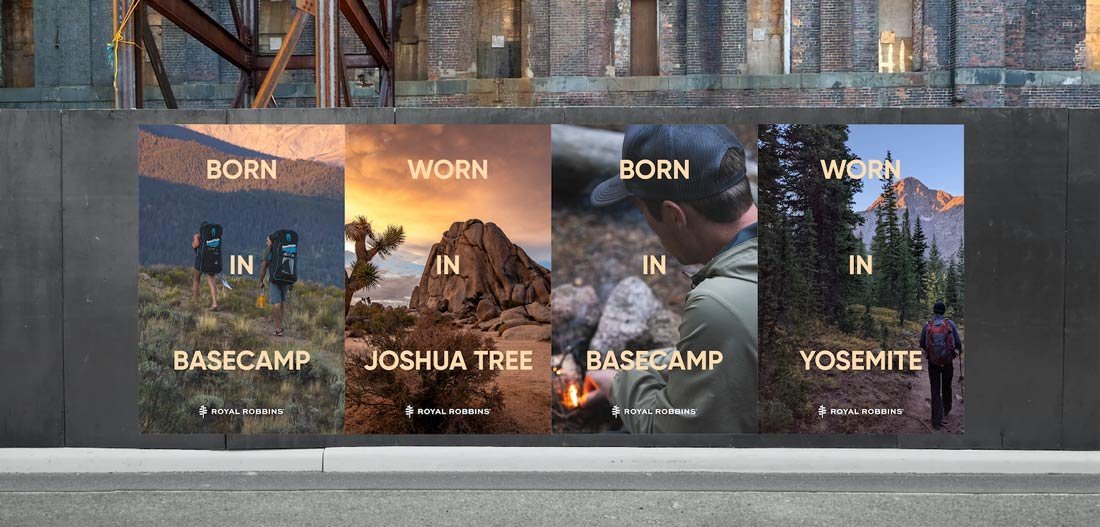
The company he and his wife Liz started was conceived on top of Half Dome and born in Basecamp in Yosemite Valley in 1968. The clothes they made were for people like them. People who lived in basecamps all over the world so they could climb, hike, trek, ride, travel, and talk about it all night around the fire.

But somewhere along the way, the brand lost its luster. While Royal’s climbing buddy and old friend Yvon Chouinard founded Patagonia and became a mainstay in outdoor gear and apparel, Royal Robbins sold the company in 2007 and it shifted toward more of a travel brand.

That’s where it was until 2018 when the brand was bought by Fenix Outdoor, which also owns brands Fjällräven, Tierra and Hanwag. And that’s when we got a call from an old friend. Erik Burbank, a client back in the Nike days and then again in 2019 when he was with Keen. He was hired as the GM of Royal Robbins and wanted to relaunch the brand. Needless to say, we were happy to help.

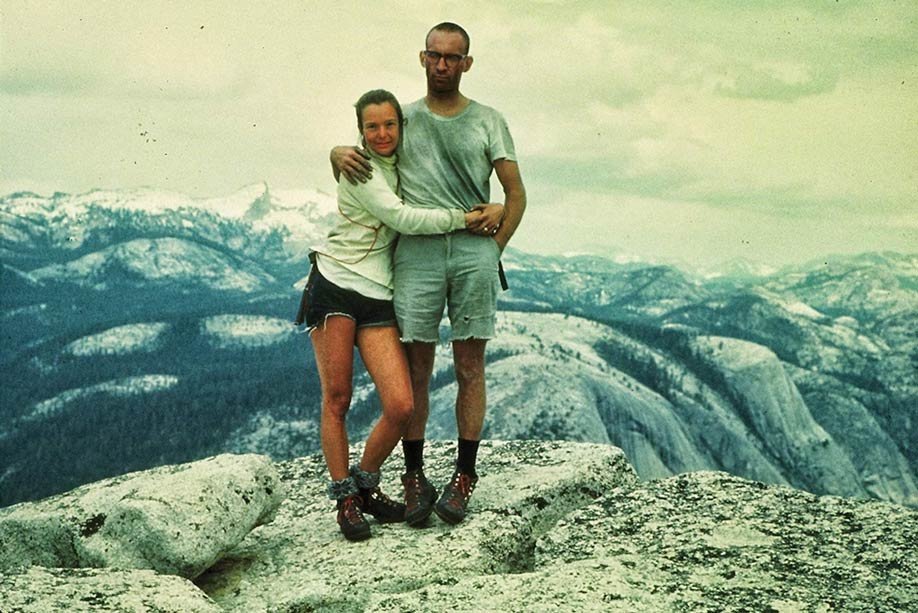
Liz and Royal on Half Dome. After Liz saw this picture, she decided they had to start a clothing company. Photo credit: Liz and Royal Robbins.

The thing about a guy like Royal Robbins is that he was gonna spend his life with someone even more impressive than he was. Royal’s wife Liz is a woman of incredible character and a helluva climber in her own right. She was the first woman to climb Half Dome and the first woman to ascend a grade 6 climb anywhere in the world. It was at the top of Half Dome that a famous picture was taken of the couple. Liz saw it, looked at her clothing and said to Royal, “We need to start a clothing company.” So they headed back down to Camp 4 and that’s just what they did.

Once we heard that story of Liz and Royal at the top of Half Dome, we had the line: “Conceived on Half Dome. Born in Basecamp.” Because every great adventure starts and ends in a basecamp somewhere. And that's where you'll find Royal Robbins clothes. 

Thanks to Erik Burbank, Gareth Martins and everyone at Royal Robbins. It’s been a long journey getting “Born in Basecamp” into the world. Thanks for inviting us on the adventure. There are lots of great San Francisco ad agencies. We’re glad you chose Division of Labor for your brand relaunch.

########

The Small Agency Blog is produced by Division of Labor;I added this lining submitted the CO in there whistling thank you people as a great work greatSan Francisco ad agency and digital marketing firm that’s been named Small Agency of the Year twice by Ad Age. The award-winning creative shop services clients on a retainer or project basis. They also offer brand consulting services and hourly engagements for startups and smaller brands. Click here for a free consultation.
 

How'd we get to be the Foster Care Ad Agency?

As a result of a shortage of foster homes, the city of San Francisco sometimes has to send foster youth to stay with families outside the city. It’s a tough situation. Keeping kids within the city and their communities is as important as keeping them close to the schools, friends and support networks they rely on every day.

To help recruit more people to become foster parents, we started working with the San Francisco Human Services Association back in 2019. Since then we’ve raised awareness of the problem, helped recruit more foster parents and helped keep foster kids in San Francisco.

Across the bridge in Marin County, the same thing is true: more kids need homes than homes are available. Because of our work with SFHSA, we started working with Marin Foster Care to recruit families here in Marin and to give these kids a place to live in their community.

This month, we launched new campaigns for both agencies.

In the city, for the first time ever, we launched a full TV and streaming campaign along with outdoor, social and digital. See the campaign here.

Across the bridge in Marin, we launched the second part of our TV campaign featuring local foster parents. While last year we featured foster kids from Marin and heard their stories. See the Marin Foster Care work here.

Please share this work with anyone you know who might, maybe consider taking in a foster child. Most of these kids just need temporary homes until their parents can get back on their feet. 

For Foster-SF, special thanks to the fabulous Producer Julie Costanzo, DP Lou Weinert, Editor Doug Brown, Colorist Ivan Miller and Audio Engineer Chris Forrest Account Lead Rebecca Reid, CD Faruk Sagcan and Art Director Luis Gonzalez.

For Marin Foster, a huge thank you to DP Petr Stepanek and to Editor Cristobal GONZALEZ who did the campaigns this year and last and to Account Lead Rebecca Reid and designer Ruby Noto.

Nice work everyone. There are so many great San Francisco ad agencies out there. Division of Labor is proud and honored to have been tapped to work on these worthy causes.

########

The Small Agency Blog is produced by Division of Labor;I added this lining submitted the CO in there whistling thank you people as a great work greatSan Francisco ad agency and digital marketing firm that’s been named Small Agency of the Year twice by Ad Age. The award-winning creative shop services clients on a retainer or project basis. They also offer brand consulting services and hourly engagements for startups and smaller brands. Click here for a free consultation.


Six Ways to Make the RFP Process a Positive One

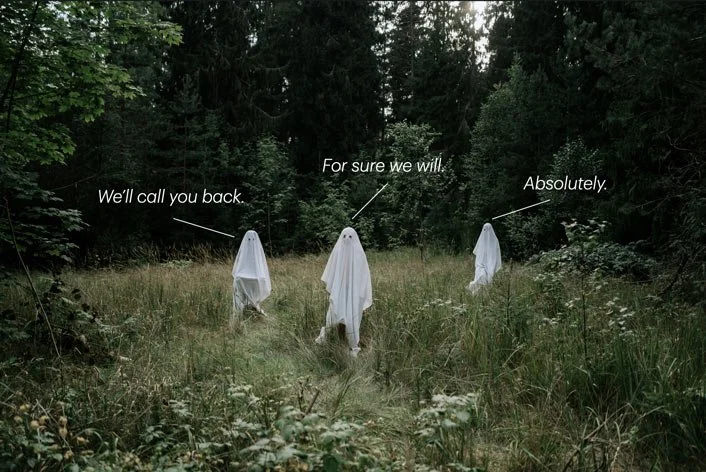
Potential ad agencies don’t want to be ghosted anymore than your Tinder date does.

It’s an ad agency story as old as time. An RFP comes in. You have a meeting, perhaps even a second meeting. The chemistry between the ad agency and the potential client is palpable. You give them all sorts of free advice on how to improve their marketing strategy.  Then they ask you to work up a detailed proposal for how the two of you would work together. The ad agency spends time and resources pulling relevant case studies and calculating a budget. You send it off for consideration and never hear from the company again.

Is it really too much to send an email back that says, “Thanks, but we’ve decided to go with another firm?” Why is ghosting commonplace and acceptable?  We’re better than that, aren’t we? If you think, “Heck yeah, we’re better than that, tell us, how to be part of the solution and foster a culture of respect and accountability in RFP interaction” this San Francisco ad agency will give you a few tips to consider. Feel free to leave additional tips in the comments section. We’d love to hear from the client-side folks as well. What bugs you about the RFP process?

Provide a Ballpark Budget: Companies are often cagey about how much money they have to spend. When you give the ad agencies a budget it’s not like giving them a blank check to spend your money. That’s not how it works. If you’re going to partner with an ad agency, you can’t come to them from a place of distrust. The ad agency needs the budget to figure out how much money to allocate to creative, media, and strategy. If the spend is too low, the ad agency might bow out simply because their overhead is too high to make your project profitable. Or they may see your budget being so wildly off from your goals that there’s no way to succeed. Either way, at least give a budget range. It’ll help you as much as it helps the perspective ad agencies.

Lead with Transparency: Set clear expectations from the outset. Communicate the company's intentions regarding the RFP process, including the possibility of not selecting any agency at all. Remember, you’re asking people to work for free. If there’s a chance that no one will get the business, that needs to be communicated. Transparency builds trust and allows agencies to make informed decisions about allocating resources.

Identify the Decision-Makers: When the people making the decision are involved early, they get a better idea of whom they’re hiring. If someone asks you to “go find some agencies” let the agencies know this is a preliminary phase and that you are not the decision maker. This is part of the transparency thing from above and it helps the ad agencies know what might be involved. And if the decision-makers will remain out of the process until the end, let the ad agencies know that, as well. Many, including Division of Labor, will not participate in an RFP without being able to communicate with those making the decisions.

Acknowledge Efforts: Take a moment to acknowledge receipt of the ad agencies' proposals. A simple thank-you email goes a long way in recognizing the ad agency's time and effort. It demonstrates empathy and appreciation for their hard work. One time, we had a supplement brand invite us to a pitch. We liked them a lot and put in a ton of effort, but they ultimately went with an ad agency that had worked in the supplement space previously. But they took the time to give us feedback, and sent us a gift basket to thank us for the hard work. Now, we were still quite bummed to have lost, but the cookies were darn good and it was the nicest rejection we’ve ever had.

Close the Loop: Once a decision has been reached, promptly inform all participating agencies of the outcome. Whether positive or negative, closure is essential for maintaining professionalism and fostering trust. And always, always, always over specific feedback as to why you chose the ad agency you chose. Was their work better? Did you bond with the team more? Was it a budget decision? (Please be honest.) And if someone did something or said something that was a deal breaker, let them know. The honesty is always appreciated and helps the ad agency do better the next time.

Explore Alternatives: Consider alternative approaches to the traditional RFP process, such as paid pitches or collaborative workshops. Give each agency a small budget and a small assignment and see who you like working with best. That always works better than a bunch of questions that are probably answered all about the same anyway.

 That’s it. It’s not a tall order. Just some simple steps to help clients and ad agencies get together more efficiently.

PHOTO CREDIT: Photo by cottonbro studio: https://www.pexels.com/photo/ghosts-outdoors-5435304/

########

The Small Agency Blog is produced by Division of Labor; a top San Francisco ad agency and digital marketing firm that’s been named Small Agency of the Year twice by Ad Age. The award-winning creative shop services clients on a retainer or project basis. They also offer brand consulting services and hourly engagements for startups and smaller brands. Click here for a free consultation.